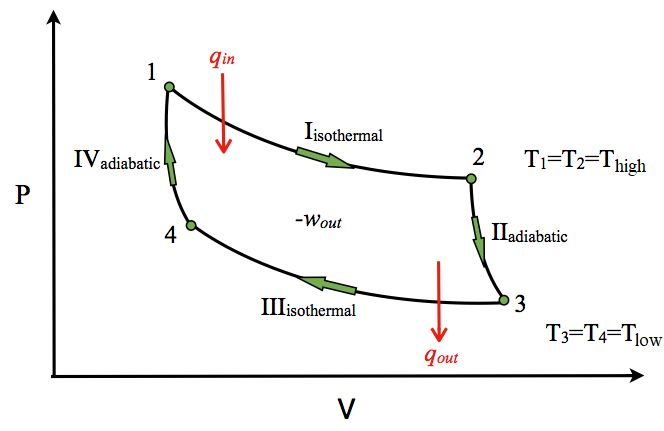
Carnot cycle
21
MENTIONS
3
EPISODES
3
PODCASTS
Search complete. 21 mentions across 3 episodes found for "Carnot cycle".
Oct 10, 2026

speaker_0HOST
We're talking about the massive difference between a multistage physical explosion and an instantaneous digital command.
speaker_0HOST
Now, the mathematical crux of this whole shift really comes down to what's known as the Carnot cycle.
speaker_0HOST
Because gas engines are essentially heat engines, they hit a hard theoretical maximum efficiency of about 25 to 30%.
speaker_0HOST
They are mathematically doomed.

speaker_0HOST
Scott's Irish physicist Lord Kelvin was the first to formulate a concise definition of thermodynamics in 1854, which stated, Thermodynamics is the subject of the relation of heat to forces acting between contiguous parts of bodies and the relation of heat to electrical agency.
speaker_0HOST
German physicist and mathematician Rudolf Clausius restated Carnot's principle, known as the Carnot cycle, and gave the theory of heat a more accurate and sounder basis.
speaker_0HOST
His most important paper, On the Moving Force of Heat, published in 1850, first stated the second law of thermodynamics.
speaker_0HOST
In 1865, he named the concept entropy.

Ramamurti ShankarHOST
So, one great law will take care of all these things.
Ramamurti ShankarHOST
So, you've got to ask yourself, Well, it turns out this great law was discovered by an engineer called Carnot.
Ramamurti ShankarHOST
So, here's another thing.
Ramamurti ShankarHOST
People don't wake up and say, I'm going to discover a great law.
Ramamurti ShankarHOST
People just go out and do their business, and all you need is to have enough sense to realize when you stumbled on something really great.
Ramamurti ShankarHOST
So, Carnot had a very practical question.
Ramamurti ShankarHOST
Carnot was working on engines.
Ramamurti ShankarHOST
So, a steam engine, you know what happens in a steam engine.