Carnation Revolution
Military conflictWikipedia
5
MENTIONS
4
EPISODES
4
PODCASTS
Search complete. 5 mentions across 4 episodes found for "Carnation Revolution".
Sep 24, 2026

Regina BlessHOST
His brother, Luis Cabral, became the first president of the Council of States.
Regina BlessHOST
Looking at its formal recognition, following the Carnation Revolution in Portugal, Portugal formally and fully recognized Guinea-Bissau's independence on September 10, 1974.
Regina BlessHOST
Looking at its holiday status, September 24 is celebrated annually as Guinea-Bissau's official national day and public holiday.
Regina BlessHOST
Moving on, Heritage Day in South Africa.

António GuterresGUEST
There we had the information about everything that was happening in the city.
António GuterresGUEST
And, um, and so I lived moment by moment, uh, the 25th of April, the Carnation Revolution.
Melissa FlemingHOST
How did you feel?
António GuterresGUEST
Oh, it, uh, I...
António GuterresGUEST
You can't imagine what it is, uh, because it was...
António GuterresGUEST
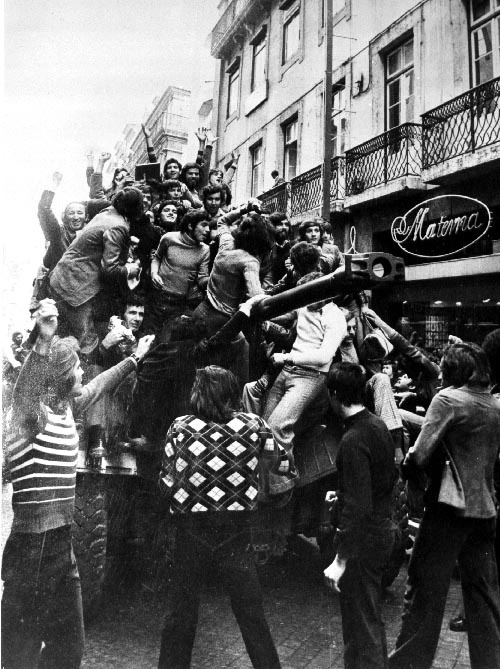
First, it was a military coup, but then the people came out of the streets, uh, to the streets, and, uh, it became a popular revolution, and it became something that galvanized the whole country.
Melissa FlemingHOST
It was called the Carnation Revolution.
António GuterresGUEST
Carnation, yes, because, uh, remember, it's a famous photo of a soldier with a, a carnation inside the weapon, and that photo with a, with a, with a child, uh, at his side became the symbol of the, of the revolution.

Isabella AidarGUEST
And so by the end of four decades where people finally...
Isabella AidarGUEST
they resisted it and they overthrew and they had Portugal the famous carnation revolution that happened here in Portugal was only like a few days and there were very few casualties like only four people they call it the bloodless revolution because it was fairly bloodless, like basically the military turned in on itself, which is a big thing that happens when you study revolutions of the past is the military finally turning against the state because they're just over it.
Isabella AidarGUEST
Like 40% of the national Portuguese budget was going towards the war effort to maintain the colonies in Africa that were resisting thanks to Soviet guns too.
Isabella AidarGUEST
And so it ended, you know, Portuguese colonialism in Africa and also ended fascism here.

Gilberto FernandesGUEST
My first book was on that very topic of the building of the making of Portuguese diaspora in Canada and the United States.
Gilberto FernandesGUEST
And that book really only went up shortly after the Portuguese Revolution of 74, so mid-70s.
Gilberto FernandesGUEST
At that point, Portuguese weren't as predominant in the construction workforce as they are now.
Gilberto FernandesGUEST
There were already quite a lot of them, but... my research then didn't have a chance to really go into the issue of construction.