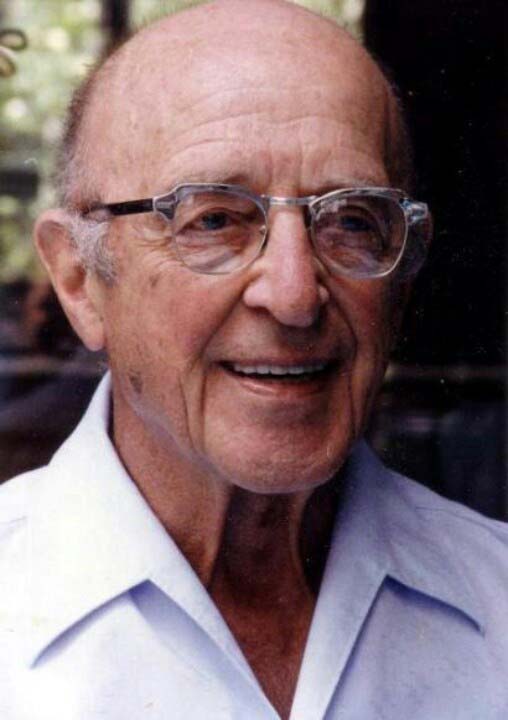
Carl Rogers
American psychologistWikipedia
127
MENTIONS
65
EPISODES
60
PODCASTS
Search complete. 127 mentions across 65 episodes found for "Carl Rogers".
Sep 11, 2026

Margaret RutherfordHOST
Welcome to this week's edition of Self-Work.
Margaret RutherfordHOST
Active listening has been applauded as the cornerstone of conflict resolution techniques since its introduction by psychologist Carl Rogers in 1957.
Margaret RutherfordHOST
In fact, it was called Rogerian therapy.
Margaret RutherfordHOST
It's also been called reflective listening, and was a technique that Rogers taught, many began using, and many actually misunderstood.

Nico CallaghanHOST
And that kind of uncertainty that you're pointing to, I think, takes you towards one of my favorite intellectual threads running throughout your book.
Nico CallaghanHOST
And this is a quite famous debate between B.F. Skinner and Carl Rogers.
Nico CallaghanHOST
So could you tell us a little bit more about these two figures and why they are important to the story of Freddie?
Anna HeywardGUEST
Yeah.
Anna HeywardGUEST
We're born, we know nothing, there's nothing there.
Anna HeywardGUEST
And then as you grow and as you interact with your environment, that is what forms you and that is what creates your behavior, your personality.
Anna HeywardGUEST
And the debate that I recount in the book happened in the mid-1960s at an American university, and he was debating a psychologist called Carl Rogers, who had a completely diametrically opposing view of how things worked and where behavior comes from.
Anna HeywardGUEST
So The idea of therapy is pretty well known today.

Bonaventure ChapmanHOST
facts and some other, and like methods of psychology and of psychotherapy and such.
Bonaventure ChapmanHOST
And I think my favorite was Carl Rogers, the Rogerian method.
Bonaventure ChapmanHOST
Do you know this method?
Gregory PineHOST
Unconditional positive

Dodge ReaGUEST
How much of that is, you know, my sort of life's training, or maybe there's something in just sort of my soul's journey that's a little like this.
Dodge ReaGUEST
I can acknowledge one of my gifts is to be able to really tune into somebody else in a way that is what Carl Rogers would describe as a mix of unconditional positive regard and genuine empathy.
Dodge ReaGUEST
The hard one is that the third ingredient he really wants to have there is congruence, which is to be enough connected to myself that it is a genuineness that I bring to that.
Dodge ReaGUEST
And most of the time I do that really well.

Doug LisleHOST
And cognitive behavioral had emerged as an alternative rather than just a...
Doug LisleHOST
Carl Rogers smiling and being friendly and being nice, which was actually a huge improvement over psychodynamic thinking.
Doug LisleHOST
So Carl Rogers and the humanistic psychologists basically said, let's treat people nice in therapy.
Doug LisleHOST
Surely that's better than this other crap.
Doug LisleHOST
And it probably was, I think it was actually.
Doug LisleHOST
As far as I'm concerned, everybody else is lost.
Doug LisleHOST
You're just falling back on your own human intuition and being nice.
Doug LisleHOST
You're Carl Rogers plus a few IQ points.
Doug LisleHOST
And so it was the great demonstration of three different ways of doing psychotherapy.
Doug LisleHOST
So for 10, 15 minutes, she talked to Carl Rogers, who was a sweet guy.
Doug LisleHOST
And then she talked to Fritz Perls, who was a weirdo gestalt guy who was actually a pretty smart guy, but half psychodynamic and lost in space.
Doug LisleHOST
And then the third one was Albert Ellis, I believe, one of the mainline people that did effectively CBT, except kind of armory version of it known as rational emotive therapy, which is CBT with a New York edge.

Jim ThomasGUEST
I say really powerful things, and he says something back that's like an interpretation or advice or something.
Jim ThomasGUEST
Sometimes I wish if I, when I say I feel so empty right now, that he would say, 'So empty.'" Is that part of what you therapists do? [laughs] And I think that captures it, that empathic reflection is something, you know, comes from, like, Carl Rogers and Gendlin and those, uh, early humanist therapists in the '60s into the '70s that were moving away from analyzing behavioral, looking for the power dynamics, et cetera.
Jim ThomasGUEST
The, the, the, the more common therapies of the day.
Jim ThomasGUEST
You know, it was this brilliant idea, and if you go read Carl Rogers' transcripts, there's a lot of what you just named.
Jim ThomasGUEST
I like that name for it, accurate reflection, that Carl would reflect back what the person said.
Jim ThomasGUEST
And the pace of his sessions, the discussions didn't move very fast.

Matt ShermanHOST
As you're trekking out into the wild, right? You have your toolkit, you have your gear that's there to protect you and help you forge allies and defeat enemies and move along the quest of your life.
Matt ShermanHOST
Carl Rogers had a quote that said, "The curious paradox is that when I accept myself just as I am, then I can change." Which has been an important, uh, thought that goes back all the way through my life of, like, when I was younger, I was really struggling with myself and my identity and feeling broken and not liking myself and strong emotions, all these things.
Matt ShermanHOST
But when I...
Matt ShermanHOST
My method for dealing with that was to become a rogue, to become a robot, to shield myself, protect myself, keep myself in the shadows away from other people.

Fish StarkGUEST
The opposite of original sin is a thing called unconditional positive regard.
Fish StarkGUEST
That idea came from a gentleman named Dr. Carl Rogers.
Fish StarkGUEST
You've ever sat across from a therapist or a school counselor or a social worker or a chaplain and felt like that person was on your side, you have Carl Rogers to thank for it.
Fish StarkGUEST
He was the father of positive psychology and patient-centered psychology, and he was named Humanist of the Year by the American Humanist Association in 1964, so about five decades before Gloria Steinem.
Fish StarkGUEST
And before Rogers, psychology worked in a way that was very informed by the cultural myth of original sin.
Fish StarkGUEST
And then he thought like a scientist and he started testing his work.
Fish StarkGUEST
He put a microphone in his room and he recorded the sessions, thousands of them, so that people could check his work.
Fish StarkGUEST
Carl Rogers is the reason that we know what we know about how people change.

Andy TubmanGUEST
Exactly.
Andy TubmanGUEST
And so years ago, there was a therapist, a researcher, Carl Rogers started this term around patient led or client led person led therapy.
Andy TubmanGUEST
And that, that had a lot of influence and to where we are today in that you've got to pay attention, like you're saying to like, what are the clues and the cues that you're getting from the person that And how do you match them where they are, right? How do you meet them where they are? These terms are common these days, but not 20 years ago, 30 years ago.
Andy TubmanGUEST
And so the thing is, is the way that you, one of the best techniques to get them from being in this state into half an hour, an hour later that day, actually dancing or moving is is to meet them where they are by starting where they are energetically so if they're in a heavy place you play a simple song that you know that's that they enjoy and you sit with next to them and you hold their hand or you just tap on the back of their hand with them right to the pulse of the music that is one of their preferred songs so they're not doing in theory anything, right? They're not doing anything.
55 more episodes mention Carl Rogers.
Create an account to see the whole feed, search across every transcript, and follow the entities you care about.