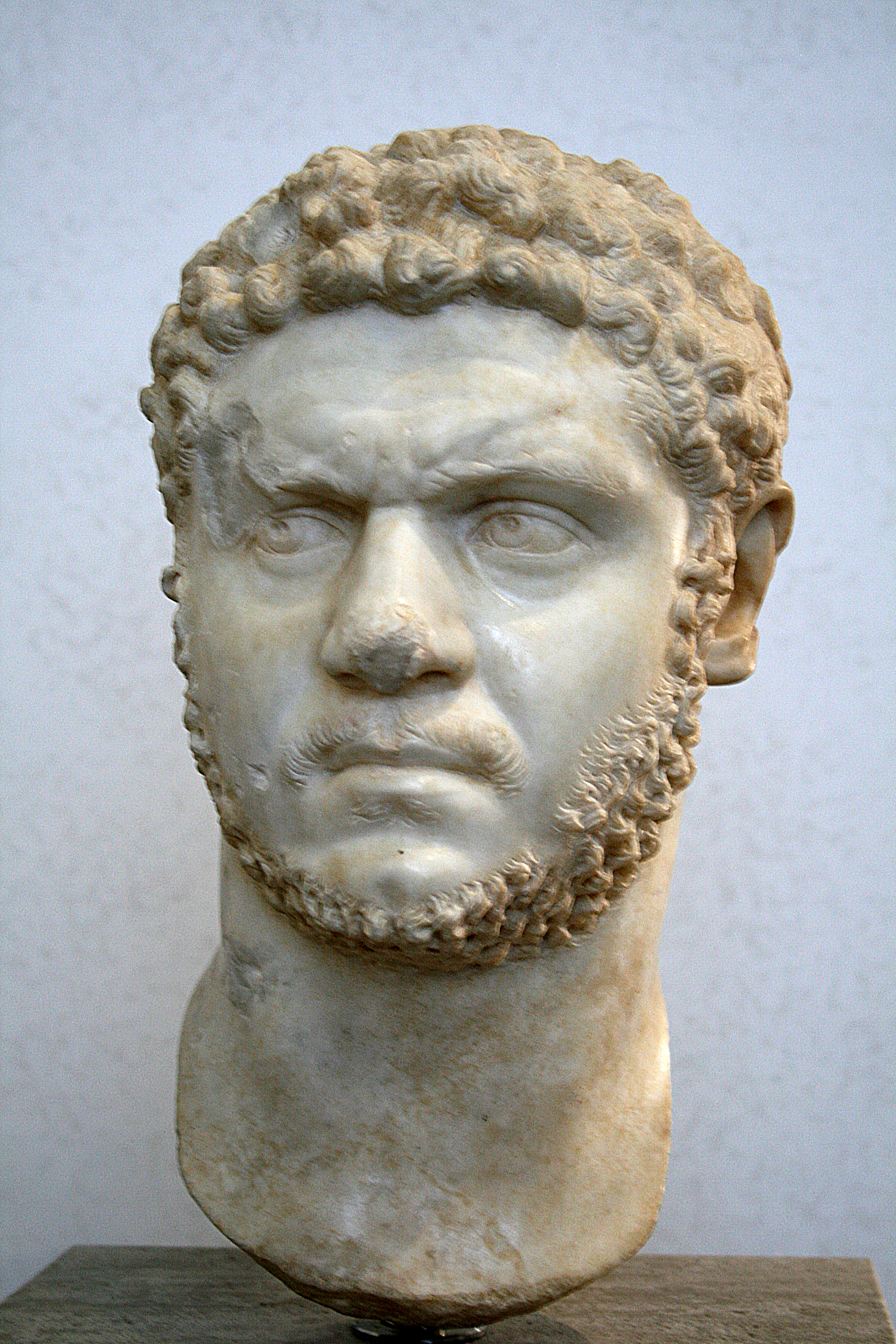
Caracalla
Former Roman emperorWikipedia
39
MENTIONS
25
EPISODES
20
PODCASTS
Search complete. 39 mentions across 25 episodes found for "Caracalla".
Oct 13, 2026

speaker_1NARRATOR
These migrations, driven by economic and social factors, played a crucial role in the formation of Jewish communities that later contributed to the emergence of Ashkenazi Jews as a distinct cultural and religious identity.
speaker_1NARRATOR
For much of the Roman period, many Jews did not have access to full citizenship, a situation that only changed in two hundred twelve CE when Emperor Caracalla granted this right to all free peoples of the empire.
speaker_1NARRATOR
Until the reign of Julian in three hundred sixty-three CE, Jews were also required to pay a special tax.
speaker_1NARRATOR
By the end of the Roman Empire, there was some freedom for Jews to form cultural and religious networks and engage in various local economic activities.

Nathanael VetteHOST
So how do we get then from ancient ethnos to religion? This was not a theological development, but a legislative one.
Nathanael VetteHOST
In 212, the Emperor Caracalla makes every free inhabitant of the Roman Empire a fully fledged citizen.
Nathanael VetteHOST
A single civitas, a single city, now stretches from Syria to Hadrian's Wall.
Nathanael VetteHOST
If one city determined one's gods, what happens when the whole empire is, in effect, a single city? The answer comes in 250, when the Emperor Decius devises a loyalty test.

SeanHOST
And they put the...
SeanHOST
Is it Emperor Caracalla? Anyway, puts the sword to his neck and cuts his neck a little bit, which is a real power play.
SeanHOST
And he's like...
SeanHOST
And he pushes it away.
13 MINS LATER
SeanHOST
I'm not bothered.
SeanHOST
The opening text after that beautiful introduction is, 16 years after the death of Marcus Aurelius, his dream of Rome has been forgotten.
SeanHOST
Under the tyranny of twin emperors, Gaeta, I thought it was Gaeta, Gaeta and Caracalla, corruption flourishes.
SeanHOST
Their ruthless aggression spreads like a plague throughout the empire.

Jeremy BoreingSOUNDBITE_SPEAKER
After the Italian allies rose up in the social war, fighting and dying over the question of whether they'd ever be let in, Rome made the wiser choice and made them citizens.
Jeremy BoreingSOUNDBITE_SPEAKER
But centuries later, the Emperor Caracalla issued an edict making nearly every free man in the empire a citizen, from Britain to the deserts of Syria.
Jeremy BoreingSOUNDBITE_SPEAKER
Historians still argue about whether that was the strength of Rome on display or the beginning of the end of Rome.
Joshua HaymesHOST
Yeah, yeah, right.
Jeremy BoreingSOUNDBITE_SPEAKER
After the Italian allies rose up in the social war, fighting and dying over the question of whether they'd ever be let in, Rome made the wiser choice and made them citizens.
Jeremy BoreingSOUNDBITE_SPEAKER
But centuries later, the emperor Caracalla issued an edict making nearly every free man in the empire a citizen, from Britain to the deserts of Syria.
Jeremy BoreingSOUNDBITE_SPEAKER
Historians still argue about whether that was the strength of Rome on display or the beginning of the end of
Joshua HaymesHOST
Rome.

Jeremy BoreingSOUNDBITE_SPEAKER
After the Italian allies rose up in the social war, fighting and dying over the question of whether they'd ever be let in, Rome made the wiser choice and made them citizens.
Jeremy BoreingSOUNDBITE_SPEAKER
But centuries later, the emperor Caracalla issued an edict making nearly every free man in the empire a citizen, from Britain to the deserts of Syria.
Jeremy BoreingSOUNDBITE_SPEAKER
Historians still argue about whether that was the strength of Rome on display or the beginning of the end of
Joshua HaymesHOST
Rome.
Jeremy BoreingSOUNDBITE_SPEAKER
After the Italian allies rose up in the social war, fighting and dying over the question of whether they'd ever be let in, Rome made the wiser choice and made them citizens.
Jeremy BoreingSOUNDBITE_SPEAKER
But centuries later, the emperor Caracalla issued an edict making nearly every free man in the empire a citizen, from Britain to the deserts of Syria.
Jeremy BoreingSOUNDBITE_SPEAKER
Historians still argue about whether that was the strength of Rome on display or the beginning of the end of
Joshua HaymesHOST
Rome.

Charlotte HigginsHOST
Because of the dryness of the sands, things survive in this completely dry conditions, yeah
Mary BeardHOST
There is a, a, a unique, absolute unique panel portrait of Septimius Severus and his family, his wife, Julia Domna, and his children, uh, Caracalla and Geta.
Mary BeardHOST
Um, uh, it's now in Berlin, but it was found in Egypt, and it's a, a, a fantastically precious survival.
Mary BeardHOST
And there must have been thousands of these things originally, but they've just gone
Charlotte HigginsHOST
No, it's a wonderful, wonderful thing, not least because the figure, the face of the, of the son, Geta, is, is, is, has been rubbed out, scratched out.
Charlotte HigginsHOST
And that is because after Septimius Severus dies, those two boys, Caracalla and Geta, become joint emperors.
Charlotte HigginsHOST
But then there's a power struggle.
Charlotte HigginsHOST
Caracalla wins the power struggle.

JimmyHOST
In 200, Septimius Severus ordered the tomb sealed to the public and placed sacred books of magic within it to protect its secrets.
JimmyHOST
The last recorded imperial visit came in 215 AD with Caracalla.
JimmyHOST
Fancing himself Alexander reborn, he removed his tunic, ring, and belt, placing them on the coffin as a tribute.
JimmyHOST
Disturbingly, he would later massacre the Alexandrian populace in a fit of paranoia sparked by their mockery of his obsession.
JimmyHOST
And with that massacre, Caracalla forever proved that he was a reasonable person and ruler.
JimmyHOST
These visits confirm that the tomb was intact and identified at least until the early third century.
JimmyHOST
After that, things were going to start to get quite murky.
JimmyHOST
St. John Chrysostom, writing around 400 AD, posed the rhetorical question, asking where the tomb of Alexander was.

Marty BentHOST
Mm-hmm
Jeremy Ryan SlateGUEST
... because obvio- obviously there's other things that caused the currency to collapse faster, like Severus' son, Caracalla, is in a real need for money, so he's in a, in 212, he's gonna take about 30 million people and make them citizens overnight because now it changed the way they were taxed.
Jeremy Ryan SlateGUEST
He could also tax their inheritance, so he's, he's really in a, in a need for new money.
Jeremy Ryan SlateGUEST
But then also, if you look at how the military changes, that's, that's a really key component, too, because why would this military come back and say, "Hey, we're not happy with this money"? And that's because, for the most part, they had become less and less Roman.
9 MINS LATER
Marty BentHOST
What did he do to fix the currency? What was the, um, what was the benefit of that?
Jeremy Ryan SlateGUEST
So I, I guess to, to kind of go a little bit before him, too, is, is kind of important because emperors realized that currency was a problem, and there, there's a numer- number of attempts to actually fix that.
Jeremy Ryan SlateGUEST
You know, I mentioned Caracalla before.
Jeremy Ryan SlateGUEST
He, he, uh, mints a coin called the double antoninianus, which is basically- About one and a half size of the denarius.
15 more episodes mention Caracalla.
Create an account to see the whole feed, search across every transcript, and follow the entities you care about.