Cancer Alley
74
MENTIONS
40
EPISODES
33
PODCASTS
Search complete. 74 mentions across 40 episodes found for "Cancer Alley".
Nov 25, 2026

Abbie DillenGUEST
And so the question is, what does it do? And it gives this president the ability to give any developer You want to do the Boundary Waters.
Abbie DillenGUEST
You want to do a whole big new petrochemical facility in Cancer Alley.
Abbie DillenGUEST
You want to privatize water in the Mojave Desert.
Abbie DillenGUEST
Cadiz project that we were able to defeat in the first Trump administration, go for it.

David GellesMODERATOR
Many of them have cancer themselves.
David GellesMODERATOR
Rev and I were with some of them down there in an area known as Cancer Alley just last month.
David GellesMODERATOR
Rev, what brought you to this fight personally?
Lennox Yearwood Jr.GUEST
Well, let me start there.
Lennox Yearwood Jr.GUEST
Yeah, well, yeah.
Lennox Yearwood Jr.GUEST
You can figure that one out in the process.
Lennox Yearwood Jr.GUEST
You know, David, the nickname of Cancer Alley in America is unacceptable.
Lennox Yearwood Jr.GUEST
The fact that we have a place where,

Scott HarrisHOST
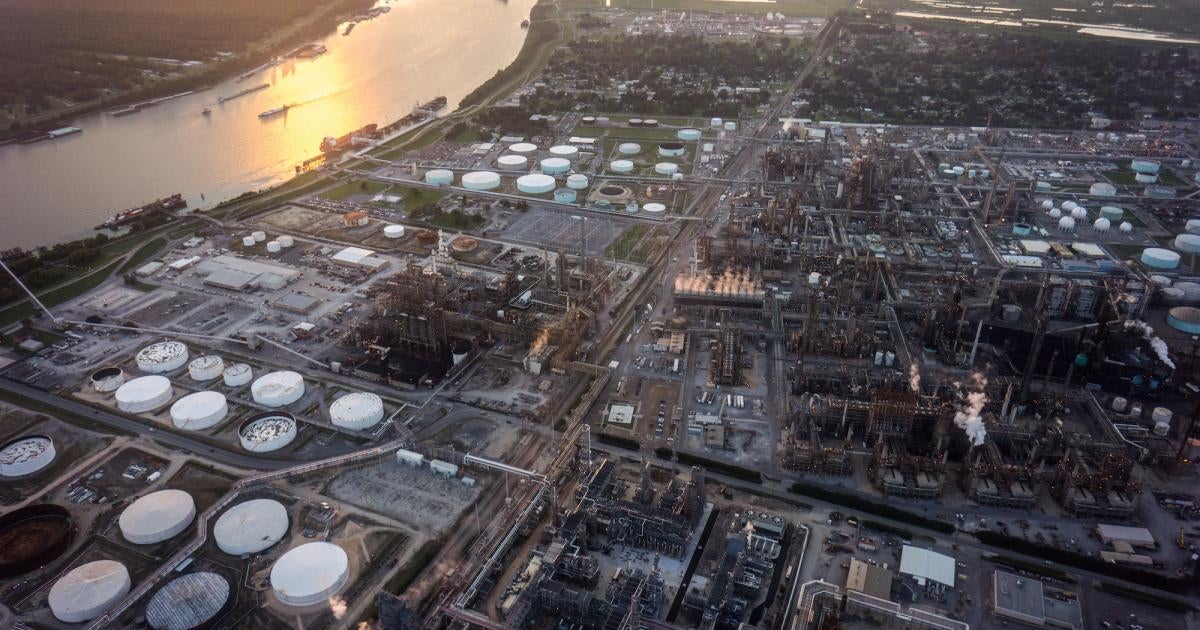
The Texas and Louisiana Gulf Coast is home to a massive array of petrochemical operations, from LNG liquefied natural gas export terminals to oil refineries and plastics production plants.
Scott HarrisHOST
Along with encroachment into residents' communities comes air and water pollution, as well as a much higher-than-average cancer rate, hence the nickname for the region, Cancer Alley.
Scott HarrisHOST
In 2000, Louisiana native Ann Rolfes founded and still directs the Louisiana Bucket Brigade, named for an easy-to-use air monitoring system.
Scott HarrisHOST
Over the past 25 years, her organization has worked on a variety of health and environmental issues, all related to hazards linked to the state's petrochemical industry.

Mark CummingsHOST
You know,
Lynna CummingsHOST
they even have a place in the middle of like Louisiana called what? Cancer Alley.
Gil DuranSOUNDBITE_SPEAKER
Yeah,
Mark CummingsHOST
because everybody there.

Sheila FosterGUEST
And it starts with, I think, where things are placed.
Sheila FosterGUEST
So if you think about Cancer Alley, which is on plantation land and before that, you know, indigenous folks were kicked off that land, then it.
Sheila FosterGUEST
Every community I've worked in, if you take a look at the history of why people are stratified and segregated and then why they're living in conditions with not just facilities but near highways, you know, with inadequate tree coverage, with inadequate green space, it is this locked-in inequality.
Sheila FosterGUEST
So you bring a set of environmental regulations on top of that that does not account for any of that.

Andrea ColemanHOST
Supporters of the American Affordability and Jobs Act say the bill is designed to lower energy costs.
Andrea ColemanHOST
But critics like Dr. Joy Banner, who lives in Louisiana's Cancer Alley.
Andrea ColemanHOST
says the law takes away community input on projects that could cause the black community harm.
Andrea ColemanHOST
Banner appeared on Roland Martin's Unfiltered podcast recently to share her opposition to the measure and to call out Democrats and black legislators who voted for it.
Andrea ColemanHOST
More than a dozen Democrats voted for the measure, which passed in the Senate last Thursday.
Andrea ColemanHOST
The bill now goes to the House.
Andrea ColemanHOST
Cancer Alley is an 85-mile-long stretch of land between Baton Rouge and New Orleans in Louisiana that has more than 200 petrochemical plants and refineries.
Andrea ColemanHOST
The area sits adjacent to black communities.

Patti VasquezHOST
I my really dear friend of mine passed away about a year and a half ago of throat cancer.
Patti VasquezHOST
Her sister had died of breast cancer and they both grew up in Cancer Alley in Louisiana.
Patti VasquezHOST
Right.
Patti VasquezHOST
Where we, you know, and I'm learning more about some of these lawsuits as something called Danik.

Kelly RyersonGUEST
But the Gulf of Mexico is collecting everything.
Kelly RyersonGUEST
So it's all the fertilizers and all the pesticides and animal waste and everything is coming down, down through the Mississippi River, down through Cancer Alley and out into the Gulf of Mexico.
Kelly RyersonGUEST
And that is a really horrible thing in particular because it's usually people of in socioeconomic, lower socioeconomic levels that are living in that area and they're impacted by all this waste and don't have much to say about their own livelihood or what should actually be happening.
Kelly RyersonGUEST
So just from a justice standpoint, that's really upsetting.

Carol LennigCORRESPONDENT
This 85-mile stretch of the Mississippi River between Baton Rouge and New Orleans is one of the most heavily industrialized corridors in the country.
Carol LennigCORRESPONDENT
Over the years, it has acquired a name that is hard to shake, Cancer Alley.
Carol LennigCORRESPONDENT
Roughly in the middle is St. John the Baptist Parish, a community of just under 40,000 residents, most of them Black.
Carol LennigCORRESPONDENT
Back in 2015, the EPA estimated this area had the highest cancer risk from air pollution in the country, nearly 50 times the national average.
Carol LennigCORRESPONDENT
Denka celebrated the decision, saying the case lacked real-world data and scientific evidence of adverse health effects.
Carol LennigCORRESPONDENT
Three months later, the plant suspended operations, citing, among other things, the financial burden of meeting pollution control requirements.
Carol LennigCORRESPONDENT
Cancer alley residents, disproportionately endangered by pollution for decades, said it was too little, too late.
Carol LennigCORRESPONDENT
They formed the Concerned Citizens of St. John in 2016 with one key goal, to hold polluters accountable.

Michael HolzmanHOST
Billboards advertised strip clubs, gun shops, payday loan companies, and attorneys boasting glorious disability claim victories.
Michael HolzmanHOST
I said, cancer alley, the petrochemical heart of America.
Michael HolzmanHOST
Freedom.
Michael HolzmanHOST
Isaiah declares, clear in the desert a road for the Lord, level in the wilderness a highway for our God.
30 more episodes mention Cancer Alley.
Create an account to see the whole feed, search across every transcript, and follow the entities you care about.