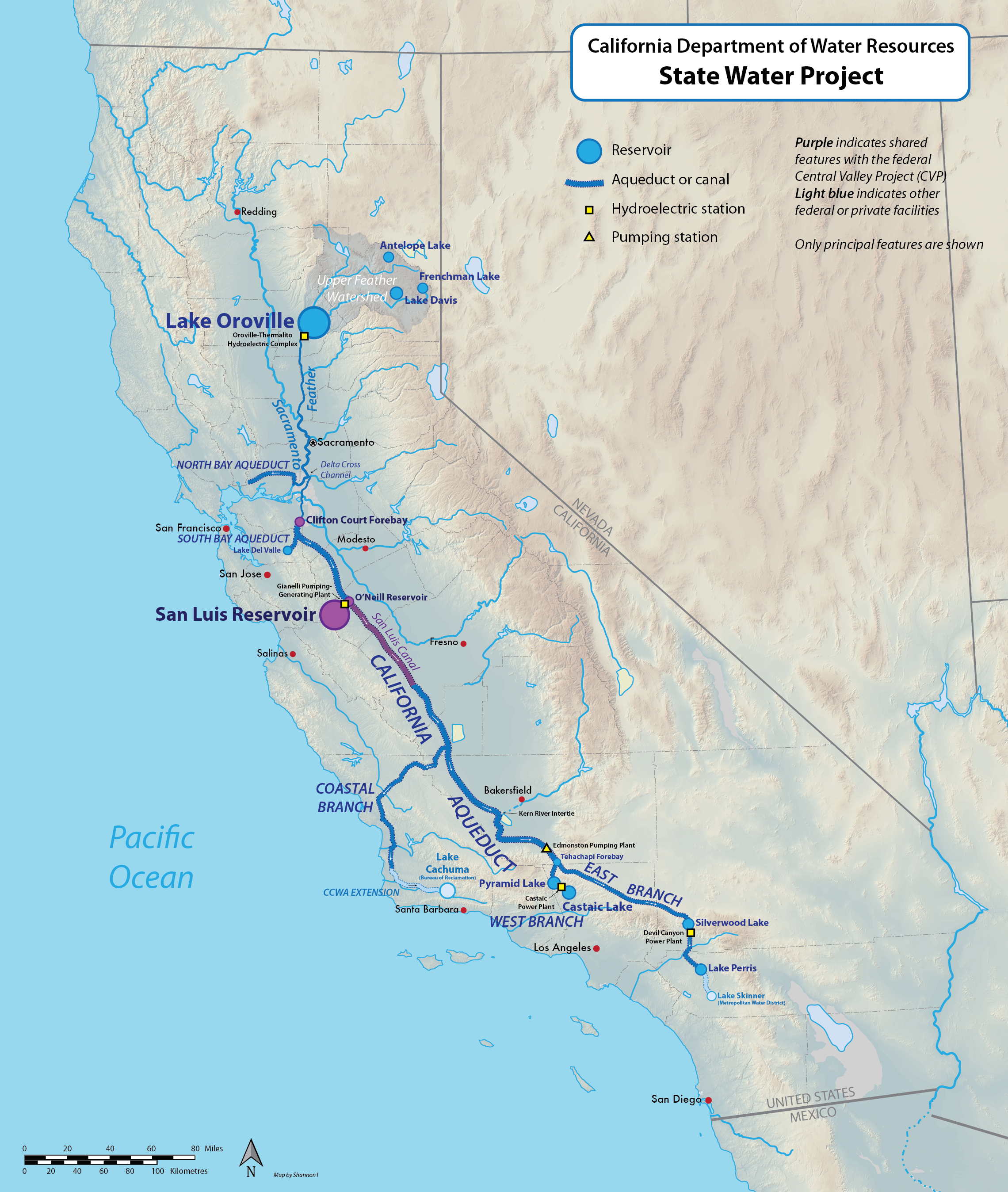
California State Water Project
25
MENTIONS
9
EPISODES
9
PODCASTS
Search complete. 25 mentions across 9 episodes found for "California State Water Project".
Nov 5, 2026

Sam ShaneHOST
Sam, if the Sites Project is turned over to the California Department of Water Resources, then it will get done.
Sam ShaneHOST
That's who put in the State Water Project and handled the contractors, all the subs and everything.
Sam ShaneHOST
Granted, it is run by more liberal people these days because the director does not often come from the department, but it is installed by the governor.
Sam ShaneHOST
I used to write contracts for the Department of Water Resources, and the State Water Project is pretty much or was paid for by the state contractors.
Sam ShaneHOST
So...
Sam ShaneHOST
If the money comes from the state to the Department of Water Resources and the state contractors, it will get built.

Mary GrantGUEST
So San Jose Water Company is number one, and then San Jose, the municipal system, is number five.
Mary GrantGUEST
What we've seen is that these two systems both rely about half of their water from valley water, which gets its water from the State Water Project.
Mary GrantGUEST
So the costs are often driven by the cost of importing water and purchasing water that's really making their costs so high in San Jose.
Mary GrantGUEST
It's interesting because San Jose is kind of split.
Mary GrantGUEST
In fact, it's one of the most affordable systems in the state.
Mary GrantGUEST
And that's because all of its water is from groundwater supplies, groundwater wells across its service area.
Mary GrantGUEST
So it shows to me that the cost of purchasing water from the State Water Project is really driving a lot of the high costs in the San Jose area and the Bay Area in particular.
Mary GrantGUEST
So it's very interesting.

David TangipaGUEST
But when it comes to water here in the valley, I mean, it's one of the most interesting.
David TangipaGUEST
amazing systems with the State Water Project and the Central Valley Water Project.
David TangipaGUEST
And what we can do is just build upon existing infrastructure, invest in it.
David TangipaGUEST
And when the state pulls out a bond in 2014 that the people allow, use that money to actually build dams.

David SwiftGUEST
If you think about where the state water aqueducts originate, most of them originate in the Sacramento Delta.
David SwiftGUEST
And so State Water Project Water, a lot of it comes from the Delta water.
Anita SchauerHOST
So is that really to help the farmers? Is that why we have that water system there that filters down?
David SwiftGUEST
It is for farming, but it's also a lot of it goes to L.A., which is, of course, a desert.

Adham AlmasriGUEST
water is critical to ensure long-term water reliability to IUA's 950,000 people spanning over 242 square miles in Western San Bernardino County that IUA serves.
Adham AlmasriGUEST
So IUA service area currently depend on imported supplies from the State Water Project for roughly 30% of its water portfolio.
Adham AlmasriGUEST
making it vulnerable to drought, regulatory constraints, and also statewide supply limitations.
Adham AlmasriGUEST
So maintaining the health of the Chino Basin and replenishing local aquifers are therefore essential to our regional sustainability.

Dick LuthyGUEST
It's pumped in.
Dick LuthyGUEST
State water project is pumped in, and there's a little wedge up there called recycling.
Dick LuthyGUEST
Now, the goal is to more than double the amount of water that we're recycling in the next 10 years.
Dick LuthyGUEST
In other words, uh, that wedge is gonna get bigger.
Dick LuthyGUEST
This is the energy content, and you can forget about the units here, but, um, just look at the height of that bar.
Dick LuthyGUEST
That's the current water supply for, um, uh, Santa Clara Valley.
Dick LuthyGUEST
This much of it, this big green part, that's the pumping of the water to the system from the, uh, State Water Project, uh, and the like.
Dick LuthyGUEST
If we go to recycled water, we can-- we're, we're not paying for that big import fee, uh, that e-energy fee, I guess.

Steve HiltonGUEST
I mean, we built the Golden Gate Bridge in four years, you know, nearly a century ago.
Steve HiltonGUEST
We built the State Water Project and the suburbs of Southern California and the magnificent UC campuses all across the state.
Steve HiltonGUEST
I mean, there was a time when we really knew how to build things quickly and effectively.
Steve HiltonGUEST
And unfortunately, as, you know, Ezra Klein has written and Derek Thompson in their book Abundance, we just got bogged down in process around these things.

Victor Davis HansonGUEST
And they keep getting bigger.
Victor Davis HansonGUEST
And you see more and more almonds taken out and farmland taken out because there's not enough water, because they've rewritten the contracts for the California Water Project and the Central Valley Project.
Victor Davis HansonGUEST
And then when you get on I-5, you go over Pacheco, you get on 152, you go over Pach- and you see these massive, uh, wind turbines.
Victor Davis HansonGUEST
And you'll see a thing, this is so funny.

Benjamin ValdezHOST
Let's do it
Ash ParanthamanGUEST
... because I- I think, you know, the State Water Project, you know, I don't know if folks know about State Water Project, but basically, Southern California is a desert, right? We don't have a lot of, like, local source of water.
Ash ParanthamanGUEST
So when Southern California was booming in population and activity, um, it needed a lot of water.
Ash ParanthamanGUEST
And, um, and back in the '60s, you know, great civil engineers, they thought of a plan to transport all the water from Northern California [laughs] all the way down to Southern California.
Ash ParanthamanGUEST
And that's the only reason why Southern California is what it is right now-
Benjamin ValdezHOST
Mm-hmm
Ash ParanthamanGUEST
... because of the State Water Project.
Ash ParanthamanGUEST
And they did all this back in the '60s.