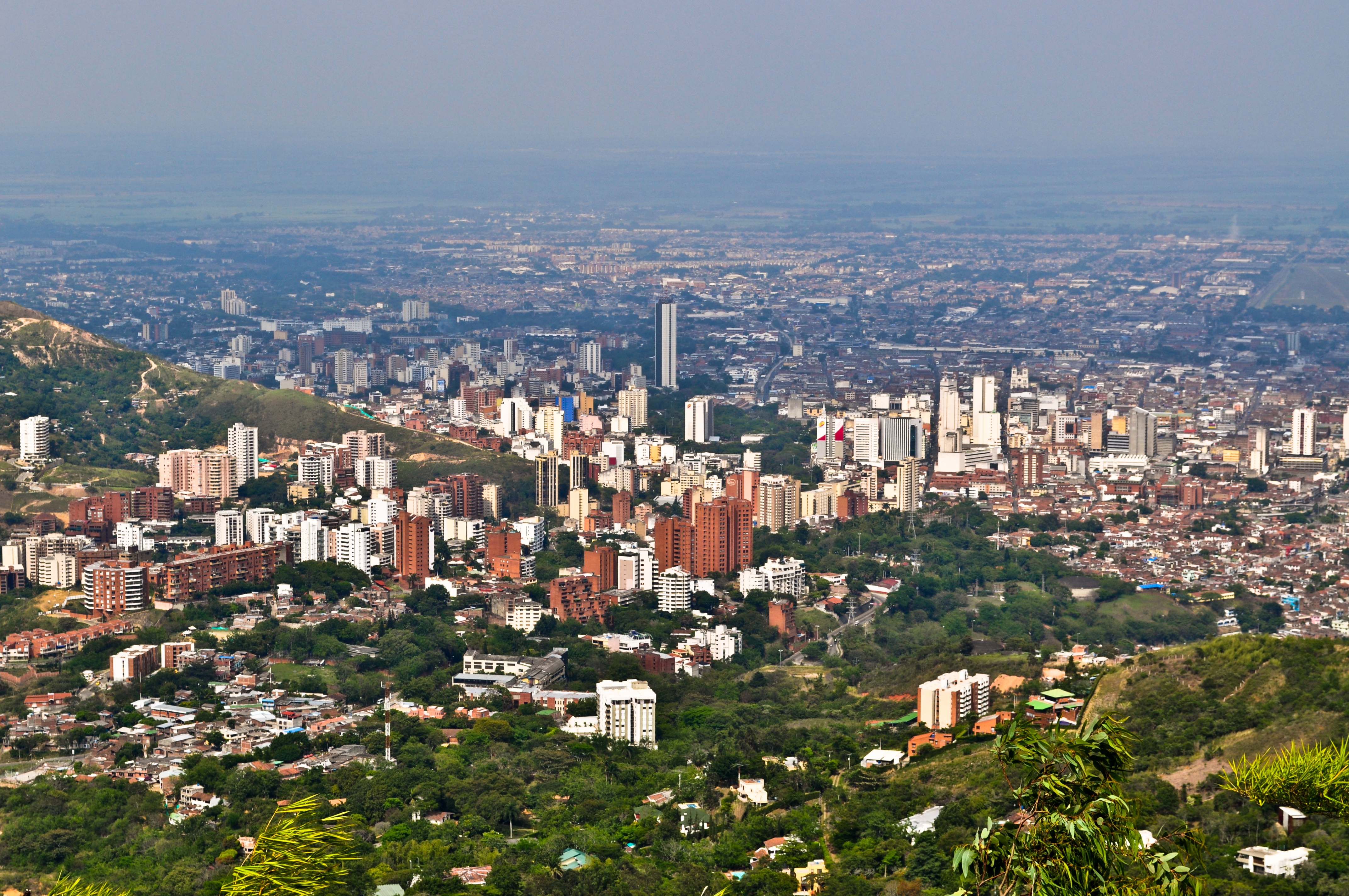
Cali
City in ColombiaWikipedia
329
MENTIONS
51
EPISODES
36
PODCASTS
Search complete. 329 mentions across 51 episodes found for "Cali".
Oct 31, 2026

Joe RotbartHOST
Where?
Melissa CastroGUEST
Cali.
Joe RotbartHOST
In Cali? Yes.
Joe RotbartHOST
The home of salsa?
Melissa CastroGUEST
Yes.
Joe RotbartHOST
So anyway,
Joe RotbartHOST
squirrel.
Joe RotbartHOST
Okay, so we were talking about you were born, okay, so you were born in Miami, your father is born in New York, you were raised in Cali.

speaker_21UNKNOWN
[ríe] Van Crazy.
speaker_21UNKNOWN
Colombia, Grupo Niche, Guayacán, Son de Cali, Producción Seca.
speaker_21UNKNOWN
Oye, se contagiaron.
speaker_21UNKNOWN
[ríe] Mark Anthony, te contagiaste.

Emir PabónGUEST
Sí, yo creo.
Emir PabónGUEST
Pues para que, pues goces, ¿no? De la música y de los grupos, ¿no? Y pues era un momento donde eran orquestas que, que los Mé-México los, los recibía mucho, o sea, los recibía demasiado bien, como Grupo Niche, ¿no? De, de Cali, Colombia.
Emir PabónGUEST
Entonces, yo me sentaba, me sentaba mi papá así en una sillita, yo todo culicagadito, todo mocosito, todo escuincle, al ladito de los músicos.
Emir PabónGUEST
La gente, la orquesta.

CinnyHOST
They help us judge whether the funding is dependable and whether the proposed work can proceed.
CinnyHOST
This week, the Cali Fund gives us a particularly stark case to examine.
CinnyHOST
The setting is Yerevan, Armenia, where governments are meeting for COP17, the 17th conference of the parties to the United Nations Convention on Biological Diversity.
CinnyHOST
The parties are the governments that have joined the treaty, whose purposes include conserving biodiversity and sharing the benefits from genetic resources fairly.
CinnyHOST
Back in Yerevan, Finance Day was earlier this week on October 26th.
CinnyHOST
It put the question of how to pay for nature protection directly before governments and financial institutions.
CinnyHOST
The Cali Fund takes its name from Cali, Colombia, where governments agreed to establish the facility in 2024.
CinnyHOST
Launched the following year, it seeks contributions from businesses benefiting commercially from nature's genetic information.

Yoninka CastilloGUEST
Y, y aceptó.
Yoninka CastilloGUEST
Y Karen tenía unas conferencias en Cali, en Medellín, en Bogotá, y en esa, en esa gira, pues le enseñó bastantes cosas a papá en, en una semana.
Yoninka CastilloGUEST
[chasquido de lengua] Entonces papá empezó a hacer los ejercicios [risas] y un día así, em, resulta que sí le llegó un mensaje telepático: "Hola Enrique, somos emisarios de las Pléyades".
Yoninka CastilloGUEST
Previo contacto con alguien de Adrom-- de Andrómeda, le habían dicho: "Enrique, em, vamos a, a transferirte esta te-- eh, comunicación telepática con seres de Pléyades, porque ellos son más cercanos a ustedes, a los humanos".

Aaron EggerGUEST
And so I think we had some sense going into it that we were going to find some regions that have been absolutely decimated.
Aaron EggerGUEST
Like Northern California has lost 95% of its bull kelp population.
Aaron EggerGUEST
Tasmania and Australia has lost 95% of its giant kelp population.
Aaron EggerGUEST
then we have kelp forests on the southern tip of south america that are basically as pristine as they were surveyed a hundred years ago or up in alaska where you've got sea otters and orcas intermingling amongst the kelp forest and they're in a really healthy condition and then you've got all the other stuff in between where there's still really vibrant beautiful ecosystems that support fisheries that support cultures that capture carbon that clean up the water but they're being degraded as time goes on and we're trying to essentially halt that as part of our process and then sort of think about how we can restore those damages that have been done.
21 MINS LATER
Aaron EggerGUEST
We're having some promising conversations and hopefully between the end of this event, the upcoming climate call, then perhaps our oceans conference next year in Canada.
Aaron EggerGUEST
we'll have some of our real global kelp champions.
Aaron EggerGUEST
Though I actually would be remiss if I didn't mention California because they pledged 800 hectares of restoration by 2030 at the launch of our report just a few days ago.
Aaron EggerGUEST
So that's the world's seventh largest economy putting their hand up and saying, we support our kelp forests.

Maya SchmidGUEST
It is, every time I go back to Colombia, it just feels, even though I'm very smiley and a very happy person in general, no matter what, I'm optimistic and positive, it just sparks something different in me when I'm in Colombia.
Maya SchmidGUEST
And when I talk to Colombians too, I kind of switch my Spanish language into Colombian, especially from Cali.
Maya SchmidGUEST
You know, it's very specific.
Maya SchmidGUEST
Even though the Colombians think I speak very Mexican, you know?

Sean WilliamsHOST
It's home to around a quarter of a million people, so it's pretty small, and it sits on Colombia's Caribbean coast, roughly equidistant between Santa Marta, where some of you may have been on holiday, and the Venezuelan oil-rich city of Maracaibo.
Sean WilliamsHOST
Just along the beach from Santa Marta is Barranquilla, which is Colombia's fourth largest city, behind Bogota, Medellin, and Cali, but it feels an is very different from those three places.
Sean WilliamsHOST
It would take almost a full day of driving, for example, to get from Bogota to Barranquilla.
Sean WilliamsHOST
So these Caribbean places have always felt politically distant from the Colombian state, but being the country's main maritime gateways into North America, Barranquilla and nearby Cartagena have been prime narco real estate ever since there was cocaine to transport out of Colombia.
Sean WilliamsHOST
The North Coast cartel gets cocaine from Colombia's jungle interior and in some cases produces it from coca paste in factories in Barranquilla itself.
Sean WilliamsHOST
It then smuggles the product to a variety of consumer bases in the U.S., including New York, Miami, Philadelphia, and Puerto Rico, using cargo ships, but also smaller, fast boats.
Sean WilliamsHOST
Part of Calico's genius, allegedly, is its use of sawdust, mustard, and cough medicine packing products.
Sean WilliamsHOST
to mask the smell of his product.

Richard McCollHOST
But this week we're discussing Colombia's inconsistent relationship with with the Middle East.
Richard McCollHOST
Next week, we go over to Cali, and we talk to Charlie Jones, a British artist, and we'll be talking about not only his work, how did he end up in Cali, and a foundation that he has started and is seeking support for, in which he teaches capoeira to children in eastern Cali.
Richard McCollHOST
So very interesting conversation there.
Richard McCollHOST
How does a boy from Naneaton in Warwickshire, in the Midlands, end up in Cali teaching capoeira and, well, working as an artist.
Richard McCollHOST
So a great conversation ahead for you next week.
Richard McCollHOST
But this week's with Daniel Quezada and Sergio Guzman after the Colombia briefing with Emily Hart.
17 MINS LATER
Richard McCollHOST
And I mean, when you come to food security, then therein comes the Galinsky family again, and their tentacles through all of this.
Richard McCollHOST
Perhaps, Sergio, you could give us a little bit of a background on the family's business and just the listeners.

Bobby CapucciHOST
Imagine in the old days, the Mexican cartels even thinking about picking up shop and moving to Colombia.
Bobby CapucciHOST
How do you think the Medellin cartel would have reacted? Or how about Pacho Herrera and the Gentleman of Cali? I'm sure they would have loved that, right? But the tide has turned and the Mexican cartels for sure are the dominant player when it comes to the narco game.
Bobby CapucciHOST
Sure, Colombia is producing the cocaine, but it's Mexico that's really overseeing what's going on.
Bobby CapucciHOST
On March 16th, elements of the Colombian National Police carried out the arrest of a couple of subjects who were identified as members of the Sinaloa Cartel, one of the main groups responsible for the production of fentanyl in Mexico, who worked for the faction of Los Chapitos, led by the sons of Joaquin El Chapo Guzman.
41 more episodes mention Cali.
Create an account to see the whole feed, search across every transcript, and follow the entities you care about.