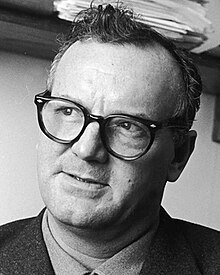
C. Wright Mills
American sociologist and professorWikipedia
9
MENTIONS
7
EPISODES
6
PODCASTS
Search complete. 9 mentions across 7 episodes found for "C. Wright Mills".
Oct 6, 2026

Jean-Philippe SapinskiGUEST
[laughs] Uh, some of them, some of them are actually.
Jean-Philippe SapinskiGUEST
Um, one of the, um, most important textbooks, and that's, um, uh, Sociology 101, uh, it's, uh, C. Wright Mills', uh, Sociological Imagination, uh, where, um, like all the undergrads in sociology get to read that.
Jean-Philippe SapinskiGUEST
Uh, and his message is, um, what the sociological imagination is, it's the capacity of individual people, uh, to make sense of the broad historical movements that they live through and understand where their personal troubles are coming from.
Jean-Philippe SapinskiGUEST
That they're not only because they're...

LionelHOST
Now, one theory is the power elite, and this is very interesting.
LionelHOST
There was a sociologist, C. Wright Mills.
LionelHOST
I love people who start off with an initial.
LionelHOST
J. Edgar Hoover.
LionelHOST
You got...
LionelHOST
I love that.
LionelHOST
C. Wright Mills.
LionelHOST
Mills argued that American power had essentially become concentrated among overlapping corporate and military and political elites, and that these people didn't necessarily meet secretly, you know, in a basement somewhere.
LionelHOST
And this is very interesting.
LionelHOST
There was a sociologist, C. Wright Mills.
LionelHOST
I love people who start off with an initial J. Edgar Hoover.
LionelHOST
You know what I mean? John Edgar Hoover.
LionelHOST
F. Murray Abraham.
LionelHOST
I love that.
LionelHOST
C. Wright Mills.
LionelHOST
Mills argued that American power... had essentially become concentrated among overlapping corporate and military and political elites.

Chris CutroneGUEST
And ultimately it can hook back up with capitalist politics.
Chris CutroneGUEST
You know, C. Wright Mills, the power elite, labor leaders, labor bureaucrats were part of the power elite and they came from the working class.
Chris CutroneGUEST
And, you know, for Christ's sake, the Soviet Union, you know, Nikita Khrushchev and I think Brezhnev too, but Gorbachev, they were all workers, right?
Douglas LainHOST
Who made it

John GreenHOST
But some people were concerned that the cookie cutter vision of the good life and the celebration of the middle class lifestyle was displacing other conceptions of citizenship.
John GreenHOST
Like the sociologist C. Wright Mills described a combination of military, corporate, and political leaders as a power elite whose control over government and the economy was such as to make democracy an afterthought.
John GreenHOST
In The Lonely Crowd, sociologist David Riesman criticized Americans for being conformist and lacking the rich inner life necessary to be truly independent.
John GreenHOST
And John Kenneth Galbraith questioned an affluent society that would pay for new cars and new missiles, but not for new schools.

speaker_0NARRATOR
For one thing, elite theory had pan-ideological appeal.
speaker_0NARRATOR
It claimed economic anti-statists, Vilfredo Pareto, and anti-oligarchic socialists, Robert Michels, alike, as well as conservative jurists like Gaetano Mosca and Vienna-trained economists like Joseph Schumpeter, progressive liberals like Dahl, and outright left-wing radicals like C. Wright Mills.
speaker_0NARRATOR
From their own ideological standpoints, each became reconciled to the idea that some elite presence would always play a role in politics.
speaker_0NARRATOR
The more conservative theorists rationalized elite rule by insisting that the tendency of wealth and power to concentrate in a few hands was natural and ineradicable.

Tejasvi NagarajaGUEST
And so that led to conflicts within the ranks of unions and the labor movement itself, as some who wanted to push back against this no-strike pledge did wage wildcat strikes in different locales and some larger strikes true like the coal miner strike of 1943 like some black workers wildcat strikes to defend themselves against white workers attacks and assert themselves and so it created a new role where some union presidents who had been insurgent leaders in the 1930s, became sort of more bureaucratic managers in the 1940s, or at least that tension.
Tejasvi NagarajaGUEST
Somebody who becomes one of the most famous sociologists coming out of the World War II years, C. Wright Mills, writes a book, The New Men of Power in the 40s, where he says, you know, these insurgent rebels are now sort of the managers of discontent.
Tejasvi NagarajaGUEST
The people who were stirring up strikes are now trying to suppress strikes as they sort of curry favor with democratic party leaders.
Tejasvi NagarajaGUEST
And so both the labor movement and the black civil rights movement get remarkable opportunities with the Franklin Roosevelt reform government and the World War II state because they need their labor as service members and defense workers.