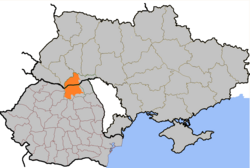
Bukovina
RegionWikipedia
57
MENTIONS
17
EPISODES
17
PODCASTS
Search complete. 57 mentions across 17 episodes found for "Bukovina".
Oct 11, 2026

Doina Anca CretuGUEST
For this particular chapter, I insisted in my answer on, on this idea of humanitarianism, because this is an example of how I thought about humanitarianism in these camps.
Doina Anca CretuGUEST
So I focus in this chapter on Jewish refugees from Galicia and Bukovina in particular, and these are people from the eastern part of the monarchy.
Doina Anca CretuGUEST
And in many ways, it is the quintessential example of what I call in the chapter, probably, I'm not sure if this is the greatest term, but I wanted to kind of make sense of things.
Doina Anca CretuGUEST
I call it a humanitarian ecosystem.
Doina Anca CretuGUEST
We see these refugees as objects of state assistance.
Doina Anca CretuGUEST
The state is the main caregiver here, but we also see the emergence of what I call maybe quasi-private committees, including Zionist committees, including committees focused only on people coming from Galicia and Bukovina, only on Ukrainians, for instance.
Doina Anca CretuGUEST
So we see different...
Doina Anca CretuGUEST
I call it quasi-private because the money would come from different sources, including in collaboration with the state.

Doina Anca CretuGUEST
For this particular chapter, I insisted in my answer on, on this idea of humanitarianism, because this is an example of how I thought about humanitarianism in these camps.
Doina Anca CretuGUEST
So I focus in this chapter on Jewish refugees from Galicia and Bukovina in particular, and these are people from the eastern part of the monarchy, and in many ways, it is the quintessential example of what I call in the chapter, probably, I'm not sure if this is the greatest term, but I wanted to kind of make sense of things.
Doina Anca CretuGUEST
I call it a humanitarian ecosystem.
Doina Anca CretuGUEST
We see these refugees as objects of state assistance.
Doina Anca CretuGUEST
The state is the main caregiver here, but we also see the emergence of what I call maybe quasi-private committees, including Zionist committees, including committees focused only on people coming from Galicia and Bukovina, only on Ukrainians, for instance.
Doina Anca CretuGUEST
So we see different, I call it quasi-private because the money would come from different sources, including in collaboration with the state.
Doina Anca CretuGUEST
But we also see forms of local mobilization or individuals involved in, in assisting refugees.

Lidia Zessin-JurekGUEST
focus in this chapter on Jewish
Doina Anca CretuGUEST
refugees from Galicia and Bukovina in particular.
Doina Anca CretuGUEST
And these are people from the eastern part of the monarchy.
Doina Anca CretuGUEST
And in many ways, it is the quintessential example of what I call in the chapter, probably, I'm not sure if this is the greatest term, but I wanted to kind of make sense of things.
Doina Anca CretuGUEST
I call it a humanitarian ecosystem.
Doina Anca CretuGUEST
We see these refugees as objects of state assistance.
Doina Anca CretuGUEST
The state is the main caregiver here, but we also see the emergence of what I call maybe quasi-private committees, including Zionist committees, including committees focused only on people coming from Galicia and Bukovina, only on Ukrainians, for instance.
Doina Anca CretuGUEST
So we see different, I call it quasi-private because the money would come from different sources, including in collaboration with the state.

Doina Anca CretuGUEST
For this particular chapter, I insist in my answer on, on this idea of humanitarianism because this is an example of how I thought about humanitarianism in these camps.
Doina Anca CretuGUEST
So I focus in this chapter on Jewish refugees from Galicia and Bukovina in particular, and these are people from the eastern part of the monarchy.
Doina Anca CretuGUEST
And in many ways, it is the quintessential example of what I call in the chapter, probably, I'm not sure if this is the greatest term, but I wanted to kind of make sense of things.
Doina Anca CretuGUEST
I call it a humanitarian ecosystem.
Doina Anca CretuGUEST
We see these refugees as objects of state assistance.
Doina Anca CretuGUEST
The state is the main caregiver here, but we also see the emergence of what I call maybe quasi-private committees, including Zionist committees, including committees focused only on people coming from Galicia and Bukovina, only on Ukrainians, for instance.
Doina Anca CretuGUEST
So we see different...
Doina Anca CretuGUEST
I call it quasi-private because the money would come from different sources, including in collaboration with the state.

Luke HamiltonNARRATOR
When, after the partition of Poland, East Galicia came to Austria, a political struggle arose between the Poles and the Ukrainians on the territory of the Austrian constitution, at the bottom of which was the idea of emancipation of the Ukrainian people from Polish hegemony.
Luke HamiltonNARRATOR
Although those in power in Austria delivered up the Ukrainians to the discretion of the Poles, the Ukrainians used the small fragments of liberty to make East Galicia and North Bukovina a national piedmont for the whole Ukrainian people, and, in spite of the Russian cordon, to cultivate the ideal community of interests with their brothers of Ukraine.
Luke HamiltonNARRATOR
Much more dangerous for the Ukrainians was the Russian unitarian theory, which was first upheld by the Russian Tsar Peter the Great.
Luke HamiltonNARRATOR
Under his rule, Ukraine lost her separate position and was incorporated into the Muscovite state of the Tsar.
37 MINS LATER
speaker_6NARRATOR
But it is only since the 17th century that this appellation was generally used, especially since the revolt of the whole Ukrainian people under the Hetman Kamilnitsky, a change of names which is not isolated in history, cf.
speaker_6NARRATOR
Romania, that formerly was called Moldavia and Wallachia respectively.
speaker_6NARRATOR
Only in the western parts of Ukraine, especially in Galicia, Bukovina, and in North Hungary, the original appellation of Ruthenae still remained in use for a long time, but had to give way to the common name of Ukrainians in the last decades before the war after the new rise of Ukrainian civilization.
speaker_6NARRATOR
The Russians wrongly claimed the foundation of the state of Kiev to themselves as the cradle of the Russian people.

George CoulourisSOUNDBITE_SPEAKER
[whimsical music plays]
speaker_0UNKNOWN
"Bukovina! Coach for Bukovina!" [horses galloping]
George CoulourisSOUNDBITE_SPEAKER
The road was rough, but still we seemed to fly over it with feverish haste.
George CoulourisSOUNDBITE_SPEAKER
When it grew dark, there seemed to be some excitement among the passengers.

Kerry AdamsNARRATOR
Russia holds the larger part, with some 28 million Ukrainians extending over an area of 850,000 square kilometers, and the Russian nationalists call that country Malorussia, or Little Russia, and the people Little Russians, when they do not call them by worse names.
Kerry AdamsNARRATOR
Austria-Hungary holds a much smaller number, some 3,500,000 in Galicia, 500,000 in Bukovina, and 700,000 in the Subcarpathian districts of Hungary.
Kerry AdamsNARRATOR
About 200,000 in Canada, as many again in USA, and 100,000 in South America are prospering, many of them making money for the cause of their country's independence.
Kerry AdamsNARRATOR
Geographically speaking, as you can see by the above map, the Ukraine is a unit, however, and that is the point that matters.
18 MINS LATER
AlistairNARRATOR
In Russia, Ukrainians are called Little Russians.
AlistairNARRATOR
In Austria, in Canada, and USA, and abroad generally, they are usually called Ruthenians, an old word derived from the Latin, and meaning Ukrainian Rus.
AlistairNARRATOR
When you hear speak of Ruthenians, let it be understood that people are referring only to those Ukrainians who inhabit the provinces of Galicia and Bukovina in Austria, and to those of Hungary.
AlistairNARRATOR
The press of all countries is gradually waking up to the importance of the Ukrainian question.
7 more episodes mention Bukovina.
Create an account to see the whole feed, search across every transcript, and follow the entities you care about.