Budget Control Act of 2011
10
MENTIONS
10
EPISODES
10
PODCASTS
Search complete. 10 mentions across 10 episodes found for "Budget Control Act of 2011".
Nov 6, 2026

Don SpielisHOST
The people expecting their money may have some thoughts about your process.
Don SpielisHOST
The confrontation ended in the Budget Control Act signed in August of 2011.
Don SpielisHOST
It provided a mechanism for increasing the debt limit and imposed caps on discretionary spending.
Don SpielisHOST
It also established a process for additional deficit reduction backed by automatic cuts if the required legislation failed to materialize.

Dagogo AltraideHOST
The US government has been looking at ways to cut spending over the decades.
Dagogo AltraideHOST
The Budget Control Act of 2011 was one attempt, but those caps were frequently overridden.
Dagogo AltraideHOST
So political will is needed.
Dagogo AltraideHOST
There's one other idea to fix the problem, and it's been floating around for a few years.

speaker_0HOST
The deal arrived at the last possible moment.
speaker_0HOST
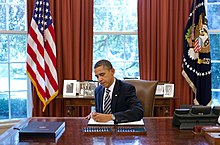
Barack Obama signed the Budget Control Act on the 2nd of August, the day of the Treasury's deadline.
speaker_0HOST
It raised the ceiling, capped spending, and created a supercommittee to find more savings.
speaker_0HOST
If it failed, automatic cuts called sequestration would kick in.

Mattie DupplerHOST
the baselines from which you are going to write the next budget bill.
Mattie DupplerHOST
And this same year in August is the debt limit fight that results in the Budget Control Act, which cut $2.1 trillion of spending.
Mattie DupplerHOST
Now, of course, some of those spending cuts never came to be.
Mattie DupplerHOST
But at the time, it was the most consequential spending reduction in the modern era.

Stephen MooreGUEST
terrible.
Stephen MooreGUEST
One of the worst things Republicans did was we negotiated, it was called the Budget Control Act, was that the thing? And that actually worked well.
Stephen MooreGUEST
We actually made some cuts sort of across the board.
Stephen MooreGUEST
I

Mark MontgomeryGUEST
Uh, there are years where we actually exceeded that.
Mark MontgomeryGUEST
Um, under, uh, what we did is something called the Budget Control Act in 2011 that went into effect in 2013, and it, we, during that time period of the Budget Control Act, over about six years, we took our defense spending from 4.8% to 3.3%.
Mark MontgomeryGUEST
A massive...
Mark MontgomeryGUEST
By the way, while there's inflation ticking up, and defense industrial base inflation's inflation on steroids, right? So while things are becoming more costly, we're actually reducing the actual, uh, uh, um, assets for the military, and this is while Russia is reloading- Getting more authoritarian under, under, uh, Pu- under, um, under Putin.

Chris NaghibiHOST
Markets spend all year in the waiting room and the election is the shot.
Chris NaghibiHOST
It might sting a little, but at least now you know what you're dealing with.
Chris NaghibiHOST
The other scenario here, which markets typically think about during this time, is the president's party almost always loses seats.
Chris NaghibiHOST
Since World War II, the average is about 25 or 26 House seats.

Mark MontgomeryGUEST
but they restrict defense spending so that they can get increases in non-defense discretionary spending.
Mark MontgomeryGUEST
Famously, the Budget Control Act from President Obama took us down from 4.8% spending to 3.3% spending over seven years.
Mark MontgomeryGUEST
That's why we have a munitions problem.
Mark MontgomeryGUEST
So I'll tell you, I'm very nervous.

Mark ByelichHOST
Statutory discretionary caps reimposing enforceable caps on non-defense and defense discretionary appropriations.
Mark ByelichHOST
Similar to the Budget Control Act model.
Mark ByelichHOST
However, discretionary outlays are already projected to drop near historical lows as a share of GDP.
Mark ByelichHOST
meaning this category cannot balance the budget alone.

Rebecca PattersonHOST
And it, and President Obama announced a deal on July 31st.
Rebecca PattersonHOST
The market was like, "Okay, maybe, maybe." The House passed the Budget Control Act on August 1st- The senate passed it on August 2nd, which was literally the X day that Geithner had i- identified.
Rebecca PattersonHOST
So t- when you said earlier, "We're gonna go to the wire, you're sure of that?" That's what that looks like.
Henrietta TreyzGUEST
Mm-hmm.