bubonic plague
DiseaseWikipedia
124
MENTIONS
23
EPISODES
22
PODCASTS
Search complete. 124 mentions across 23 episodes found for "bubonic plague".
Sep 30, 2026

Carter RoyGUEST
It was a single ship.
Carter RoyGUEST
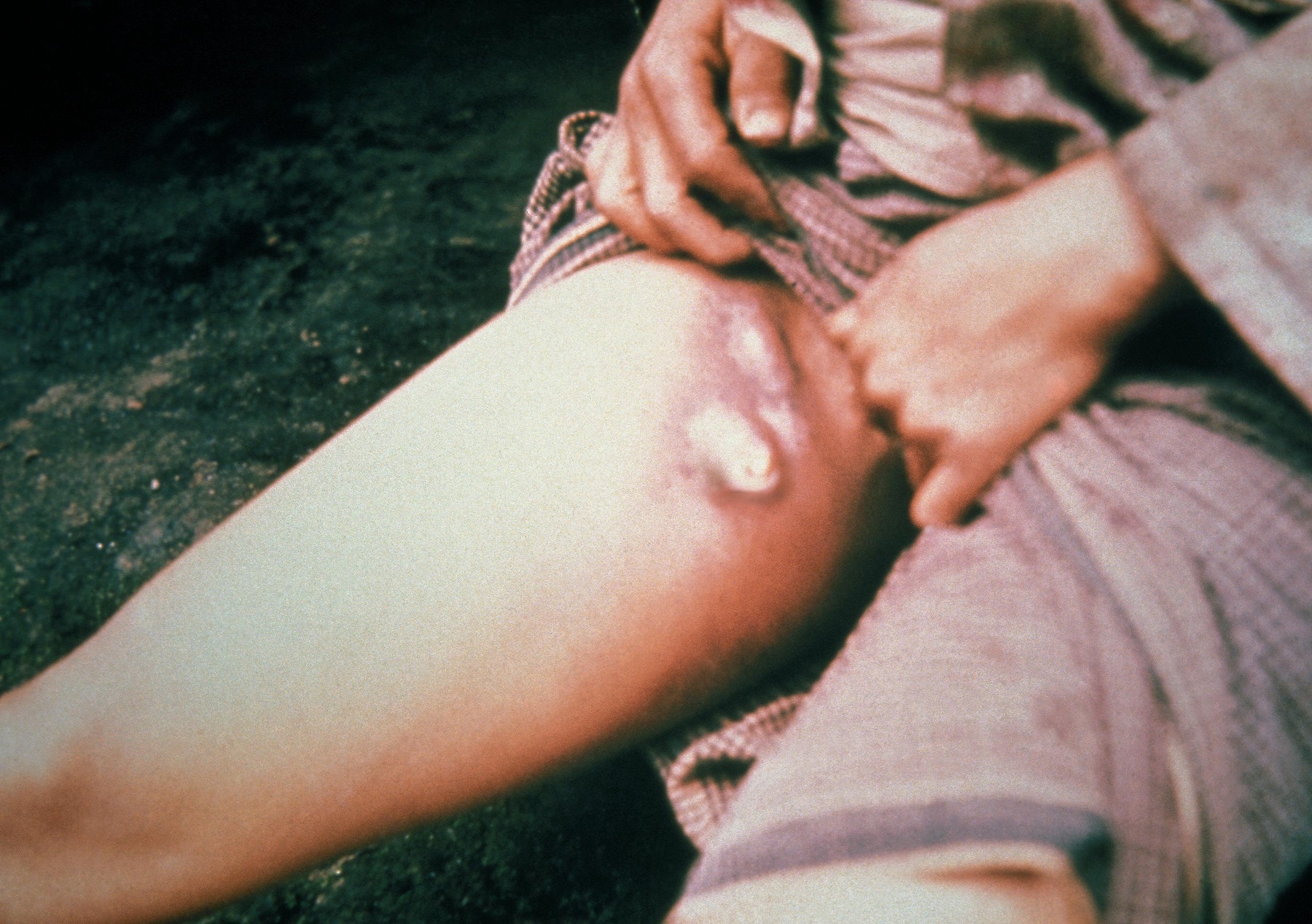
The plague was loose in Britain, and, uh, what it did to the body, the swellings were called buboes, which is where Bubonic Plague comes from.
Connor TomlinsonGUEST
Definitely.
Carter RoyGUEST
It's lumps in the armpit, neck, groin, swelling to the size of an egg, sometimes an apple, hard and black and agonizing.

Vanessa RichardsonADVERTISER
Follow Celebrity Ghost Stories, available now on Apple Podcasts, Spotify, or wherever you listen to podcasts.
Connor TomlinsonHOST
Do you know which year up to 60% of Europe died from a plague that started with a catapult, spread through flea bites, and the best doctor in the room said, have you got a chicken? That year was 1348, also known as the year of the Black Death or Bubonic Plague.
Connor TomlinsonHOST
That
Carter RoyHOST
sounds as bad as it gets.
Carter RoyHOST
It was a single ship.
Carter RoyHOST
The plague was loose in Britain.
Carter RoyHOST
And what it did to the body, the swellings were called buboes, which is where bubonic plague comes from.
Carter RoyHOST
Definitely.

speaker_7ADVERTISER
Available on CBC Gem.
Connor TomlinsonHOST
Do you know which year up to 60% of Europe died from a plague that started with a catapult, spread through flea bites, and the best doctor in the room said, have you got a chicken? That year was 1348, also known as the year of the Black Death or Bubonic Plague.
Carter RoyHOST
That sounds as bad as it gets.
Carter RoyHOST
So to understand 1348, you have to understand Europe was already on its knees.
Carter RoyHOST
It was a single ship.
Carter RoyHOST
The plague was loose in Britain.
Carter RoyHOST
And what it did to the body, the swellings were called buboes, which is where bubonic plague comes from.
Carter RoyHOST
Definitely.

Carter RoyHOST
The plague was loose in Britain.
Carter RoyHOST
And what it did to the body, the swellings were called buboes, which is where bubonic plague comes from.
Carter RoyHOST
Definitely.
Carter RoyHOST
It's lumps in the armpit, neck, groin, swelling to the size of an egg.

Carter RoyHOST
And then it went on toward Paris.
Carter RoyHOST
800 dead a day by the year's end and it crosses the channel there's a single ship the plague was loose in britain and uh what it did to the body the swellings were called bubos which is where bubonic plague comes from definitely it's lumps in the armpit neck groin swelling to the size of an egg sometimes an apple hard and black and agonizing.
Carter RoyHOST
Yeah.
Carter RoyHOST
Can you imagine like dark splotches over the skin, fever, vomiting, smell, uh, people were dead within three days.

Brent WallaceHOST
Which is so cool.
Brent WallaceHOST
One of the articles I came across, which maybe we can talk about this now, but you ended up diagnosing bubonic plague.
Brent WallaceHOST
Yes.
Brent WallaceHOST
In Manhattan, which is, I don't know if it's odd, right? But it's just something that you just associate with like way, way back when.
Ron PrimasGUEST
And when I go to examine her groin, she goes, I got this lump on my groin.
Ron PrimasGUEST
I go to examine it and it has what's is described as a classic bubo.
Ron PrimasGUEST
It's a lymph node that has a classic appearance to it, right? And that's where they get the word bubonic plague, right? And so I go ahead and I'm like, look, I don't...
Ron PrimasGUEST
And this was...

Ruth GoldingNARRATOR
The germs of pneumonia, of erysipelas, of boils and abscesses, of Malta fever, of cerebrospinal meningitis, and some others are micrococci, all having distinct specific characters by which they can be readily recognized by an expert bacteriologist.
Ruth GoldingNARRATOR
The germs of typhoid fever, of tuberculosis, of influenza, of diphtheria, of dysentery, of bubonic plague, of tetanus, and of several infectious diseases of the lower animals, hog cholera, swine plague, anthrax, glanders, are bacilli.
Ruth GoldingNARRATOR
As in the case of the pathogenic micrococci, these all have specific characters by which they can be differentiated one from the other, independently of the fact that each gives rise to a specific infectious disease.
Ruth GoldingNARRATOR
The germs of Asiatic cholera and of relapsing fever are spirilla.
Ruth GoldingNARRATOR
When under the influence of heat and moisture, they reproduce the minute microscopic plant, bacillus, or spirillum, and multiplication by binary division again occurs.
Ruth GoldingNARRATOR
It is fortunate that comparatively few pathogenic bacteria produce spores.
Ruth GoldingNARRATOR
For if this were the case, it would be a much more difficult task to arrest the progress of an epidemic of such diseases as typhoid fever, bubonic plague, cholera, or diphtheria.
Ruth GoldingNARRATOR
The only infectious disease of man in which spores have been demonstrated to be formed is tetanus or lockjaw.

Zak PaineHOST
Seedorf.
Zak PaineHOST
Yeah, Black Plague came from the fleas on the rats.
Zak PaineHOST
So, long story short, if you can afford not to, don't go to Los Angeles.
Zak PaineHOST
I went to Los Angeles a couple of times when I was younger.

AvailleNARRATOR
The germs of pneumonia, of erysipelas, of boils and abscesses, of malta fever, of cerebrospinal meningitis, and some others are micrococci, all having distinct specific characters by which they can be readily recognized by an expert bacteriologist.
AvailleNARRATOR
The germs of typhoid fever, of tuberculosis, of influenza, of diphtheria, of dysentery, of bubonic plague, of tetanus, and of several infectious diseases of the lower animals, hog cholera, swine plague, anthrax, glanders, are bacilli.
AvailleNARRATOR
As in the case of the pathogenic micrococci, these all have specific characters by which they can be differentiated one from the other, independently of the fact that each gives rise to a specific infectious disease.
AvailleNARRATOR
The germs of Asiatic cholera and of relapsing fever are spirilla.
AvailleNARRATOR
They also resist desiccation and may retain their vitality for months or years until circumstances are favorable for their development.
AvailleNARRATOR
When under the influence of heat and moisture, they reproduce the minute microscopic plant, bacillus or spirillum, and multiplication by binary division again occurs.
AvailleNARRATOR
It is fortunate that comparatively few pathogenic bacteria produce spores, for if this were the case, it would be a much more difficult task to arrest the progress of an epidemic of such diseases as typhoid fever, bubonic plague, cholera, or diphtheria.
AvailleNARRATOR
The only infectious disease of man in which spores have been demonstrated to be formed is tetanus or lockjaw.

Nate MarshallHOST
This g- you know, like he, we were down 3-1.
Luke ToumaHOST
He looks like, he looks like a guy like in a, like on the ground in a village during the Bubonic Plague where they're like, "Bring out your dead."
Nate MarshallHOST
Yeah.
Nate MarshallHOST
Yeah.
13 more episodes mention bubonic plague.
Create an account to see the whole feed, search across every transcript, and follow the entities you care about.