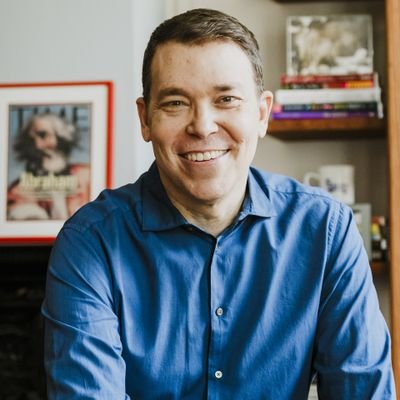
Bruce Feiler
American writerWikipedia
29
MENTIONS
12
EPISODES
12
PODCASTS
Search complete. 29 mentions across 12 episodes found for "Bruce Feiler".
Sep 22, 2026

Chip ConleyGUEST
But I think for me, what I was going through is I was going through...
Chip ConleyGUEST
You, you c- when you start getting what, uh, Bruce Feiler, the author, calls a life quake, where you're having multiple transitions at once, um, it can feel like a pile-up, like a, like a, a crash on, on, on a freeway.
Chip ConleyGUEST
You can sort of feel like you're, you're, you're doomed and so- you're doing something wrong.
Chip ConleyGUEST
There's a lot of emotions a- a- attached to this where you can feel like something...
14 MINS LATER
Molly GrahamHOST
Like, how do I shorten it? [laughs]
Chip ConleyGUEST
Well, yeah, l- learning TQ, t- uh, transitional intelligence allows you to move through this process more rapidly.
Chip ConleyGUEST
Bruce Feiler in his book Life Is In The Transitions, and he's a faculty member at MEA, um, he says that the average transition takes three to five years.
Molly GrahamHOST
Okay.

Elise HuHOST
School, then career, family, retirement, each stage arriving right on schedule.
Elise HuHOST
But writer Bruce Feiler spent years discovering that almost no one actually lives that way.
Elise HuHOST
After traveling around the US and collecting hundreds of life stories from people in all 50 states, he kept finding the same thing.
Elise HuHOST
Our lives are full of disruptions, and every so often, one of them cracks everything wide open.
20 MINS LATER
Bruce FeilerSOUNDBITE_SPEAKER
They turn our nightmares into dreams.
Bruce FeilerSOUNDBITE_SPEAKER
Thank you.
Elise HuHOST
[audience applauding] [bright music] That was Bruce Feiler at TEDxIE Madrid in Spain in 2021.
Elise HuHOST
This talk was originally published in June 2022.

Matthew McInnisHOST
They're reaching for something to say, fast, because silence feels unbearable, and the easiest thing to reach for is whatever sounds encouraging.
Matthew McInnisHOST
Bruce Feiler ran into the same wall a year earlier from a different diagnosis.
Matthew McInnisHOST
In 2008, Feiler, then in his 40s with three-year-old twin daughters, was diagnosed with a rare form of bone cancer.
Matthew McInnisHOST
He noticed the exact same pattern Pogrebin later wrote about.

John O'LearyHOST
Live with your soul on fire.
John O'LearyHOST
Well, if you enjoyed today's episode with Linda, you'll love the conversation with bestselling author Bruce Feiler.
John O'LearyHOST
Bruce reminded us in our conversation that life rarely unfolds in a straight line, and he shares instead how we can navigate periods of transition, rewrite our stories, and find meaning in whatever chapter comes next.
John O'LearyHOST
You can check out that episode with Bruce way back at episode 596.

Jean ChatzkyGUEST
I didn't make up the term.
Jean ChatzkyGUEST
So first of all, let me give credit to Bruce Feiler, who is a writer who I believe coined the term lifequakes.
Jean ChatzkyGUEST
Lifequakes are those things that happen to adults on an average of four times per year that just shake you.
Jean ChatzkyGUEST
They can be good things and they can be bad things.

Chip ConleyHOST
It's a really important part of life.
Chip ConleyHOST
And Bruce Feiler, who's teaching September 13th through the 17th at the Santa Fe campus, his book on ritual, his newest book on ritual, is really important because the thing that ritual allows you to do is to let go of something so something new can come in.
Chip ConleyHOST
What are you ready to let go of? We do something called the Great Midlife Edit in all of our five-day and four-day workshops at MEA that helps with this.
Chip ConleyHOST
And I just want to finish with one last thing.

Guy KawasakiHOST
This is Guy Kawasaki.
Guy KawasakiHOST
This is the Remarkable People podcast, and we have Bruce Feiler on today.
Guy KawasakiHOST
And my God, you've been a New York Times bestseller seven times? Seven times.
Guy KawasakiHOST
Wow.
Guy KawasakiHOST
So you gotta define ritual, and you say it's an act, and it's shared, and it's unnecessary.
Guy KawasakiHOST
Those three things wouldn't pop into my mind for a definition of a ritual.
Guy KawasakiHOST
So what is a ritual in the eyes of Bruce Feiler?
Bruce FeilerGUEST
So I'll answer the question directly, and then I'll back up and tell you how I came to be asking this question.

Tom MatharHOST
In fairness, I don't think we always assume that life is going well, but I take her point.
Tom MatharHOST
And so we decided that today we're doing the other side of it, setbacks, transitions we didn't choose, the big disruptions in life that my first guest, Bruce Feiler, calls lifequakes.
Tom MatharHOST
Bruce is a bestselling author who studies life's transitions and how to deal with them.
Tom MatharHOST
And later I'm joined by Romany Yuill, once Britain's youngest financial planner, on how she helps people through the hardest turns in their lives and how she recently came through a big one of her own.
Tom MatharHOST
[ethereal music] [upbeat music] And back up out of the rabbit hole and breathing in the good, clean Scottish air.
Tom MatharHOST
This is the Money Mindshift Podcast: Your Life, Your Money, in that order.
Tom MatharHOST
I'm now connected to New York, to Brooklyn, to Bruce Feiler.
Tom MatharHOST
Bruce is one of America's most thoughtful voices on contemporary life.

Craig CooneyHOST
But some transitions are bigger than others in terms of the impact they have on you and on those around you and your future.
Craig CooneyHOST
There was a book came out a few years ago called Life is in the Transitions by a guy called Bruce Feiler.
Craig CooneyHOST
Not sure if he's a believer, but he says this.
Craig CooneyHOST
In your adult life, you will go through three to five major transitions.
Craig CooneyHOST
It's not just struggling to find a new job.
Craig CooneyHOST
It's finding yourself in a completely different place and space that you never thought you would be in.
Craig CooneyHOST
And those lifequakes, Bruce Feiler says, take three months to three years.
Craig CooneyHOST
but sometimes five years.

Steven PinkerGUEST
It's deniability beyond a reasonable doubt, uh, a much higher standard.
Shankar VedantamHOST
[Instrumental music] A few years ago, the writer Bruce Feiler was given an assignment by a magazine.
Shankar VedantamHOST
Uh, he was to try and bribe a series of maitre d's at popular New York City restaurants in order to get a good table.
Shankar VedantamHOST
What did he imagine would happen when he did this, Steve?
Steven PinkerGUEST
If you're tendering an outright quid pro quo bribe, you're kind of treating them like a, a, you know, l- like a sales clerk, l- like a transactional partner, undermining that aura of authority that they have.
Steven PinkerGUEST
And, uh, doing it in cases where you don't know whether they will agree leads to that emotion of on, on the part of the speaker, it would be awkwardness.
Steven PinkerGUEST
On the part of the recipient of the bribe, it would be outrage, at least in the imagination of the writer.
Steven PinkerGUEST
And even in the case w- where it did succeed, which, which it did in every time, it may not have succeeded had he tendered the bribe in, uh, as a naked quid pro quo.
2 more episodes mention Bruce Feiler.
Create an account to see the whole feed, search across every transcript, and follow the entities you care about.