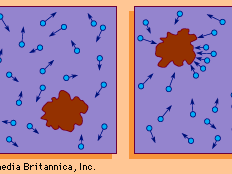
Brownian motion
25
MENTIONS
9
EPISODES
9
PODCASTS
Search complete. 25 mentions across 9 episodes found for "Brownian motion".
Nov 6, 2026

Adam SafronHOST
Is this like with respect to motor control or in the animal literature? So for instance, you pointed out how the pre-play literature, which we interpret in that way, actually it's not physically plausible that what's going on there would be a simulation.
Adam SafronHOST
It's like a kind of a... like a Brownian mixture of, but not like coherent simulation.
John W. KrakauerGUEST
Yeah, I think you're right.
John W. KrakauerGUEST
Replay absolutely has been the battleground for this notion, right? So you had the notion of forward models in tunnels, motor control, and then replay, and, you know, Lauren Frank, David Foster, lots of people doing work in these areas.

Mathieu RosenbaumGUEST
So first, again, I insist on that.
Mathieu RosenbaumGUEST
If you do something non-rough, as a dynamic driven by Brownian motion, you know that Brownian motion has a time scaling in square root of t. Brownian motion scales at square root of t over time, whereas the fractional Brownian motion scales at t to the power h.
Mathieu RosenbaumGUEST
And it scales at times the power h, and you know h is very small for us.
Mathieu RosenbaumGUEST
So that's exactly why we can take very long timescales, because t to the power h, when h is very close to zero, it's almost non...

Erik WinfreeGUEST
think they're fascinating questions when you get to entropy, enthalpy, the physics of computation.
Erik WinfreeGUEST
That was actually one of my, shall we say, motivating reasons to get excited about uh, DNA computing was that prior to that, I had been reading Charles Bennett and Margolis and, uh, uh, Toffoli and, you know, the thermodynamics of computation, not quantum, but, um, just the sort of Brownian version thereof, how much energy does it take to compute? Right.
Erik WinfreeGUEST
And I, I thought that those were fascinating ideas to the extent that I understood them.
Erik WinfreeGUEST
Um, But I think with DNA systems, there are a lot of very concrete ways of looking at those questions.

Tengyu MaHOST
So...
Tengyu MaHOST
Let me see whether I should give the, so in some sense, if you think about the Brownian motion, so it's like, how many have heard of Brownian motion or something like this? OK, great.
Tengyu MaHOST
Oh, that's fantastic.
Tengyu MaHOST
So I think if you have a one-dimensional case and you're just adding some noise each time, something like this.
Tengyu MaHOST
So when you have a continuous time, then how do you write this forward process? What you do is you write something like this.
Tengyu MaHOST
You say d x t is something like you have a deterministic drift dt plus this Gaussian noise.
Tengyu MaHOST
So this is the so-called Brownian motion.
Tengyu MaHOST
And this is the variance, which is kind of like that beta, the beta t, or square root beta t. Oh, sorry, gt is the square root beta t, yes.

speaker_2HOST
And the text points out something that feels almost like a cheat code for probability.
speaker_2HOST
Every single Levy process in existence, whether it's the smooth wandering of Brownian motion or the jagged jumping arrival of a Poisson process, can be completely characterized by just three parameters.
speaker_2HOST
The characteristic triplet.
speaker_3GUEST
Drift, variance, and the jump measure.
16 MINS LATER
speaker_2HOST
Which perfectly sets the stage for the climax of the text, chapter six and chapter seven.
speaker_2HOST
We're going to take everything we've built, martingales, Markov properties, continuous time, and push it to the absolute limit.
speaker_2HOST
We enter the world of the Wiener process or Brownian motion.
speaker_3GUEST
This is the most famous stochastic process in existence.

Michael LevinGUEST
Those are the three pieces.
Michael DubrovskyHOST
You know, there's these famous, I think Einstein did some of this and maybe others, like where you look at Brownian motion.
Michael DubrovskyHOST
And then based on just watching the dynamics of Brownian motion, you can actually infer quite rigorously a lot of things about atoms, even though you've never seen the atoms, right? Using statistical mechanics and so on.
Michael DubrovskyHOST
Is there something similar where, let's say you take this, I mean, just to take the same example you gave, you take this cell that's migrating through the tail, you know, to get to become a finger or whatever, this like grafted tail on the lizard.
Michael DubrovskyHOST
Is there a way to take that, just watch that happening and then extract some fundamental truth about, let's say, there must be at least seven layers of hierarchy in here, you know, for it to be able to like do this at this pace, right? Or whatever, like navigate this many, you know, have this many arguments within 24 hours, right? Or whatever.

Dave FarinaHOST
In 1905, while working as a patent clerk in Switzerland, he published three seminal papers that revolutionized physics.
Dave FarinaHOST
These were about Brownian motion, special relativity, which we will get to later, and the photoelectric effect.
Dave FarinaHOST
The last of these, just like Planck's work, also made use of quantization, which cemented the concept as more than just a fluke.
Dave FarinaHOST
The photoelectric effect has to do with the way light is able to eject an electron from a piece of metal.

Joe PardavilaHOST
Yeah.
Jae Woo KimGUEST
And, uh, in, in the, in your ro- even in your room, all the, the, uh, molecule are doing Brownian motion, right? They are moving this way, and one is this way, and the other one is this way, this way, and like, right? It's a random, like a motion.
Jae Woo KimGUEST
But if you have a very good like a, something like a, some, they can move the molecule in one direction-
Joe PardavilaHOST
Yeah
Joe PardavilaHOST
But you guys were able to do both.
Jae Woo KimGUEST
Yeah.
Jae Woo KimGUEST
The, the, uh, uh, going back to the Brownian motion again.
Joe PardavilaHOST
Yeah.

Rhona MahonyGUEST
I'd have to come in at some time and then hopefully lost.
Rhona MahonyGUEST
And when I got here, but yeah, all of us, we're like Brownian particles, but it is that sense for human life.
Rhona MahonyGUEST
And you never quite know what's obviously, we don't know what's around the corner.
Rhona MahonyGUEST
We're not absolutely sure how we got here.