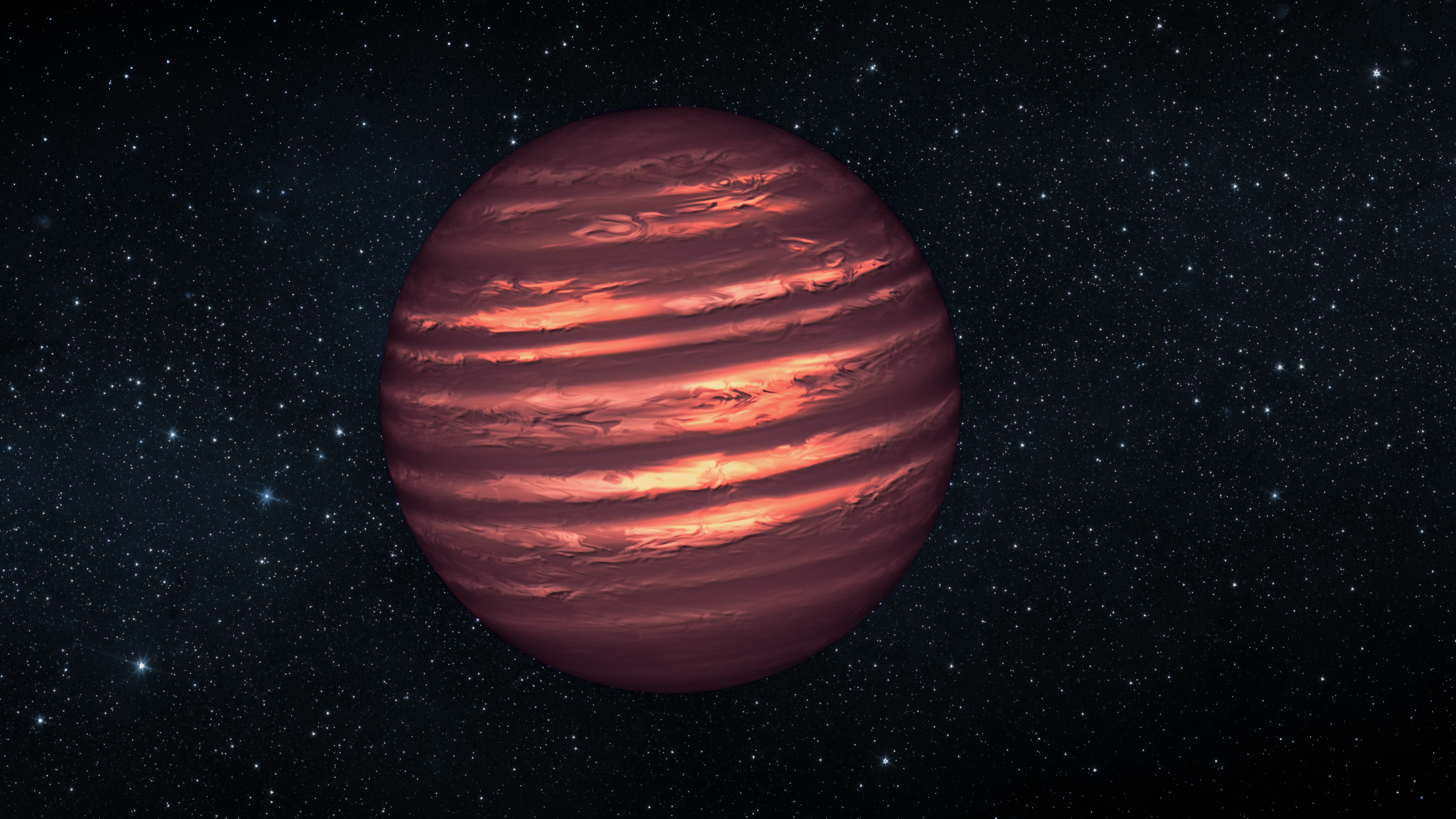
Brown dwarf
18
MENTIONS
6
EPISODES
5
PODCASTS
Search complete. 18 mentions across 6 episodes found for "Brown dwarf".
Sep 26, 2026

Sarah RugheimerGUEST
Yes.
David CooperHOST
How is a brown dwarf different from our sun? And why is it such a useful place for studying distant weather?
Sarah RugheimerGUEST
So, yeah, brown dwarfs are what we term substellar objects.
Sarah RugheimerGUEST
That means they're not quite a star.
Sarah RugheimerGUEST
They're also not quite a planet.
Sarah RugheimerGUEST
Whereas a planet doesn't glow of its own energy from fusion.
Sarah RugheimerGUEST
It can glow from heat and whatnot, but it's not fusing together atoms to produce light.
Sarah RugheimerGUEST
And these brown dwarfs fit right in the middle.
Sarah RugheimerGUEST
Yes.
David CooperHOST
How is a brown dwarf different from our sun? And why is it such a useful place for studying distant weather?
Sarah RugheimerGUEST
So yeah, brown dwarfs are what we term substellar objects.
Sarah RugheimerGUEST
That means they're not quite a star.
Sarah RugheimerGUEST
They're also not quite a planet.
Sarah RugheimerGUEST
Whereas a planet doesn't glow of its own energy from fusion.
Sarah RugheimerGUEST
It can glow from heat and whatnot, but it's not fusing together atoms to produce light.
Sarah RugheimerGUEST
And these brown dwarfs fit right in the middle.

AveryHOST
20 light-years away, there's an object called SIMP 0136.
AveryHOST
It's a brown dwarf, too heavy to be a planet in the ordinary sense, too light to have ever ignited hydrogen fusion and become a star.
AveryHOST
It sits right on the boundary, and it has no host star at all.
AveryHOST
It's just drifting.

Merla SchraderGUEST
Outside of our solar system, but well within our galaxy.
Merla SchraderGUEST
So what we call brown dwarfs are worlds that formed like stars, but they don't shine like stars because they're not massive enough, so they cool down throughout their lifetimes, and they develop atmospheres very similar to planets that we have in our solar system.
Merla SchraderGUEST
And they're easier to study than exoplanets because they're not hidden beside these bright stars, 'cause planets form around stars, but these brown dwarfs don't.
Merla SchraderGUEST
So we use them as laboratories to study weather on these worlds outside of our solar system and understand what drives the weather and what shapes their atmospheres.
Chris SmithHOST
How are you looking at them? How do you spot them?
Merla SchraderGUEST
So we can see this change in light, and we can try and relate it back to the weather on these objects.
Chris SmithHOST
How do you know that's actually the "weather" in inverted commas that you're seeing? That tho- those changes in light and dark and, and therefore the density of what's around the object, how do you know that's the weather and clouds and so on?
Merla SchraderGUEST
So like I mentioned, brown dwarfs form like stars, so they create all of this mass, and then that leaves them kind of in this hot state where they emit energy, and this energy is emitted in the form of heat.

PeterHOST
And massive storms rage across its atmosphere, and deep inside, its core is still glowing red from the heat of its formation.
PeterHOST
And because it's so young, only a few million years old, it's still radiating leftover heat, almost like a failed star that never cooled down.
PeterHOST
But gas giants and stars are separated by one critical line, mass.
PeterHOST
If an object reaches about 13 times the mass of Jupiter, the pressure in its core becomes strong enough to trigger nuclear fusion, and it officially becomes a brown dwarf star.
PeterHOST
No more fuel, no more growth.
PeterHOST
So now it's kind of just stuck, just drifting through space, glowing faintly in infrared, too big to be a planet, too small to be a star.
PeterHOST
That's what scientists call a sub-brown dwarf, or more dramatically, a failed star.
PeterHOST
And if you could somehow fly into it, you'd sink through thick, crushing gas, deeper and deeper as pressure builds to unimaginable levels.