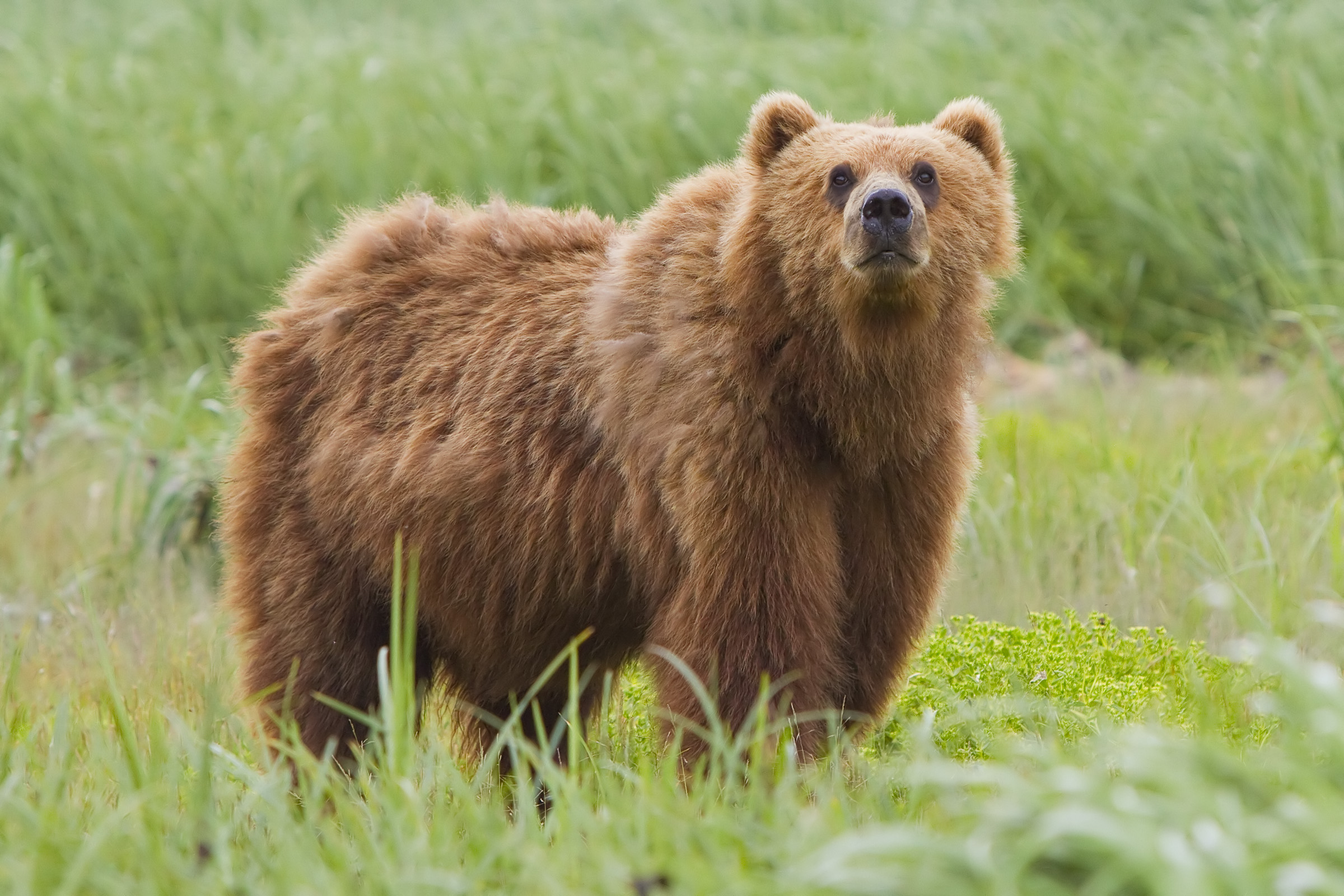
Brown bear
AnimalWikipedia
82
MENTIONS
13
EPISODES
12
PODCASTS
Search complete. 82 mentions across 13 episodes found for "Brown bear".
Nov 21, 2026

speaker_1ADVERTISER
visit crown coins.com sign up in seconds enter code crown and get a free lucky wheel bonus you may win up to 10 000 sweeps coins crown coins.com that's c-r-o-w-n coins.com no purchase needed code valid for new users only void were prohibited by law 18 plus terms and conditions apply crown
Johnny MacHOST
And good news, if you're a brown bear, for most of the 20th century, you guys were declining in numbers there in northern Spain.
Johnny MacHOST
By the early years of this century, there were perhaps as few as 140 brown bears left in the mountains up there.
Johnny MacHOST
While the brown bears are rebounding, there are now around 370...
Johnny MacHOST
The bears now roam across five regions.
Johnny MacHOST
Their range covers more than 6,500 square miles.

Brad SchwartzHOST
Admiralty Island is part of the Tongass National Forest, the largest temperate rainforest in the world.
Brad SchwartzHOST
This island, known to the Tlingit people as Kootznuwu, meaning Fortress of the Bears, is home to one of the densest populations of brown bears in North America.
Brad SchwartzHOST
The island spans nearly 1,700 square miles, and there's approximately one bear for every single square mile.
Brad SchwartzHOST
Its remote location, just 15 miles southwest of Juneau, makes it a prime spot for hunters seeking deer, but it's also a hotbed for bear activity.

Ivan PhillipsenHOST
This evolutionary scenario seems to be an interesting parallel with what happened to some bears.
Ivan PhillipsenHOST
The brown bear, Ursus arctos, aka the grizzly bear, is the sister species of the polar bear.
Ivan PhillipsenHOST
These two species split sometime in the last million years.
Ivan PhillipsenHOST
Their common ancestor was probably brown and looked more like the modern brown-slash-grizzly bear.

speaker_0NARRATOR
in the air.
speaker_1NARRATOR
Welcome to this quiet look at brown bears and their search for autumn food.
speaker_1NARRATOR
You can settle in and rest as we follow how they find enough to eat before winter.
speaker_1NARRATOR
Across their range, the menu changes with the landscape.
speaker_1NARRATOR
How does a bear choose where to forage when berries ripen, nuts fall, and salmon return to some rivers? For brown bears, the search for autumn food involves three recurring tasks.
speaker_1NARRATOR
Finding a productive place, gathering what it offers, and moving on when feeding becomes less rewarding.
speaker_1NARRATOR
A bear may spend a long stretch within one patch of vegetation, advancing only a few steps between mouthfuls.
speaker_1NARRATOR
What appears, from a distance, to be a continuous expanse of habitat contains many smaller differences.

Michael SchwartzHOST
What's the most aggressive
Dean WeingartenGUEST
bear? Grizzly bears, brown, what we call Ursus arctos, which is the worldwide...
Dean WeingartenGUEST
species of various names.
Dean WeingartenGUEST
You call them European brown bear.

Chris MorganGUEST
And I've done a lot of that through bears.
Chris MorganGUEST
So grizzlies have been my thing since moving to the States, but I've still got this real European sensibility about the bears that are over there and the parallel journey that my mind takes thinking about European bears, comparing them to brown bears and grizzly bears and in North America and polar bears and American black bears.
Chris MorganGUEST
And yeah, there's lots of parallels there where I think about both places, Europe and here.
Rae Wynn-GrantHOST
So if we think about bears in general, the eight species of bears all together, you know, what makes them such like a powerful umbrella, say, for conservation? Why could we focus on bears for conservation in general?
Rae Wynn-GrantHOST
I mean, they're a huge part of society and culture.
Rae Wynn-GrantHOST
And yeah, I think for that reason, they get attention.
Rae Wynn-GrantHOST
Can you be the expert that tells us about brown bears? Like to a person who's kind of like, I'm not really sure I know what's the difference between this bear and this bear.
Rae Wynn-GrantHOST
How would you describe a brown bear?

Drake ColleyHOST
Puck drops at 9 p.m.
Drake ColleyHOST
The young Memphis Grizzlies, would you call them Cubs? You wouldn't call – the Grizzly Bears, they're Cubs, right?
Slim DPANELIST
I don't know.
Slim DPANELIST
The Grizzly Bears are – Are they
Drake ColleyHOST
Grizzlets or are they Cubs?
Slim DPANELIST
I think they're
Drake ColleyHOST
Cubs.
Slim DPANELIST
You got the Grizzly Bears.

Michelle SmallmonHOST
Okay, I just looked up the speeds.
Michelle SmallmonHOST
Grizzly Bears and Brown Bears, 35 to 40 miles an hour.
Evan CohenHOST
That's rolling.
Michelle SmallmonHOST
Jaguar, 50.

Rob ChaneySOUNDBITE_SPEAKER
A grizzly bear is a brown bear.
Rob ChaneySOUNDBITE_SPEAKER
And if we're talking about bears defined by color, then things get really complicated because black bears are brown bears or cinnamon bears or as an old ranger once told me, whatever bottle of Miss Clairol they got out of some hiker's backpack.
Rob ChaneySOUNDBITE_SPEAKER
But what we're really talking about is two species of bears that are common to North America, Ursus arctos and Ursus americanus.
Rob ChaneySOUNDBITE_SPEAKER
Ursus arctos is what we call the grizzly bear in the lower 48 states.
Rob ChaneySOUNDBITE_SPEAKER
If you get up into Canada and Alaska, that same species of bear is known as the brown bear.
Rob ChaneySOUNDBITE_SPEAKER
And if you get all around the rest of the Northern hemisphere across Russia, Japan, Finland, Scandinavia, Northern Canada, that's all referred to as the brown bear.
speaker_0NARRATOR
Jogging through the turn in the trail, near the brush patch, a huge brown form suddenly appeared a few feet in front of her.
speaker_0NARRATOR
She instantly knew it was a giant brown bear, and that she was in a dangerous and frightening situation.
speaker_0NARRATOR
Before she could react, the bear reacted, pivoting toward her rapidly, mouth open and paws reaching toward her.
speaker_0NARRATOR
Welcome back to Scary Bear Attacks.
speaker_0NARRATOR
in the state of alaska along the wolverine bowl trail accessible from the prospect heights trailhead located within chugach state park near anchorage brown bears have been hurriedly searching for food This vast recreational expanse borders the state's largest metropolitan center, featuring dramatic mountain topography that ascends rapidly from sea-level coastal lowlands to rugged alpine peaks exceeding 5,000 feet.
speaker_0NARRATOR
The terrain surrounding the low trails is characterized by dense river valleys, rolling foothills, and rocky glacial contours, making it one of the most accessible and heavily utilized wilderness corridors in the entire region for hiking, trail running, mountain biking, and backcountry skiing.
speaker_0NARRATOR
the climate of this subarctic coastal zone is defined by relatively cool summers and long snow-covered winters with maritime weather patterns rolling in from cook inlet to provide abundant rainfall and lush summer growth within the mixed woodland canopy three prominent tree species define the landscape they are white spruce paper birch and quaking aspen the understory beneath those tall timbers are filled with hardy plant life including three prevalent shrub varieties being devil's club with its wide leaves and sharp spikes sitka alder that forms dense thickets in red osier dogwood among moist drainages during the late summer months the ground is covered with fruit bearing vegetation including three widespread berry bushes being highbush cranberry wild red raspberry and abundant oval leaf blueberry This rich habitat supports a diverse array of northern wildlife, where coastal brown bears, black bears, moose, lynx, porcupines, and snowshoe hares regularly share the forested corridors with outdoor enthusiasts.
speaker_0NARRATOR
The residents of the neighborhood have been seeing brown bears around their streets every once in a while, and they don't have to look far to find evidence that big bears are fairly comfortable there.
3 more episodes mention Brown bear.
Create an account to see the whole feed, search across every transcript, and follow the entities you care about.