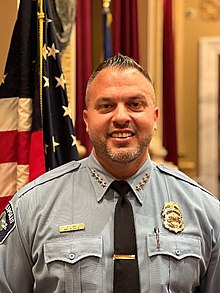
Brian O'Hara
American law enforcer
23
APPEARANCES
17
PODCASTS
Oct 21, 2026


Tom MuellerHOST
And I'm, I'm curious from an internal organization perspective, did you have, you know, a public information officer? Did you have some comms team support? And, um, Is there anything you do differently, you know, relating to pushing external communications or, you know, what did you do with that?

Brian O'HaraGUEST
Well, I had, um, very consistently, I had a Sergeant that was with me, um, who was assigned as a public information officer and had some other folks that were kind of in and out along the way.
Brian O'HaraGUEST
He's very, very thoughtful, very, very smart and accurate with getting information, and he is willing to work around the clock.
Brian O'HaraGUEST
The amount of requests that that organization gets, the amount of attention on it is very much overwhelming.
18 MINS LATER
Brian O'HaraGUEST
think for the situation that it was in, you sort of had to get back to the very, very basics of what the mission is.
Brian O'HaraGUEST
Everything that they had dedicated, in some cases, 30 plus years of their professional lives, all of the stories that they had been telling themselves about public service and how good the organization was, overnight that was completely taken away.
Brian O'HaraGUEST
And as you mentioned, they had just lived through a majority of the city council vowing to disband the agency.
10 MINS LATER


Brian O'HaraGUEST
Um, your black wood grain, and I think that'll look, it'll, it will look really slick.
Brian O'HaraGUEST
Um, but aluminum's incredibly, incredibly versatile in that you can powder coat it, you can sublimate it, you can anodize it.
Brian O'HaraGUEST
Uh, and then what we do is, um, we take a, a specialized film that has the pattern or the ink on it, and we vacuum wrap the aluminum profile, suck the air out of it.
Brian O'HaraGUEST
Uh, and, uh, the, it's a heat transfer process, so we transfer the, the wood grain from that film into the powder-coated layer, and then we strip off the film, and you've got a permanent wood grain finish on the aluminum profile then.
11 MINS LATER

Brian O'HaraGUEST
Well, one thing I think is very interesting is I had several seasoned officers who have a lot of respect for.
Brian O'HaraGUEST
They are among the best people I have ever known in this profession, and they've been serving Minneapolis for decades, and the city's lucky to still have them.
Brian O'HaraGUEST
They told me the same thing that many people in the community told me, which is that of the hundreds of officers that left, a lot of them needed to go.
Brian O'HaraGUEST
So that's the impression both that a lot of the officers had as well as people in the community who were affected by policing.
29 MINS LATER

Antonio OftelieHOST
What was it like being chief and having to work with community to navigate all of this, to protect community members, but also to do the lawful work around what you needed to do for the federal government, et cetera? What was the dynamic there?


Jeff AsherHOST
I know this is difficult to to ask you to summarize from all of these different perspectives, but how are consent decrees? Is there a general consensus about them in sort of the police leadership ranks? How was the consent decree seen in within the Newark Police Department? And then also as Minneapolis sort of starts to head towards that, how is it seen there?
Brian O'HaraGUEST
I would say in policing in general, especially over the last couple of years, the pendulum has swung to the right.
Brian O'HaraGUEST
There's a very strong feeling that consent decrees are exorbitantly expensive and not worth it, and that monitors are out more for padding their pockets than they actually are about implementing change.
Brian O'HaraGUEST
So I think that's a broad generalization, but I think that's generally true in policing circles where the country is today.
Brian O'HaraGUEST
I don't think that was necessarily the case a few years ago, but obviously, you know, politics and things kind of influence that.
Brian O'HaraGUEST
I would say in Newark, I just remember the massive amount of resistance when I was first appointed to try and implement the thing.
Brian O'HaraGUEST
Anytime we were trying to implement any kind of changes, right? I remember we implemented a requirement that you had to fill out a form and report whenever an officer pointed their firearm at someone.
8 MINS LATER


Lyndsey SmithHOST
Um, it is a question though, right? Of, you know, that harvest efficiency part that, you know, when, I guess, is something like FH, FH twenty herbicide, um, how does it make it more efficient? When does a, a farmer choose to use it?
Brian O'HaraGUEST
Um, you know, twenty twenty-six started out pretty rocky across Western Canada.
Brian O'HaraGUEST
Uh, some areas were too wet, so, um, getting the crop in was tough and, and germination was really, really uneven.
Brian O'HaraGUEST
Um, so trying to increase your efficiency at harvest time, this is the perfect year.
Lyndsey SmithHOST
Now, but it, it also brings up the question of, you mentioned, like green stems or late flushing weeds, um, how do we know when the crop is ready for a pass like this? Because there are some considerations.

Lyndsey SmithHOST
Um, it is a question though, right? Of, you know, that harvest efficiency part that, you know, when, I guess, is something like FH, FH twenty herbicide, uh, how does it make it more efficient? When does a, a farmer choose to use it?
Brian O'HaraGUEST
Um, you know, twenty twenty-six started out pretty rocky across Western Canada.
Brian O'HaraGUEST
Uh, some areas were too wet, so, um, getting the crop in was tough and, and germination was really, really uneven.
Brian O'HaraGUEST
Um, so trying to increase your efficiency at harvest time, this is the perfect year.
Lyndsey SmithHOST
Um, how do we know when the crop is ready for a pass like this? Because there are some considerations.
Lyndsey SmithHOST
Uh, why Precision Pack? What does it offer that maybe some other options don't?
Brian O'HaraGUEST
So Precision Pack PF150 herbicide gives you everything you're looking for in a, in a fall herbicide.
Brian O'HaraGUEST
It's gonna control your key winter annual weeds like narrowleaf hawksbeard, flaxweed, uh, volunteer canola, just to name a few, while also providing extended residual control into the spring.
Brian O'HaraGUEST
Um, we are seeing less rain typically in the spring, so trying to get some of these residual products activated is, is tougher.
Brian O'HaraGUEST
So by putting them down in the fall, you know, we're gonna get snow at some point during the, the winter, so this will make sure that they're, they're ready to go for when the weeds do come in the spring.
Brian O'HaraGUEST
And, you know, by having that burndown, uh, product mixed in with it, you're, you're getting both immediate burndown and season-long control just from one application.


Brian O'HaraGUEST
My wife, Naomi, she suggested that we just do some raised beds for our back garden down in Garry Bow or down in East Cork.
Brian O'HaraGUEST
And yeah, we really just wanted to start growing some of our own organic produce.
Brian O'HaraGUEST
I suppose drawing a little bit of inspiration from from Ballymanoo, who's just up the road.
Brian O'HaraGUEST
She suggested that we just do some raised beds for our back garden down in Garry Bow or down in East Cork.
Brian O'HaraGUEST
And yeah, we really just wanted to start growing some of our own organic produce.


Margaret HooverHOST
Is there any benefit by comparison to your operation versus federal law enforcement officers? And again, I'm not trying to gloat over the lack of trust that these federal officers have incurred with your city, but has by basis of comparison, the efforts that you've made to improve the department stood out by contrast in a positive way?
Brian O'HaraGUEST
And I think that's not necessarily because of what has happened during the surge.
Brian O'HaraGUEST
It's because of the renewed training that we have, the emphasis on de-escalation, the outreach to people in the community to be a part of our new policies, our new training, our reform process, to engage with community stakeholders.
Brian O'HaraGUEST
I think we had earned some trust before this, but I'm not naive enough to think that there aren't plenty of people that still perceive us in a different way.
Brian O'HaraGUEST
The biggest challenge that we've had throughout all of this is we can't please everybody.
Margaret HooverHOST
So what do those experiences teach you about the relationship between federal and state governments when it comes to law enforcement?

speaker_16UNKNOWN
Can you please outline all measures within your power to ensure safe passage of children to and from school each day?
Brian O'HaraGUEST
Um, you know, I, I recognize the concerns that are raised with the child from your district.
Brian O'HaraGUEST
I can tell you, in the Minneapolis Police Department, our number one priority whenever we are involved in an arrest situation where there is a, a dependent child present, that we wanna do everything possible to ensure that we are not traumatizing that child, and doing everything we can to maintain their health and welfare.
Brian O'HaraGUEST
Um, you know, this is a real issue for us, not just because of what's been going on.
Brian O'HaraGUEST
We're only a few months removed, where we had a gunman shoot over 100 rounds at children play- praying in a church the first week of school.
Brian O'HaraGUEST
So we've been doing everything possible to try and remain in contact, uh, with schools and houses of worship in our city, and to try and ensure that people do feel safe.
speaker_17UNKNOWN
So do you speak on that, please?


Margaret BrennanHOST
But from what you have seen in the public space and heard from federal officials, is there any evidence that you know of that Preti was assaulting the federal officers as the Border Patrol chief claims?
Brian O'HaraGUEST
Well, I've seen the videos just as thousands of people around the country have, and the videos speak for themselves.
Brian O'HaraGUEST
It appears that he was present exercising his First Amendment rights to record law enforcement activity and also exercising his Second Amendment rights to lawfully be armed in a public space in the city.
Brian O'HaraGUEST
And I think the greater issue is even if there is an investigation that ultimately proves that at the time of the shooting it was legally justified.
Margaret BrennanHOST
What do you mean it doesn't matter at this point? You mean the situation on the ground is already, the impression is left?
Brian O'HaraGUEST
Well, I've said for several weeks, uh, that my concern has been that a tragedy would happen, and that's already passed.
Brian O'HaraGUEST
Uh, and as time continues to go on now, it appears that the pressure just continues to build, and my concern is that we are heading to a point, uh, that can be very explosive.
Brian O'HaraGUEST
Um, you know, the, these instances that you mentioned, obviously with the five-year-old child, and I don't know what their training or policies are, but at least best practices in local policing is, number one, the safety of the child that young, and number two, trying to do everything that you can so as to not re-traumatize or traumatize that child.
Brian O'HaraGUEST
The other, uh, arrest that you mentioned with the woman in her car, um, obviously to anyone who watches it, uh, is clearly just a lot of confusion and chaos on the scene.

Anderson CooperHOST
I mean, it sounds like you would need to talk to those officers about their tactics.


Jen WhiteHOST
The investigation is ongoing, but in your professional opinion, was the ICE officer following best practices in terms of tactics, tactics, and training in that interaction?
Brian O'HaraGUEST
I tell you, um, i- in the most basic sense, conducting traffic stops, the training has been, for many years in this country, that the best practices are to, number one, never put yourself in the path of a vehicle, and number two, to try and de-escalate as, as much as possible.
Brian O'HaraGUEST
And there's very simple things that an officer does to de-escalate situations in traffic stops, and that is introducing yourself, telling the individual your name, your rank, the agency that you work for, explaining why you are conducting the stop, answering any questions that the person asks.
Brian O'HaraGUEST
It's not clear to me if the agents that were there understood what each other was trying to accomplish there.
Jen WhiteHOST
The Trump administration says they're breaking the law, but from your perspective, as the chief of police, do these individuals have the right to do what they're doing?

Brian O'HaraGUEST
We just, we quickly ran in to back the crowd out to get a path for the police car to come out.
Brian O'HaraGUEST
And I think because we did that, I think that may have contributed to emboldening an already unruly crowd, and we very quickly called in well over 200 additional police officers, and then ultimately we wound up placing, uh, 30 people under arrest for unlawful assembly a- and releasing them.
Brian O'HaraGUEST
It's been very taxing for all members of the police department, and this is a situation that has been building up for several weeks.
Brian O'HaraGUEST
A lot of the disturbances and chaos that's been happening here as a result of the manner in which some federal enforcement activity is happening is requiring our officers to respond and step into situations and try and restore the peace, where oftentimes they themselves then become the target of people's frustration.

Michael BarbaroHOST
So in, in, in your mind, was this planned deployment, specifically of ICE agents that the president asked for, was it warranted?
Brian O'HaraGUEST
I mean, there have been immigration enforcement conducted in Minnesota as long as there has been ICE.
Brian O'HaraGUEST
I think the problem is what gets lost in this is it's not necessarily about which laws are being enforced.


Jake TapperHOST
Chief, what's your reaction to the Homeland Security Secretary's claims and also just the assertion that the officer feared for his life?
Brian O'HaraGUEST
Well, I got to tell you, as a matter of policy and training amongst professional police departments for many, many years in this country, We have an obligation to ensure, particularly during traffic stops, that our officers are doing everything possible so that we don't unnecessarily put their lives in jeopardy, so that our officers are not unnecessarily creating a risk of imminent threat of death or serious bodily injury, either to themselves or others.
Brian O'HaraGUEST
And that means that they have to employ sound tactics and must be proportional in what they do.
Brian O'HaraGUEST
Law enforcement officers cannot control the actions of other people and that's why a full and thorough investigation in every case where there is a use of force is necessary.
Brian O'HaraGUEST
I will be the first one to stand up for my cops when a situation happens And it is abundantly clear that there's no indication to to think that an officer could have possibly done anything else.
Brian O'HaraGUEST
I'll be the first one to stand up and say my cop put their lives on the line and they did what they have to do.
Brian O'HaraGUEST
Uh, I still have just the same basic information that I had earlier today, um, and, you know, ear- earlier yesterday, I guess it is at this point.
Brian O'HaraGUEST
Um, you know, I, I, I think, uh, I just, I just spoke on the phone, uh, with the Portland police chief.
Brian O'HaraGUEST
Um, you know, the day before this happened, I had said, as I had said repeatedly, um, that these are...


Pamela BrownHOST
From what you have seen in these videos, do you believe the use of deadly force was warranted?
Brian O'HaraGUEST
Well, I think that is a question that ultimately must be answered through a thorough and complete investigation.
Brian O'HaraGUEST
And that's why I think we owe it not just to the deceased and her family, but also to the larger community to ensure that number one, we maintained that scene yesterday so that it could be processed and that we can allow a full investigation to follow the evidence to all of its logical conclusion.
Brian O'HaraGUEST
That being said, in law enforcement, professionally, it is very concerning when we have officers that are placed into situations which may result in the use of deadly force.
Brian O'HaraGUEST
And we must ensure that our officers are doing everything possible to avoid placing officers' lives in jeopardy unnecessarily and trying to de-escalate whenever possible.
Brian O'HaraGUEST
Well, I am not aware of that specific incident and I cannot speculate, but what I can tell you, at least through our policy, our training here in Minneapolis, our number one priority is the preservation of life.

Brian O'HaraGUEST
So we've had a few thousand protesters that we believe remain in the city in at least three different locations.
Brian O'HaraGUEST
We have canceled days off for all of our police officers and recalled personnel and have asked for mutual aid from the Minnesota State Patrol and Hennepin County Sheriff's Office.
Brian O'HaraGUEST
You know, our officers responded very quickly and did everything they could to deescalate the situation.
Brian O'HaraGUEST
And they have performed I'm very proud of how they have performed, very heroically.
Brian O'HaraGUEST
But I think the issue remains going forward that whenever our officers have to be injected into this type of situation, we will see what happened in some cases today, and that's they then become the point of people's frustration and vitriol over what has happened.

Kaitlan CollinsHOST
Is that the same information you have? And what can you tell us about those?
Brian O'HaraGUEST
I don't have any specific information on any other vehicle accidents in the city.

Brian O'HaraGUEST
Well, um, you know, unfortunately, the reality of conducting law enforcement, uh, is every time our police officers leave the station and go out into the street, there is risk, uh, that something tragic can happen.
Brian O'HaraGUEST
Um, and we know, uh, very clearly as we, I have been saying for several weeks, is there is a very heightened risk, uh, when activity is being conducted, enforcement activity is being conducted on the street when, uh, you know, situations are very tense and things are very emotionally charged.
Brian O'HaraGUEST
Um-And so, that's why I just think it's very important, uh, that we ensure that an investigation occur transparenc- transparently.
Brian O'HaraGUEST
I think we owe that, uh, to the deceased person and their family, uh, as well as to the community who clearly, um, you know, have been, uh, very concerned and there's just been a lot of questions.
Brian O'HaraGUEST
Uh, not so much specifically about, um, whether or not federal law enforcement, uh, federal laws are enforced, but more specifically, how that enforcement is being conducted.

Geoff BennettHOST
What- what's the plan for how you intend to handle protests and demonstrations, uh, in the days ahead?
Brian O'HaraGUEST
Well, our officers have been doing an incredible job day and night around the clock, and it's been heightened for the last several weeks.


Brian O'HaraGUEST
Um, and I know it has been, uh, very alarming to a lot of people in the community.
10:26
Brian O'Hara, would you respond to that? Has ICE been helping or hindering your officers in trying to keep your city safe?
Pamela BrownHOST
So from what you know about the tactics, because we've seen, you know, the immigration tactics in other cities, from what you know, what's your take on them, the way that the immigration enforcement is taking place?
Brian O'HaraGUEST
I have been in the community each of the last several days around the Somali community and the lake street corridor which is kind of hub of immigrant activity in the city and people are scared american citizens have literally shown me their passport to say that they're carrying it they've expressed fear for their children who were born in the u.s you know just afraid that they might get uh you know mistaken uh for someone who's not here legally um and it's just uh you know it is uh It's tough as a human being to hear these concerns that are so just terrorized people, really.
Pamela BrownHOST
So tell me about that, what that's been like for those Somali migrants who are here legally, who are police officers in this position.