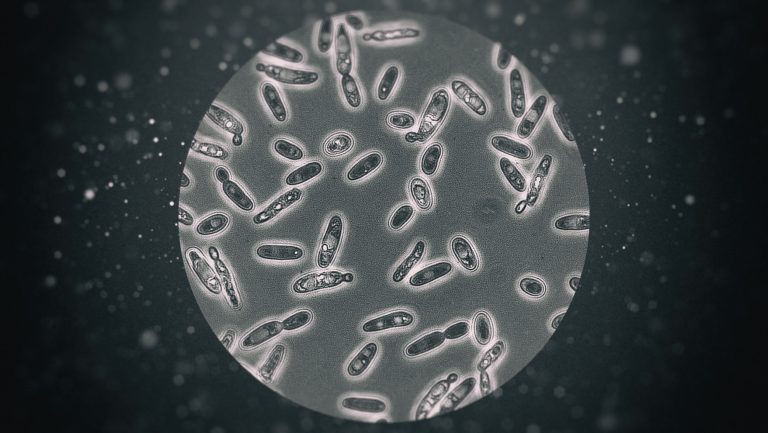
Brettanomyces
FungiWikipedia
25
MENTIONS
8
EPISODES
7
PODCASTS
Search complete. 25 mentions across 8 episodes found for "Brettanomyces".
Aug 26, 2026

Elizabeth SchneiderHOST
However, they can cause problems because yeasts still like sugars.
Elizabeth SchneiderHOST
And even though the Saccharomyces won't eat these sugars, Brettanomyces is happy to snack upon them, and there's certain strains of bacteria that will eat them, and that's going to cause flaws in the wine.
Elizabeth SchneiderHOST
So usually it's not a problem, but just important to know that there are some unfermentable sugars that sound like Scientology names in wine.
Elizabeth SchneiderHOST
Wine making, I've already touched on the yeast, but I want to address specifically how to make wine sweet by wine making.

Keith BeaversHOST
We're gonna talk about the history of yeast in wine.
Keith BeaversHOST
We're gonna talk about the history of Brettanomyces.
Keith BeaversHOST
We're gonna talk about how yeast and Brettanomyces were identified, how they were used, and what happened to them in modern wine culture.
Keith BeaversHOST
We're also gonna start talking about Roundup and, and all these things that are happening in vineyards or not.
Keith BeaversHOST
We're gonna talk about data and science, and we're gonna try to understand exactly what is going on and cut through all sort of the internet noise.

Natalie MacLeanHOST
If you missed episode one from last week, go back and take a listen after you finish this one.
Natalie MacLeanHOST
By the end of our conversation, you'll also discover why swirling changes the personality of some wines, how to use personal memories when describing wine, why wine professionals are so obsessed with high-acid wines, when Brettanomyces adds character to wine versus when it becomes a flaw, whether decanting champagne can actually improve it, why lifelong Chardonnay skeptics should give the grape another chance, when pairing red wine with fish actually works, and why you should drink outside your comfort zone rather than stick to familiar grapes.
Natalie MacLeanHOST
[upbeat music] Do you have a thirst to learn about wine? Do you love stories about wonderfully obsessive people, hauntingly beautiful places, and amusingly awkward social situations? Well, that's the blend here on the Unreserved Wine Talk podcast.
Natalie MacLeanHOST
I'm your host, Natalie MacLean, and each week I share with you unfiltered conversations with celebrities in the wine world, as well as confessions from my own tipsy journey as I write my third book on this subject.
21 MINS LATER
Natalie MacLeanHOST
Yeah.
Natalie MacLeanHOST
Yeah.
Natalie MacLeanHOST
And Brettanomyces-
Maryse ChevriereGUEST
Yeah

Richard PreissHOST
... you know those ones, right? HBC 1019 Dulceta.
Richard PreissHOST
That's a, that, that's one where it's like, actually, [laughs] this is, like, the ultimate hop for Brettanomyces.
Richard PreissHOST
Um, it can play super, super well, um, just because these hops have a lot of interesting, you know, uh, flavor compounds that can then be transformed by, you know, the yeast and/or bacteria that you have in a, in a mixed culture.
Richard PreissHOST
So, you know, don't, uh, don't think, you know, as a brewer that you, you need to only use this, you know, the hot new hop in a hazy IPA.
6 MINS LATER
Richard PreissHOST
Like, hops do have these fatty acid compounds, um, and adjacent ones.
Richard PreissHOST
You know, um, I don't think it's, in the case of hops, it's not, like, just lactones, but that's a, my understanding is that that's a big driver there.
Richard PreissHOST
And, uh, when we get yeast in the mix, well, what yeast can do, different types of yeast, you know, both saison yeast as well as, uh, Brettanomyces tend to be both, you know, very, very good at biotransformations, turning, you know, one aroma compound into another or making esters that kind of enhance other compounds.
Richard PreissHOST
Um, that's part of what's going on, right? Um, is this all understood, especially when it comes to lactones? Absolutely not.

Joanne LoveHOST
So they're putting it in the Belgian specialty ale category because there just isn't anything else quite like it.
Joanne LoveHOST
It combines Belgian pale ale, English style dry hopping, Trappist brewing tradition, and Brettanomyces maturation.
Joanne LoveHOST
It's all over the shop, but it tastes amazing because of it.
Tori PowellHOST
Tastes nice.
13 MINS LATER
Joanne LoveHOST
Brett can come back.
Joanne LoveHOST
Um, we, we keep saying Brett.
Joanne LoveHOST
That is a shortening of Brettanomyces.
Joanne LoveHOST
So this is a, um, a wild yeast, and it can, like, you know, that can make changes to the beer that aren't as controllable as other things, so I, I think that adds to it as well.

Isaac WinterGUEST
I loved the, the idea of sour beer, blending different casts together.
Isaac WinterGUEST
Um, and so my, my master's thesis project was on Brettanomyces, which is a wild yeast that a lot of sour beer brewers use, and how you can use computers to model the fermentation.
Isaac WinterGUEST
And so one of the, one of the problems that we, we see with Brettanomyces is it's, it's sort of a fickle yeast.
Isaac WinterGUEST
It's, it's either slow or unpredictable in its fermentation speed.
Isaac WinterGUEST
And so if you're trying to commercialize a beer and do it repeatedly, um, the idea was this model would help you to, to make sure you're on track so you could intervene if you needed to.

ZinaHOST
So technically, Brett is spoilage yeast, and this is where people talk, is this interesting-
ReneeHOST
Brettanomyces.
ReneeHOST
Yeah
ZinaHOST
... or is this disgusting? So Brettanomyces, or Brett.
ZinaHOST
So some people like the funk to it.
ZinaHOST
I am not that person.
Averie SwansonGUEST
Yeah.
Richard PreissHOST
And, like, I didn't clock at first the, like, oh, no, it's pineapple because there's Brettanomyces in there.
Averie SwansonGUEST
Yes.
Richard PreissHOST
And, like, that would...