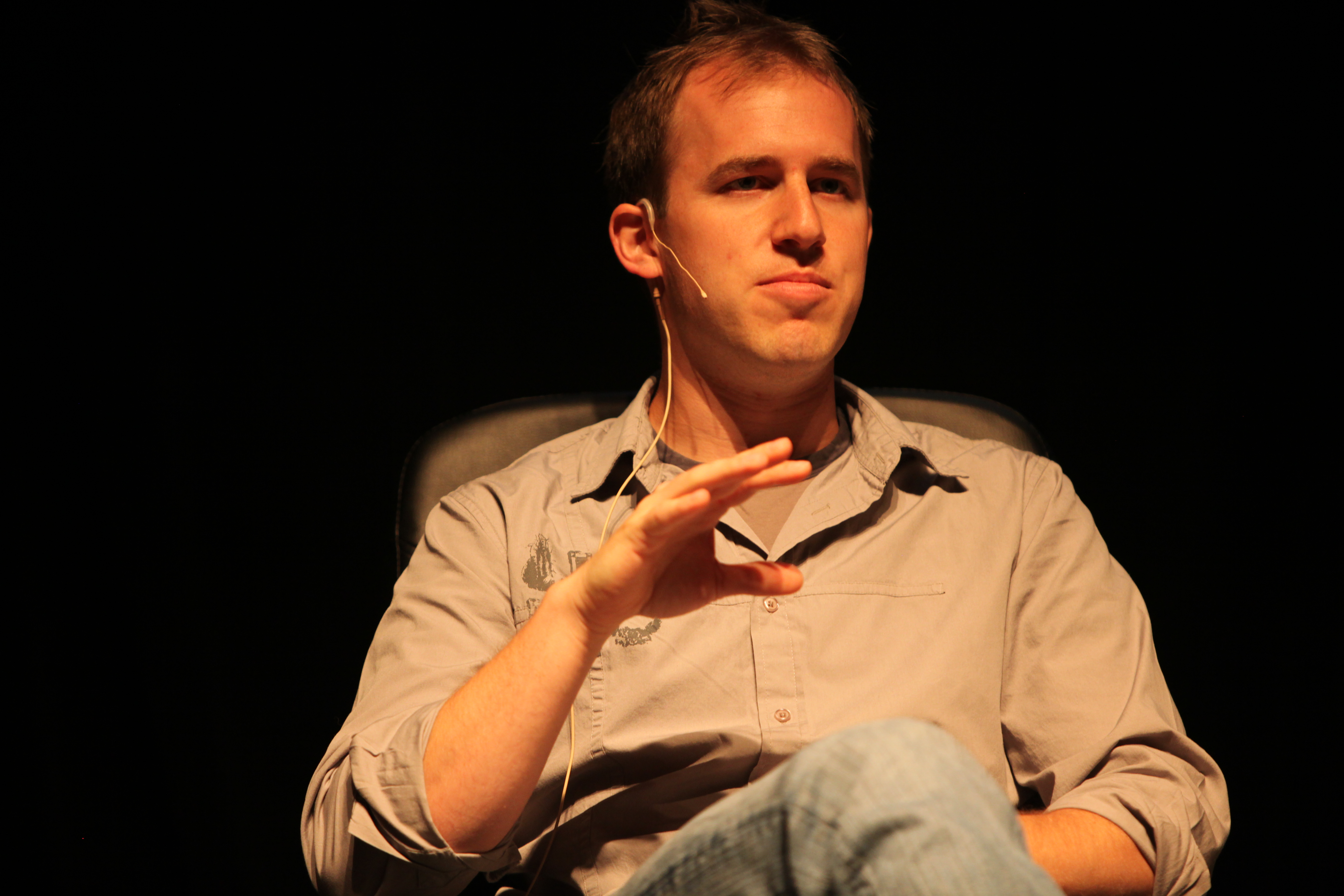
Bret Taylor
Chairman of the board of directors of OpenAI
12
APPEARANCES
8
PODCASTS
Jul 20, 2026


Brett TaylorGUEST
And you know, if you've used a really advanced model like 5.6 from, from OpenAI, you'll know actually, wow, the code it writes is a lot better than the previous model.
Brett TaylorGUEST
So it's not exactly the right analogy, and that's the thing is actually I think what we're seeing is for a lot of tasks, it turns out these frontier models from OpenAI and Anthropic are actually just better than these open weight models.
Brett TaylorGUEST
And I think it's important for the labs in the United States for any-- If you just think about what do you want from a model, you might want it to be fast for some tasks.


Kate RooneyCORRESPONDENT
Are you seeing some of the changes in how things are billed, how enterprises are spending start to impact the legacy players? What does it say about sort of where we are in the cycle right now?
Brett TaylorGUEST
And the CFO has said, who the heck's buying all these tokens? What's going on with our token bill? And then on the other hand, you have a lot of people saying, where's the value from this AI? The approach that we at CIRA and others are taking, I think, is roughly the answer.
Mike SantoliHOST
How does that fit into, I guess, both the Frontier Labs strategy and growth, and then the opportunities on the software side where you're also playing?


Brett TaylorGUEST
... from Spanish, Mandarin, Tagalog, you know, like, go down the list, really, really expensive to do.
Brett TaylorGUEST
And then the other part of it is, for good reason, as I said, there's just a, a really high compliance bar for technologies to be available.
Brett TaylorGUEST
And as a consequence, if you look at, you know, what waste management, or just pick any private company, they can go off and get the best of breed solution for any given technology problem they have.
speaker_8UNKNOWN
[laughs]
Bret TaylorGUEST
I was like, "What are you doing that you need two?" But that's the whole thing.I, you know, I think this is really interesting, and I think it's really giving people direct access.
Bret TaylorGUEST
You know, one of the things you can do in Sierra is you can ask questions like, "Hey, what is irritating people about our returns policy?" Kind of those qualitative questions that would previously maybe require a focus group.
Bret TaylorGUEST
The agents in the Sierra platform will actually sample conversations, look for low CSAT conversations, use large language models to synthesize actually what's going on, and give you a report like ChatGPT Deep Research.
5 MINS LATER
Tyler DenkPANELIST
... to Sierra at all? Do they move the needle? Uh, you know, d-- I, I'm curious what role you think they play in, like, a truly elite enterprise GTM.

Andrew PalmerHOST
Why is it that the managers trying to implement GenAI often feel like they're banging their heads against a brick wall?
Brett TaylorGUEST
When a technology is new, whether it's the mainframe or the PC or eventually the advent of the Internet, there's not a lot of off-the-shelf solutions to leverage that technology.
Brett TaylorGUEST
So, you know, when mainframes and PCs came out, a lot of companies had to build everything from scratch....
Brett TaylorGUEST
And then the first generation of software companies essentially amortized the research and development costs of building that software across thousands or hundreds of thousands of clients, which is just rational.
Brett TaylorGUEST
So you end up where, you know, every company in the world built their own, and then you transition to, you know, licensing software from these software vendors.
Brett TaylorGUEST
And then the internet comes out, and there was an article in Wired in nineteen ninety-seven, ninety-eight, that time period, and it was about a set of banks that were spending between twenty and fifty million dollars to make their websites transactional, which, if you read the article, basically meant adding a login form, so you could actually see your stuff and not just like information about the bank.
Brett TaylorGUEST
Which is something a, you know, someone who goes to a coding boot camp could do in a weekend, or now with tools like Codex and Cloud Code, you can do just by prompting.
23 MINS LATER

Bret TaylorGUEST
I think it's very hard to predict the second-order effects of the marginal cost of software development going down, um, so dramatically, but it's interesting.
Bret TaylorGUEST
So I was, uh, for our, uh, first customer conference at Sierra, I was doing research, and I was looking up in the Wayback Machine old Wired articles, and I found one from, I think it was 1997, and the article was about banks failing to launch websites with login forms and spending tens of millions of dollars with consulting companies, and how hard it was to go from read-only to enabling someone to log in to, like, check their balance.
7 MINS LATER

Alex KantrowitzHOST
But we're-- for the sake of this thought exercise, we're just burning it down and starting from scratch.

Bret TaylorGUEST
I have such a nuanced point of view on this, because it is decidedly not simple.
Bret TaylorGUEST
Uh, so broadly speaking, I really like the spirit of founder mode, which is just having deep founder-led accountability for every decision at your company.
Bret TaylorGUEST
Um, I think that that's how great companies operate, uh, and when you, you know, proverbially make decisions by committee or you're more focused on process than outcomes, um, that produces all the experiences we hate as employees, as customers.
Bret TaylorGUEST
You know, that's the proverbial DMV, right? You know, it's like process over outcomes.
Bret TaylorGUEST
Um, and then similarly, uh, you look at the disruption in all industries right now because of AI, you know, the companies that will recognize where things are clearly going to change, like everyone can see it.
7 MINS LATER
JohnHOST
Oh.
Bret TaylorGUEST
I mean, if you just think of any consumer brand, uh, every new platform brings distribution channels, right? The, uh, you know, mobile had app store, the web had portals and then search.
Bret TaylorGUEST
A lot of our customers are thinking about, what do we want our presence to be on our own properties? What do we want our presence to be when people are starting from ChatGPT? We think just the world of channels are changing now.
Bret TaylorGUEST
It's going from chat and phone and your website, to chat and your phone and your website.
11 MINS LATER

Bret TaylorGUEST
And you know, it does all have to start with the product though, you know, 'cause certainly I would say-My guess is, the way I think of Sierra is, we have the best product, but because we have a founding team that's sort of been there and done that, we're not, like, a hugely risky bet, you know? We know how to work with large companies.
Bret TaylorGUEST
We're not gonna show up and be learning from, you know, first principles how to engage with a large bank or a large health insurance company.
Bret TaylorGUEST
And that's a unique value proposition, because right now, most of the incumbent technology platforms, their products don't really work.
Bret TaylorGUEST
And so, you really want to use a best of breed product right now, and I think our value proposition is we are a best of breed, I believe the best of breed product in this space, but we also know how to, like, work with complex companies.
Bret TaylorGUEST
You know, we're gonna show up with as many people necessary to help you be successful, as opposed to just throwing a product over the wall and saying, "Good luck to you." And, uh, so that I think, I, you know, certainly our reputation helps, but at the end of the day, it's the quality of the product that really matters here.
8 MINS LATER
speaker_1HOST
Uh, h- how'd you land on that and w- uh, what does it say about the, the usage of that fund, how in capital intensive your business is, the state of the markets right now? Just take me through the, the thesis for the round.


Alex HeathHOST
So, what is unique about how you work with a customer versus, like, how you would have done it at a, at another company before?
Bret TaylorGUEST
I'll start with our business model because I think it helps answer your question, which is, um, one of the things that we do differently than traditional software companies at Cyra is we charge only for outcomes.
Bret TaylorGUEST
So, for most of our customers, that means when the AI agent autonomously resolves the case that you called about or chatted in about, there's a fee for that.
Bret TaylorGUEST
Uh, we really like this as a business model, and I think it will become the standard business model for agents because, uh, the word agent comes from agency, and the principle of it is some degree of autonomy.
Bret TaylorGUEST
And, uh, I think most of the most sophisticated agents will actually start and complete a task, whether it's generating a new lead for your sales team, or solving a customer service inquiry, or, uh, doing a legal analysis, uh, for an antitrust review, whatever it might be.
Bret TaylorGUEST
And if an AI agent isn't just helping a person be more productive but actually accomplishing a task, why not just pay for a job well done? Uh, and if you look at most of your companies, the, if you have a job where the outcome is measurable, like sales, you tend to pay a commission, right? There's not, uh, just a salary.
39 MINS LATER


Lenny RachitskyHOST
What mindsets or habits or just ways of working have you worked on building in yourself that you think have most contributed to you being successful in such a variety of roles and levels?
Brett TaylorGUEST
It's actually amusing when I meet colleagues that I've known from one of those jobs, they'll often think of me through the lens of that job, you know? And so, uh, you know, I'll go to meet folks from Facebook, and they think of me largely as an engineer.
Brett TaylorGUEST
They'll-- If I meet folks from Google, they think me largely as a product, you know, person.
Brett TaylorGUEST
At Salesforce, you know, a lot of the folks there interacted with me as like a, for lack of a better word, a suit.
24 MINS LATER

Shane ParrishHOST
How did that change how you went about integrating that company into the Salesforce culture?
Bret TaylorGUEST
I'll talk abstractly and I'll talk to you about some specific acquisitions, too.
Bret TaylorGUEST
But first, I, I think I tried to approach it with more empathy, um, and more realism.
Bret TaylorGUEST
You know, uh, one of the nuanced parts about acquisitions is there's the period of, um, doing the acquisition, there's sort of the period, uh, after you've decided to do it and doing due diligence, and then there's the period when it's done and you're integrating the company, and sort of the period after.
Bret TaylorGUEST
One of the things that I have observed is that while a company's doing acquisitions, often the part of deciding to do it is a bit of a mutual sales process.
Bret TaylorGUEST
Um, uh, you're trying to find a f- fair value for the company and, and there's some back and forth there, but at the end of the day, there's usually some objective measure of that, um, influenced by a lot of factors.
17 MINS LATER