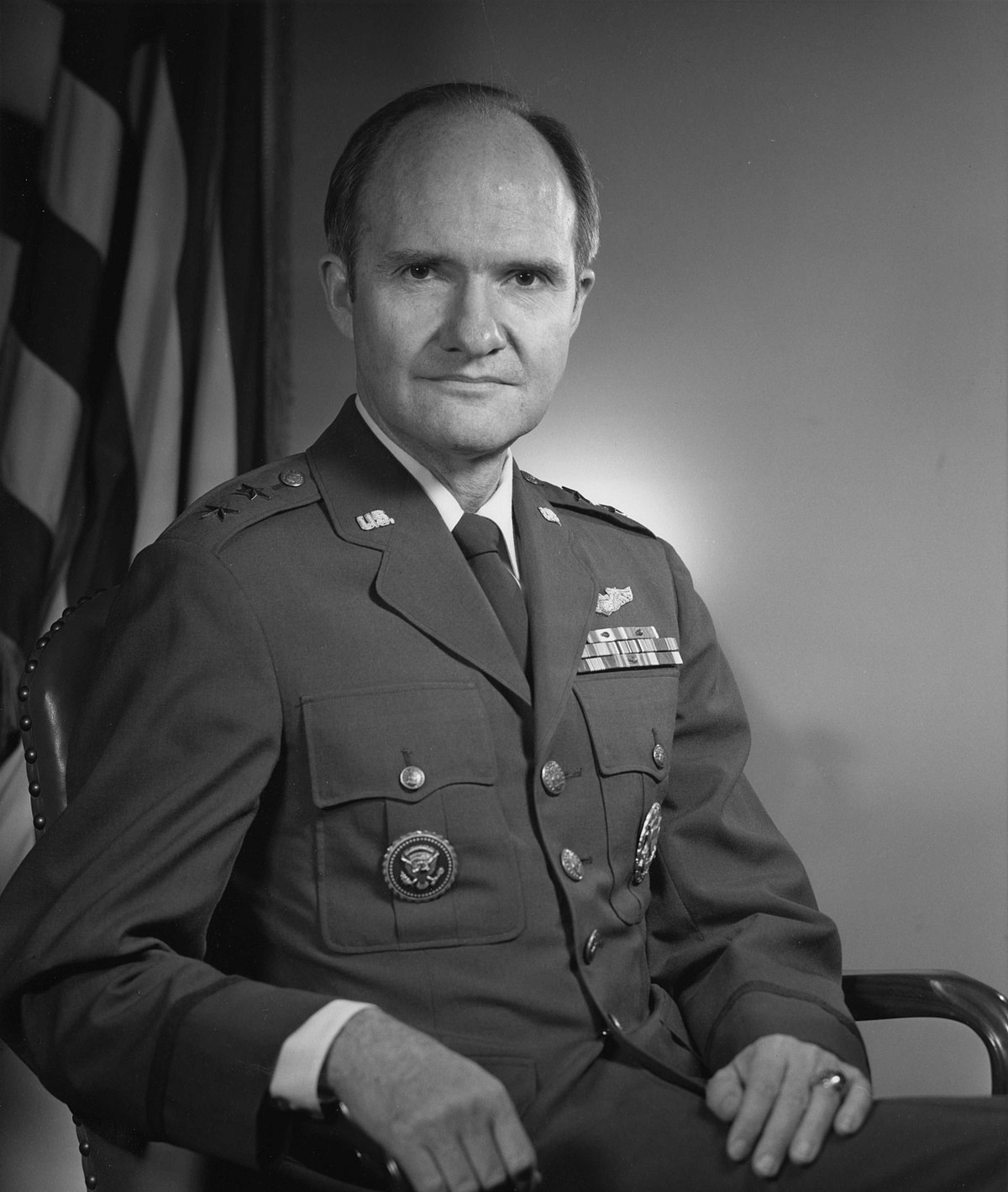
Brent Scowcroft
Former National Security Advisor of the United StatesWikipedia
41
MENTIONS
30
EPISODES
23
PODCASTS
Search complete. 41 mentions across 30 episodes found for "Brent Scowcroft".
Oct 12, 2026

John BatchelorHOST
And Brad, here's that ambivalence you've identified already in current Washington thinking.
John BatchelorHOST
After Tiananmen, rather than press the case that it was obvious to everyone that the Chinese Communist Party was a sadistic monster, instead the George H.W. administration vouchsafed a mission of Brent Scowcroft at the end of June, early July of that year, And alongside were visits by Henry Kissinger, then out of office, and engaged in developing investment opportunities in China.
John BatchelorHOST
And even Richard Nixon visited China.
John BatchelorHOST
It's as if we were apologizing to China for being caught a brute.

Thomas777GUEST
the key to understanding how things developed in the way Yugoslavia broke apart, particularly what guided decision-making in the Croatian control group around Tudjman, you've got to understand what was underway vis-a-vis the Bush 41 administration and why they were so zealously behind Gorbachev and, uh, Shevardnadze, who was Gorbachev's top advisor, he was kind of the man behind Perestroika in conceptual and policy terms.
Thomas777GUEST
There was this basic concord between Bush and James Baker and people within Bush and Baker's orbit, like Brent Scowcroft, Contra...
Thomas777GUEST
the team B coterie, um, kind of best exemplified by people like, or most purely exemplified by people like Cheney, you know, who wanted, who wanted, wanted the Soviet Union dismantled and, and, and kind of, you know, laid prostrate in the most, um, you know, in the most complete and punitive way possible.
Thomas777GUEST
Um, Bush and Baker's kind of absolute imperative was that they wanted to preserve the Soviet structure, not its internal constitution, but its basic structure.

ThomasGUEST
He was kind of the man behind Perestroika in conceptual and policy terms.
ThomasGUEST
There was this basic concord between you know, Bush and James Baker and people within, you know, Bush and Baker's orbit, like Brent Scowcroft, you know, Contra, the Team B coterie, kind of best exemplified by people like, or most purely exemplified by people like Cheney, you know, who wanted the Soviet Union dismantled and kind of, you know, laid prostrate.
ThomasGUEST
in the most um you know in the most complete and punitive way possible um bush and baker's uh kind of absolute um imperative was that they wanted to preserve the soviet structure um not its internal constitution but its basic structure it's like kind of you know um essentially administrated governmental organizational modality until full disarmament had been accomplished okay you know total nuclear disarmament a drawing down of soviet conventional forces you know to something minuscule you know to to um levels of some kind of like internal you know constabulary element And only then would there be discussion about moving forward, like how the Soviet Union would be structured or whether it would continue to exist at all.
ThomasGUEST
It ending up with tanks in Red Square and Yeltsin literally banning the Communist Party declaring himself president of the new Russian Federation, and then holding what him on to do, you know, like an ad hoc plebiscite, that was totally at odds with what the Bush administration wanted to develop, okay? And why that became possible in an indirect but essential way was impacted by what happened in Yugoslavia, right? for people who think i'm over emphasizing this um there's a fascinating memo um that circulated at the department of state i mean all the minutes of any like official meeting between the secretary of state and uh his soviet counterpart or the or the soviet chief executive would obviously you know be widely circulated um may 11th of 89 Gorbachev met with Baker and Shevardnadze was present too.
Thomas777GUEST
Like, they have no concept at all of the world and power political affairs or anything like that.
Thomas777GUEST
So, Bush, Baker, Scowcroft, even Cheney, and Cheney's a terrible person, but, again, you know, we're not talking about the character of these people.
Thomas777GUEST
You know, they stand out...
Thomas777GUEST
Kind of like the contrast emerges in high relief, verbally speaking.
ThomasGUEST
Like, they have no, they have no concept at all of, of, of the world and power political affairs or anything like that.
ThomasGUEST
So, um, Bush, Baker, Scowcroft, even Cheney, and Cheney's a terrible person.
ThomasGUEST
But again, uh, you know, we're not talking about the character of these people.
ThomasGUEST
Um, you know, they, they stand out, um, and they come- kind of like the, the, the contrast emerges in high relief, verbally speaking.

Lawrence WilkersonGUEST
That was an agreement between them.
Lawrence WilkersonGUEST
Brent Scowcroft even couldn't deliver a message when it looked really critical, his father's National Security Advisor.
Lawrence WilkersonGUEST
And that was what put us off to the races.
Lawrence WilkersonGUEST
We have been crazy ever since, and the second war in Iraq was an example of that.
Thomas777GUEST
And, uh, when Bush found himself elected president, um, he was surrounded by men, uh, who had, uh, gone on to very storied and powerful roles in, uh, policy planning corridors and the national security apparatus, uh, who, who, who were very hostile to, to his worldview and who did not view him as particularly competent, okay? Um, Bush tried to insulate himself with, with, with his own loyalists, and I think he did that in large measure.
Thomas777GUEST
You know, people like Baker or people like Scowcroft, who's kind of a complicated figure in terms of his values.
Thomas777GUEST
He had neoconish tendencies, but first and foremost, he was loyal to Bush.
Thomas777GUEST
Um, and, uh, when Bush took office, you know, uh, February 1989, again, not only was this kind of Team B faction that would much later become kind of known to the public as, you know, the neocon cabal, some aspect of it at least.
11 MINS LATER
Thomas777GUEST
[sighs] And again, we- we're gonna, gonna come back to the CIA and its incompetence, and I know people think I overstate this, but consider this.
Thomas777GUEST
William Crowe, he was another general who was kind of-- He would've been considered something like a minister without portfolio had he served a European government.
Thomas777GUEST
But he was close to Bush 41 and Baker and Scowcroft and that whole coterie.
Thomas777GUEST
He said the CIA, literally in mid-1989, he said they were still, they were still issuing dispatches that spoke about the USSR as if it was 20 years earlier.

John AughenbaughHOST
Yeah, right.
John AughenbaughHOST
She's at this meeting, and her lectures and her discussions drew the attention of an individual by the name of Brent Scowcroft.
John AughenbaughHOST
Now, on a previous podcast episode a couple years ago, we had our colleague on, Bill Newman.
John AughenbaughHOST
who talked about the Reagan-Bush foreign policy, et cetera, et cetera.
John AughenbaughHOST
And Brent Scowcroft, okay, was an important figure as far back as the Ford presidency.
John AughenbaughHOST
Well, Scowcroft takes note, right, of the performance of this Stanford University, at the time, assistant professor.
John AughenbaughHOST
She's not yet been promoted, right? So the next president is –
ThomasGUEST
Um, I was reading the, the Wilson Center, which I, I think is kind of abominable in a lot of ways, but [laughs] their archives are very useful and very interesting.
ThomasGUEST
Um, when Bush and Scowcroft, Bush 41 obviously, and Baker, and Helmut Kohl, you know, were negotiating with Gorbachev, particularly as regarded, specifically as regarded to what, you know, the START treaty, but generally, um, you know, the kind of expedience related to ending the Cold War.
ThomasGUEST
Something that Kohl, and Bush, and Scowcroft all said to Gorbachev was like, "Look, like, however we leave this, you know, assuming that, you know, we can come to terms on, on nuclear weapons, assuming we can come to terms on, you know, a basically complete drawdown in forces and being in Europe." You know, he's like, "We need your guarantee that your satellites in Latin America are gonna stop exporting revolution." You know, and obviously they couch this in, like, the language of diplomacy and in the language of, of, of A- of, of, of American propaganda.
ThomasGUEST
You know, like subverting the democracies in, in Latin America.
ThomasGUEST
But this was very much on their mind, which is fascinating, and this makes sense.
Pete QuiñonesHOST
Is there anything you, uh, you wanted to get out there?
ThomasGUEST
I just, I just, yeah, one of the, I want to, and we'll, we, we'll deal with this more in a dedicated capacity, um, in a, in a more current events discussion.
ThomasGUEST
But I, the degree to which the, uh, what people like Bush 41, Scowcroft, Baker, Nixon himself, and I mean, make no mistake, like, Nixon played a key role in ending the Cold War.
ThomasGUEST
And I think he did that in large measure.
ThomasGUEST
You know, people like Baker or people like Scowcroft, who's kind of a complicated figure in terms of his values.
ThomasGUEST
He had neoconish tendencies, but first and foremost, he was loyal to Bush.
ThomasGUEST
And when Bush took office, you know, February 1989, again, not only was this kind of team defection that would much later become kind of known to the public as, you know, the neocon cabal, some aspect of it at least, not only were they insinuated very much into the national security apparatus, but, you know, certain expectations have been raised by Reagan.
7 HRS 58 MINS LATER
ThomasGUEST
But, um, [coughs] the way it played out, um, in, uh, operational terms was Ford, Ford was informed of the seizure of the Ma- of the Mayaguez at his, uh, morning briefing on, uh, the 16th.
ThomasGUEST
Um, like I said, the National Security Council was convened.
ThomasGUEST
Brent Scowcroft, who, as I'm sure people will recognize, um, you know, later went on to play a major role in the Reagan administration, particularly Reagan's first term, um, you know, he, he basically early on in the crisis was, uh, wa- was the one who, uh, you know, convened, uh, what ultimately became, um, you know, the parties who, who determined what, what the, what the operational response would be, for better or worse.
ThomasGUEST
Um, the, uh, the, um, the big concern, I mean, obviously aside from the, you know, the issues I just indicated relating to, uh, relating to, uh, US-Chinese relations and everything else, uh, America had a major credibility problem.
20 more episodes mention Brent Scowcroft.
Create an account to see the whole feed, search across every transcript, and follow the entities you care about.