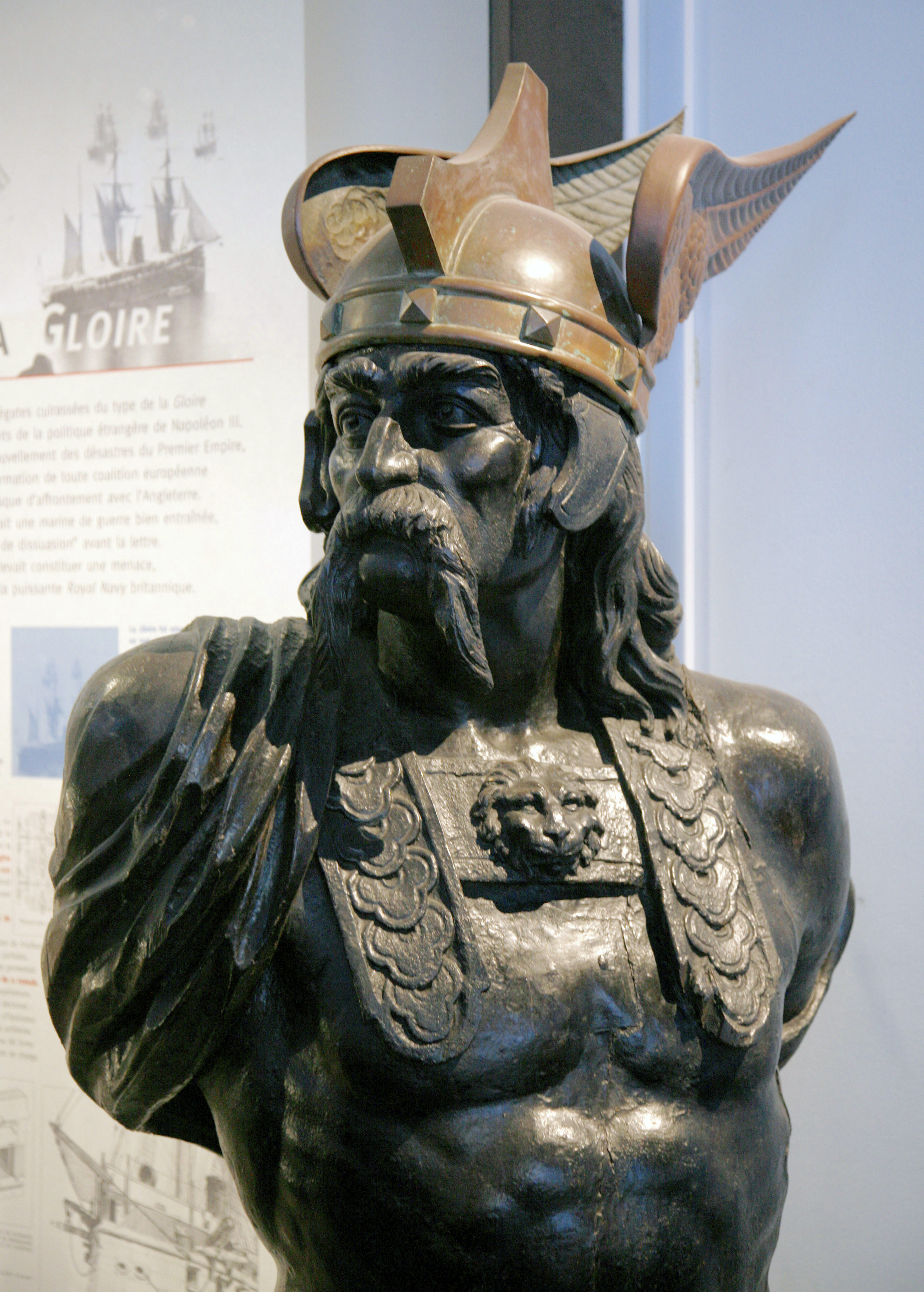
Brennus
WarriorWikipedia
26
MENTIONS
9
EPISODES
9
PODCASTS
Search complete. 26 mentions across 9 episodes found for "Brennus".
Oct 26, 2026

MiraHOST
Let's go all the way back to the year 390 BC.
MiraHOST
A powerful Celtic leader named Brennus marched his army of the Senones tribe right down into Italy.
MiraHOST
Did they attack the city of Rome itself? They really did! Brennus absolutely crushed the Roman army at the River Allia.
MiraHOST
The Roman citizens were so panicked that they actually abandoned the main streets of their own city and hid inside a fortress on a steep hill called the Capitol.
MiraHOST
They just hid up there.
MiraHOST
How long were they trapped on the hill? For seven long, miserable months.
MiraHOST
Finally, the starving Romans begged for peace.
MiraHOST
Brennus agreed to leave their city, but only if Rome paid him a massive, unbelievable ransom.

Pamela NagamiNARRATOR
When astounded at his enormous demands, the Romans asked him, what then would he leave them? He answered, your lives.
Pamela NagamiNARRATOR
But the third year, 410, the imperial city, the sacred, the inviolate, which since the almost mythical visitation of Brennus and his Gauls had only once seen a foreign enemy from her walls and never within them, beheld the amazing, the inconceivable sight.
Pamela NagamiNARRATOR
Her streets, her palaces broken into and sacked by barbarians whom of late days she had indeed seen among the mercenaries who served her, but whom of old she knew only as the slaves who fought with one another to make her sport in her gladiatorial shows.
Pamela NagamiNARRATOR
The end of the world must have seemed at Rome to have come when the city of Caesar and Augustus with its gold, its marble, its refinement was given over to the Gothic spoilers.

PhilHOST
My name has been Hjalmar, Tyr, Bragi, Bran, Horsa, Eric, and John.
PhilHOST
I strode red-handed through the deserted streets of Rome behind the yellow-maned Brennus.
PhilHOST
I wandered through the violated plantations with Alaric and his Goths when the flame of burning villas lit the land like day and an empire was gasping its last under our sandaled feet.
PhilHOST
I waded sword in hand through the foaming surf from Hengist's galley to lay the foundations of England in blood and pillage.
PhilHOST
And when Godfrey of Bouillon led his crusaders over the walls of Jerusalem, I was among them in steel cap and brigandine.
PhilHOST
But it is none of these things I would speak.
PhilHOST
I would take you back with me into an age beside which the Brennus of Rome is of yesterday.
PhilHOST
I would take you back through not merely centuries and millenniums, but epoch and dim ages unguessed by the wildest philosopher.

JimmyHOST
Livy elsewhere complained that Antias exaggerated every number without restraint, so the real toll was probably lower, but the Battle of Arausio was still Rome's worst disaster since Cannae.
JimmyHOST
Notably, despite giving their name to the Germanic fury, you may note that their leader was named Boiorix, a clearly Gallic name.
JimmyHOST
This has led some historians to question whether the Teutons were Germanic or whether they were a unified group with Celto-Germanic elements.
JimmyHOST
Caesar later described how Gauls vowed the spoils of a coming battle to their war god, sacrificed the captured animals after victory, and heaped everything else in sacred places.

Pamela NagamiNARRATOR
When astounded at his enormous demands the Romans asked him what then would he leave them, he answered, your lives.
Pamela NagamiNARRATOR
But the third year, 410, the imperial city, the sacred, the inviolate, which since the almost mythical visitation of Brennus and his Gauls had only once seen a foreign enemy from her walls and never within them, beheld the amazing, the inconceivable sight.
Pamela NagamiNARRATOR
Her streets, her palaces broken into and sacked by barbarians whom of late days she had indeed seen among the mercenaries who served her.
Pamela NagamiNARRATOR
but whom of old she knew only as the slaves who fought with one another to make her sport in her gladiatorial shows.

speaker_8NARRATOR
The Gauls received them courteously because of the name of Rome, ceased their attacks upon the city walls, and held conference with them.
speaker_8NARRATOR
When they were asked what wrong they had suffered at the hands of the Clusians that they had come up against their city, Brennus, the king of the Gauls, burst into a laugh and said, "The Clusians wrong us in that, being able to till only a small parcel of earth, they yet are bent on holding a large one, and will not share it with us, who are strangers, many in number and poor.
speaker_8NARRATOR
This is the wrong which ye too suffered, O Romans, formerly at the hands of the Albans, Fidinates, and Ardeates, and now lately at the hands of the Veientines, Capenates, and many of the Faliscans and Volscians.
speaker_8NARRATOR
Ye march against these peoples; and if they will not share their goods with you, ye enslave them, despoil them, and raze their cities to the ground.
speaker_8NARRATOR
Not that in so doing ye are in any wise cruel or unjust; nay, ye are but obeying the most ancient of all laws, which gives to the stronger the goods of his weaker neighbours, the world over, beginning with God Himself and ending with the beasts that perish.
speaker_8NARRATOR
For these too are so endowed by nature that the stronger seeks to have more than the weaker.
speaker_8NARRATOR
Cease ye therefore to pity the Clusians, when we beseech them; that ye may not teach the Gauls to be kind and full of pity towards those who are wronged by the Romans." From this speech the Roman envoys saw that there was no coming to terms with Brennus; and so they slipped into Clusium and emboldened and incited its citizens to sally out against the barbarians with them, either because they wished to discover the prowess of those warriors or to display their own.
speaker_8NARRATOR
The Clusians made a sally, and in the fight which raged along the walls one of the Fabii, Quintus Ambustus, drove his horse straight at a stately and handsome Gaul who was riding far out in front of the rest.

Trevor CulleyHOST
In the late 4th century, Gallic tribes from north of the Alps began crossing into Italy in greater numbers, raiding and pillaging down the countryside.
Trevor CulleyHOST
The Senones, from the banks of the river Seine in modern France, marched against Rome under the leadership of a king called Brennus, no known relation to the Brennus who invaded Greece a few decades later.
Trevor CulleyHOST
The Senones met Roman and allied forces at the Alia River after being invited as mercenaries to Clusium, an Etruscan city north of Rome.
Trevor CulleyHOST
The Romans tried to intervene on behalf of the Clusians, only for the ambassador to be killed.