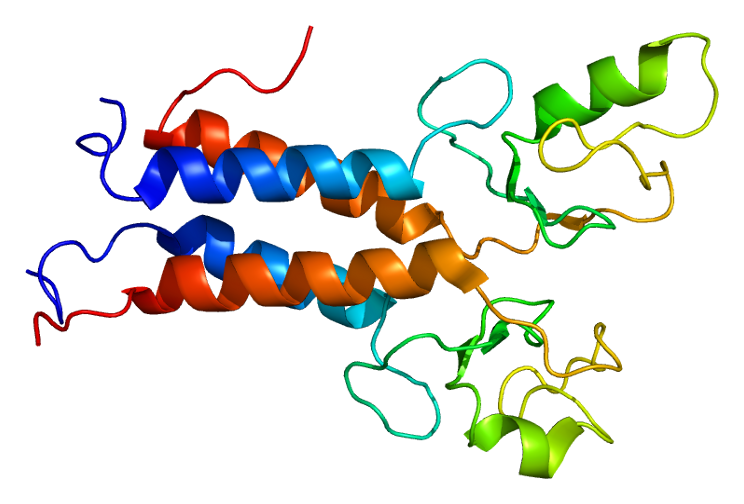
BRCA1
GeneWikipedia
127
MENTIONS
55
EPISODES
50
PODCASTS
Search complete. 127 mentions across 55 episodes found for "BRCA1".
Sep 11, 2026
Ep. 183 - Lupus, Rheumatoid Arthritis, And The Names That Explain Nothing
T
67:53Thomas LodiHOST
And if anybody thinks there's genetics with CFCs...
T
67:55Thomas LodiHOST
Okay, BRCA, you're talking, everyone's gonna say, "What about the BRCA, the BRCA1 and BRCA2?" That's questionable.
T
68:01Thomas LodiHOST
I'm telling you, that's questionable, and I, I can go into that.
T
68:03Thomas LodiHOST
Let me just real briefly say this to you.
T
70:27Thomas LodiHOST
So anyway, so I was talking about the BRCA gene and all that stuff.
T
70:29Thomas LodiHOST
So the BRCA gene...
T
70:31Thomas LodiHOST
Now, a BRCA gene, there's BRCA1 and BRCA2.
T
70:35Thomas LodiHOST
You would get, whether you're a man or a woman, has, we always think of it with breast CFCs, but it's not only that.
Dog With a Blog - Stan Stops Talking
C
11:13ChristopherHOST
It's one of my biggest pet peeves with video games.
S
11:15SamHOST
February 16th, Angelina Jolie undergoes a preventative double mastectomy after learning she had an 87% risk of developing breast cancer due to the defective BRCA1 gene.
C
11:25ChristopherHOST
Yeah, good.
C
11:26ChristopherHOST
I was about to say, brave of her to do that.
S18 Ep35: The ADC Revolution in Metastatic Breast Cancer: Redefining Treatment Selection and Sequencing
S
20:42Seth WanderMODERATOR
Same concept, 51-year-old, de novo, triple negative to lung, minimally symptomatic, PD-L1 positive, HER2 0.
S
20:50Seth WanderMODERATOR
Germline shows BRCA1.
S
20:52Seth WanderMODERATOR
So the difference here is it's HER2 0.
S
20:55Seth WanderMODERATOR
She's a little bit symptomatic.
Breast Cancer Awareness: Lyndsay Levingston on SurviveHER, Genetic Testing & Community Action
L
2:08Lyndsay LevingstonGUEST
If you know that you are at high risk for breast cancer, for example, then you can perhaps consider a prophylactic or preventative mastectomy to reduce your risk.
L
2:18Lyndsay LevingstonGUEST
I mean, that's just one of many action steps that we can take, especially in the black community where the BRCA1 gene mutation is prevalent.
S
2:28speaker_0HOST
That's really real.
S
2:29speaker_0HOST
And I like that you always rep Houston where you go.
Urology Health: What Men and Women Should Know
A
20:28Andrew TurkGUEST
Um, then we talked about mutations as well.
A
20:30Andrew TurkGUEST
So anybody who's had a strong family history of cancers and who has a mutation in, say, BRCA1 or BRCA2, um, or any type of Lynch syndrome, um, should also, you know, be considered to be high risk.
A
20:44Andrew TurkGUEST
Uh, and lastly, like we said, f- family history does play a significant role, um, with prostate cancer, especially if you've had more than two or three first-degree relatives, you know, who have had it.
A
20:57Andrew TurkGUEST
So those are all factors to consider.
(Audio) Prostate Cancer Awareness Month: Knowledge, Community, and Hope
J
11:21Jeremy PatchGUEST
Um, and then genetics.
J
11:23Jeremy PatchGUEST
So we know that there are genetic links, like I, like I mentioned, but, um, genetic testing can find things such as the BRCA1 or BRCA2 mutation.
J
11:32Jeremy PatchGUEST
There are many other mutations that may increase your risk, so it's important to know if you do have that genetic risk that you may be, uh, genetic history, that you may be at higher risk.
J
11:43Jeremy PatchGUEST
And then, um, veterans are also at higher risk.
Cupcakes, Crisis, and a Comeback
A
23:54Andra HallGUEST
Well, additional testing came.
A
23:56Andra HallGUEST
And when that additional testing came, it was... you have about found out that I carry the BRCA1 gene mutation.
A
24:05Andra HallGUEST
Triple negative? Well, I found out I was triple negative first off.
A
24:09Andra HallGUEST
Well, I can't remember which one came first.
A
24:44Andra HallGUEST
No, not my mom, not my grandmother.
A
24:46Andra HallGUEST
Although my grandmother passed from cancer, but it was lung cancer.
A
24:49Andra HallGUEST
But when we connected the dots and I did additional testing, turns out it was, I carried that BRCA1 gene mutation from my father's side.
A
24:59Andra HallGUEST
His sister passed from breast cancer.
What Do Fallopian Tubes Have to Do With Ovarian Cancer? (Ovarian Cancer Awareness Series, Part 3 of 9)
M
8:46Marissa StahelskiHOST
Remove the tubes now, remove the ovaries later.
M
8:49Marissa StahelskiHOST
So there are studies looking at this approach in women, specifically with BRCA1 and BRCA2.
M
8:58Marissa StahelskiHOST
And in one of the big studies, almost three quarters of the women choose the tubes first option, which honestly doesn't shock me because when you're actually the woman making the decision and somebody says, okay, option A, remove your ovaries now and go straight into surgical menopause and manage symptoms.
M
9:25Marissa StahelskiHOST
Or option B, potentially keep your ovaries a little bit longer, just remove the tubes, potentially reduce some type of risk.
M
13:18Marissa StahelskiHOST
The research is absolutely worth paying attention to.
M
13:23Marissa StahelskiHOST
But we do not yet know whether the tubes are Average woman has a lifetime ovarian risk around 1%.
M
13:33Marissa StahelskiHOST
For someone with BRCA1, we're talking about a risk of roughly 40 to 60%.
M
13:40Marissa StahelskiHOST
And for BRCA2, it's about 13 to 30%.
Military, First Responders & Family Building: A Fertility Journey Not Talked About Enough
A
1:54Ashley LaRueHOST
Kyle deployed to Iraq in 2006 and now serves full time with the Seekonk Police Department in Massachusetts.
A
2:02Ashley LaRueHOST
He and his wife Meg, a nurse practitioner and a breast cancer survivor with the BRCA1 mutation, spent years navigating toxic exposure-related infertility, IUI, and IVF before welcoming their daughter, Mayla, through donor eggs.
A
2:16Ashley LaRueHOST
That deeply personal journey revealed a massive gap in support for veterans and first responders facing family building challenges.
A
2:24Ashley LaRueHOST
Kyle now advocates to raise awareness, connect affected service members with resources, and push for better policies and coverage.
K
6:22Kyle HermanGUEST
We started to try to have a family roughly five years ago i'd say beginning of 2020 2021 when when we came together and.
K
6:31Kyle HermanGUEST
As you had said in the intro that was beautifully said that my wife mag is a is a nurse practitioner and she is a breast cancer survivor so.
K
6:39Kyle HermanGUEST
She has the BRCA1 gene, which is just a mutation that correlates usually to very high chances of having cancer.
K
6:48Kyle HermanGUEST
And her mother has it, she has it, her sister has it, and her niece and nephew have it.
CEO Ending the 5-Year Diagnostic Odyssey for Kids With Genetic Disease!
K
4:34Katherine StuelandGUEST
But the industry, for many reasons, um, that made incredible sense from a, from a, a, an industrial logic standpoint, the, the, the industry was really focused on multi-gene panels.
K
4:47Katherine StuelandGUEST
So moving from BRCA1 and BRCA2 to, you know, there's now dozens of, of genes that are on a multi-gene panel.
K
4:55Katherine StuelandGUEST
But what GeneDx was really able to do over those years is invest in the core technology, build the biggest reference set of data, um, genotypic data and clinical data from notes that, that a doctor might submit, um, that give clinical context.
K
5:13Katherine StuelandGUEST
And so they've been building this, this core technology.
45 more episodes mention BRCA1.
Create an account to see the whole feed, search across every transcript, and follow the entities you care about.