Brancacci Chapel
Chapel in Florence, ItalyWikipedia
5
MENTIONS
4
EPISODES
4
PODCASTS
Search complete. 5 mentions across 4 episodes found for "Brancacci Chapel".
Sep 29, 2026

Pamela NagamiNARRATOR
The renewed study of nature and the secular spirit of the Renaissance led to the overthrow of the old arbitrary rules, to a wonderful development of individuality, to the introduction of new methods, as well as to the study of anatomy and the discovery of the laws of perspective, to the introduction of oil colors and all kinds of technical improvements.
Pamela NagamiNARRATOR
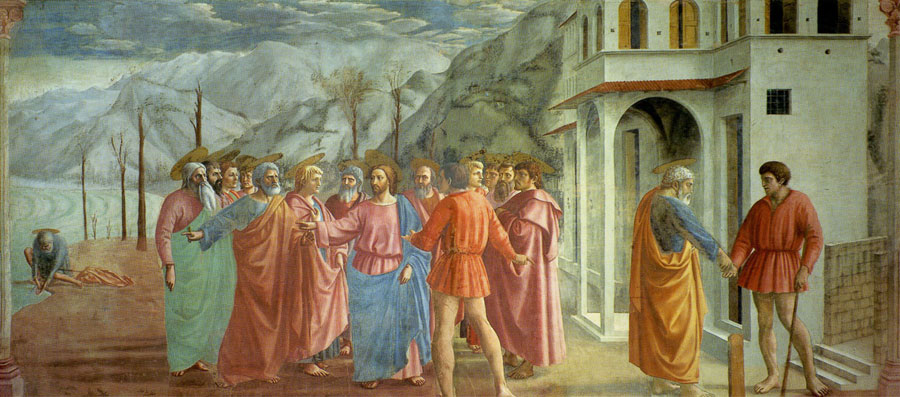
The great pioneer of Renaissance painting was the Florentine Masaccio, 1402 to circa 29, whose frescoes on the walls of the Brancacci Chapel in his native city were inspirations to all the succeeding generations of artists, and particularly to Raphael.
Pamela NagamiNARRATOR
Other great 15th century artists were Fra Filippi Lippi, 1406 to 69, Fra Angelico, 1387 to 1455, whose loving nature caused him to decorate the cells of the monks in San Marco at Florence with beautiful frescoes; Botticelli, 1446-1510, specially famous for his treatment of classical myths; Ghirlandaio, 1449-98; Pietro Perugino, who died in 1524, the master of Raphael; Mantegna, 1430-1506, the inventor of engravings; the Bellini and Carpaccio, who died in 1519.
Pamela NagamiNARRATOR
But it is the very end of the 15th century and the first 30 years of the 16th that give us the greatest names in Renaissance paintings, the names of Leonardo da Vinci, 1452-1519, painter, sculptor, architect, engineer, scientist, and musician; Michelangelo, Raphael, 1485-1520, whose work, particularly in the Vatican frescoes, was so perfect that when he died, inspiration seemed to pass from his followers as color fades from clouds at sunset; Andrea del Sarto, who died in 1531, and the four great painters of the Venetian school, Giorgione, 1478-1511, Titian, 1477-1576, Tintoretto, who died in 1594, and Veronese, who died in 1588.

speaker_0HOST
There was no oil painting.
speaker_0HOST
If you go back to Florence and places like the Brancacci Chapel, all of these paintings are painted with egg tempera.
speaker_0HOST
So the fashion in Florence at the time, sort of 11, 1200, was to paint everything in egg tempera.
speaker_0HOST
They hadn't even realised what oil painting was at the time.
speaker_0HOST
They're supreme works of art in the history of art.
speaker_0HOST
But this is like night and day.
speaker_0HOST
If you go into the Brancacci Chapel in Florence, beautiful, sure, but it's nothing on the Ghent Altarpiece.
speaker_0HOST
I mean, these paintings were, you know, it's like looking, it's like night and day.

Pamela NagamiNARRATOR
The renewed study of nature and the secular spirit of the Renaissance led to the overthrow of the old arbitrary rules, to a wonderful development of individuality, to the introduction of new methods, as well as to the study of anatomy and the discovery of the laws of perspective, to the introduction of oil colors and all kinds of technical improvements.
Pamela NagamiNARRATOR
The great pioneer of Renaissance painting was the Florentine Masaccio, fourteen oh two to circa twenty-nine, whose frescoes on the walls of the Brancacci Chapel in his native city were inspirations to all the succeeding generations of artists, and particularly to Raphael.
Pamela NagamiNARRATOR
Other great fifteenth-century artists were Fra Filippi Lippi, fourteen oh six to sixty-nine.
Pamela NagamiNARRATOR
Fra Angelico, thirteen eighty-seven to fourteen fifty-five, whose loving nature caused him to decorate the cells of the monks in San Marco at Florence with beautiful frescoes.