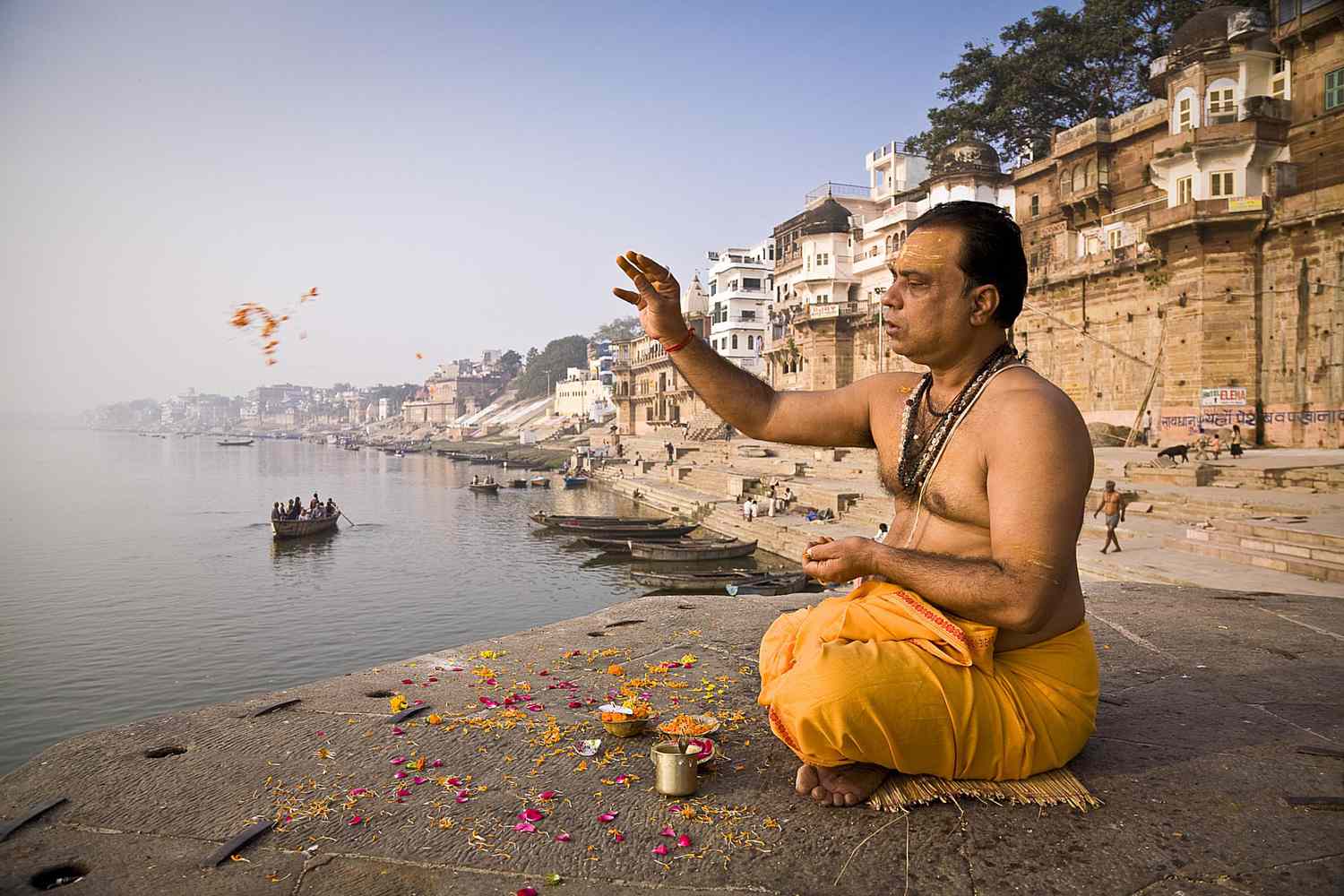
Brahmin

Brahmin

PeopleWikipedia

Search complete. 1728 mentions across 388 episodes found for "Brahmin".

Sep 12, 2026

Unknown podcast

S1E5 — Rishyashringa Comes to Ayodhya

Sep 12 · 1 Mention

speaker_0NARRATOR
4:13
Because of a transgression attributed to that king, a terrible drought arises, bringing fear to living beings.
speaker_0NARRATOR
4:21
Distressed by the absence of rain, the king summons Brahmans who are old in learning and tradition.
speaker_0NARRATOR
4:27
He asks them to prescribe the proper discipline and expiation.
speaker_0NARRATOR
4:31
Their answer is to bring Vibhandaka's son Rishya Sringa into Anga by every suitable means and then, with due observance, give him the maiden Shanta.
AlistairNARRATOR
19:29
Today the castes are social classes within which each person is bound by religion to live and marry.
AlistairNARRATOR
19:36
At the bottom of the social scale are millions of outcasts, to touch whom would contaminate a proud Brahmin.
AlistairNARRATOR
19:44
That such divergent elements should have been fused in an ardent nationalism would be inconceivable were it not for British imperialism.
AlistairNARRATOR
19:53
Britain has made India a nation, partly by giving political unity to the great peninsula which had been a welter of warring principalities, partly by giving English education to Indians of the upper class, who thereby imbibed the European idea of nationalism, but most of all by giving India a universal sentiment which could serve as a bond of union.
AlistairNARRATOR
20:15
That sentiment is antagonism toward British rule.
AlistairNARRATOR
20:19
Perhaps no other could have brought Brahmin and Pariah, Hindu and Muslim, Marathi and Bengali together, but they have been welded together in the heat of resentment against what they consider as the wrongs done to them by England.
AlistairNARRATOR
20:34
The nationalist torrent which has raged in India of recent years is a flood swelled by innumerable rivulets of discontent, but its main current has been the desire for Swarajya, self-government.
AlistairNARRATOR
20:46
Indian youth, mostly of the higher castes and wealthier classes, having studied at English universities, returning to India found much to criticize in the British administration.
Trudy GoodmanGUEST
46:41
This is from the Brahmajala Sutra, the Buddha's identifying certain pleasures as potentially addictive.
Trudy GoodmanGUEST
46:53
He says, Even ascetics and Brahmins remain addicted to attending such shows as dancing, singing, music, displays, recitations, band music, cymbals and drums, fairy shows—I like that one—combats of elephants, buffaloes, bulls, and rams, maneuvers, military parades, disputations and debates, rubbing the body with shampoos and cosmetics— I like that one too.
Trudy GoodmanGUEST
47:24
Bracelets, headbands, fancy sticks? I don't know what those are.
Trudy GoodmanGUEST
47:31
Do you know what fancy sticks are? Oh, oh, to hold your hair up.
speaker_1NARRATOR
16:33
Sir, said he, all this good order depends only upon the good counsel and prudent conduct of wise and able ministers, well affected to their prince and lovers of the public peace.
speaker_1NARRATOR
16:48
These are the persons that always preserve an empire in a flourishing condition, and whenever these things are mentioned, we ought to remember the strongest instant of this maxim ever known, which was in the conduct of the great Debshalim, who wholly entrusted the government of his kingdom to the good counsels of that miracle of wisdom, the Brahman Bilpa, insomuch that by the guidance of that minister he reigned in peace and the greatest prosperity and earthly happiness while he lived, and dying left to his posterity a name forever to be remembered with esteem and honor.
speaker_1NARRATOR
17:32
When the king heard him pronounce the names of Debshalim and Bilpa, he felt in himself the motions of a more than ordinary joy.
speaker_1NARRATOR
17:42
I have, said he to the vizier, for a long time most earnestly desired to hear the story of that Brahman's government, but never yet could meet with an opportunity to satisfy myself, nor ever imagined that you knew their history.
speaker_1NARRATOR
18:01
I am now more happy than I could expect, and desire you will immediately relate to me the story, that my kingdom may be established in happiness by the maxims of that venerable philosopher.
speaker_1NARRATOR
18:15
On this command of the monarch, the vizier thus entered on the history.
Max HollowayNARRATOR
20:39
If any beggar come to me Now when Saqqa, the king of gods, heard this thing, he determined to put the royal hair to the test.
Max HollowayNARRATOR
20:52
So he came in disguise of a Brahmin.
Max HollowayNARRATOR
20:55
to the otter and said why sir if i could get something to eat i would perform all my priestly duties the otter said i will give you food seven red fish i have safely brought to land from the sacred river of the ganges eat thy fill o brahman and stay in this wood and the brahman said let it be until to-morrow and i will see to it then then he went to the jackal who confessed that he had stolen the food but he begged the brahman to accept it and remain in the wood but the brahman said let it be until to-morrow and i will see to it and he came to the monkey who offered him mangoes and the brahman answered in the same way Then the Brahmin went to the wise hare, and the hare said, Behold, I will give thee of my flesh to eat, but thou must not take life on this holy day.
Max HollowayNARRATOR
21:54
When thou hast piled up the logs, I will sacrifice myself by falling into the midst of the flames, and when my body is roasted, thou shall eat it and perform all thy priestly duties.
Max HollowayNARRATOR
22:07
Now when the Sakka heard these words, he caused a heap of burning coals to appear.

6 MINS LATER

Max HollowayNARRATOR
27:59
Now when the Brahman saw the parrot king, he felt his strong power, and his heart was full of love to him.
Max HollowayNARRATOR
28:07
But he hid his feelings and said in a voice of anger, thy greed greater than all the other birds they eat their fill but thou takest away each day more food than thou canst eat doest thou out of hatred for me or doest thou store up food in some granary for selfish greed and the great being made an answer in a sweet human voice i hate thee not o brahman nor do i store the rice in a granary for selfish greed But this thing I do, each day I pay a debt which is due, each day I grant a loan, and each day I store up a treasure.
Max HollowayNARRATOR
28:50
Now the Brahmin could not understand the words of the Buddha, because true wisdom had not entered his heart.
speaker_12NARRATOR
83:33
This highly increased Dabshalem's curiosity, who therefore went himself to the mouth of the cave, and Pilpay, seeing him approach, went out to meet him and invited him in.
speaker_12NARRATOR
83:43
The king being entered, the old Brahmin besought him to rest himself, and begged leave to ask him the reason of his taking so long and dangerous a journey.
speaker_12NARRATOR
83:52
The king, who had something of a prophetic apprehension that he should meet with what he sought for in his converse with this old man, recounted to him the whole story of his travels, his dream, the discovery of the treasure, and what was contained in the piece of white satin.
speaker_12NARRATOR
84:06
The Brahmin then, with a look of the highest pleasure, told the king he looked upon those to be a happy people who lived under his reign, and that he could not sufficiently applaud his having contemned the fatigues of a tedious journey to acquire knowledge for the felicity of his subjects.
speaker_12NARRATOR
84:21
Then taking occasion from hence, he opened his lips, like a cabinet of precious knowledge, and charmed Dabshalem with his admirable discourses.
speaker_12NARRATOR
84:29
After several other things, they talked concerning Hanshank's letter.
speaker_10NARRATOR
84:51
Section 9 of the Fables of Bidpa This is a LibriVox recording.
speaker_10NARRATOR
84:56
All LibriVox recordings are in the public domain.
Michael McTaggartNARRATOR
83:36
This highly increased Dabshilem's curiosity, who therefore went himself to the mouth of the cave, and Pilpay, seeing him approach, went out to meet him and invited him in.
Michael McTaggartNARRATOR
83:46
The king being entered, the old Brahmin besought him to rest himself, and begged leave to ask him the reason of his taking so long and dangerous a journey.
Michael McTaggartNARRATOR
83:55
The king, who had something of a prophetic apprehension that he should meet with what he sought for in his converse with this old man, recounted to him the whole story of his travels, his dream, the discovery of the treasure, and what was contained in the piece of white satin.
Michael McTaggartNARRATOR
84:09
The Brahmin then, with a look of the highest pleasure, told the king he looked upon those to be a happy people who lived under his reign, and that he could not sufficiently applaud his having contemned the fatigues of a tedious journey to acquire knowledge for the felicity of his subjects.
Michael McTaggartNARRATOR
84:24
Then taking occasion from hence, he opened his lips like a cabinet of precious knowledge, and charmed Dabshilem with his admirable discourses.
Michael McTaggartNARRATOR
84:32
After several other things, they talked concerning Hoshank's letter.
speaker_15NARRATOR
85:07
The Fables of Bidpai by Anonymous, translated by Abdullah Ibn al-Muqaffa and Joseph Harris.
speaker_15NARRATOR
85:15
Chapter two: That we ought to avoid the insinuations of flatterers and backbiters.
Jennifer Beckett WoodNARRATOR
138:40
The marriage of equals is most recommended, for the first wife at least.
Jennifer Beckett WoodNARRATOR
138:45
That of a Brahmin with a Sindhra, that is, one of the lowest of several class, is discouraged, and as a first wife it is positively forbidden.
Jennifer Beckett WoodNARRATOR
138:57
Marriage is indissoluble, and the parties are bound to preserve mutual fidelity.
Jennifer Beckett WoodNARRATOR
139:03
From the few cases hereafter specified in which the husband may take a second wife, it may be inferred, says Oliphant Stone in his History of India, from whom in part we gather these points of Hindu law, that with these exceptions he must have only one wife.
Jennifer Beckett WoodNARRATOR
140:48
The practice of allowing a man to raise up issue to his brother, if he died without children, or even if, although still alive, he hath no hopes of progeny, is reprobated, except for Sudras, or in case of a widow who has lost her husband before consummation.
Jennifer Beckett WoodNARRATOR
141:07
Six forms of marriage are recognized as lawful.
Jennifer Beckett WoodNARRATOR
141:10
Of these, four only are allowed to Brahmins, which, although differing in minute particulars, all agree in insisting that the father shall give away his daughters without receiving a price.
Jennifer Beckett WoodNARRATOR
141:23
The remaining two forms are permitted to the military class alone, and are abundantly liberal, even with that limitation.
Sabah ChoudreyHOST
4:30
He heard it here first.
Sharon DhaliwalHOST
4:33
So Falguni was the youngest of five daughters born in 1971 in a Gujarati Brahmin family in Mumbai.
Sharon DhaliwalHOST
4:40
Her entire family loved music, so it was in her from an early age.
Sharon DhaliwalHOST
4:44
Her parents always had the radio on and one of her sisters actually was taught classical music at home.
AlistairNARRATOR
17:59
Today the castes are social classes, within which each person is bound by religion to live and marry.
AlistairNARRATOR
18:05
At the bottom of the social scale are millions of outcasts, to touch whom would contaminate a proud Brahmin.
AlistairNARRATOR
18:13
That such divergent elements should have been fused in an ardent nationalism would be inconceivable were it not for British imperialism.
AlistairNARRATOR
18:23
Britain has made India a nation, partly by giving political unity to the great peninsula which had been a welter of warring principalities; partly by giving English education to Indians of the upper class, who thereby imbibed the European idea of nationalism; but most of all by giving India a universal sentiment which could serve as a bond of union.

378 more episodes mention Brahmin.

Create an account to see the whole feed, search across every transcript, and follow the entities you care about.

We value your privacy

We use cookies to understand how you use our platform and to improve your experience. Click “Accept All” to consent, or “Decline non-essential” to opt out of non-essential cookies. Read our Privacy Policy.