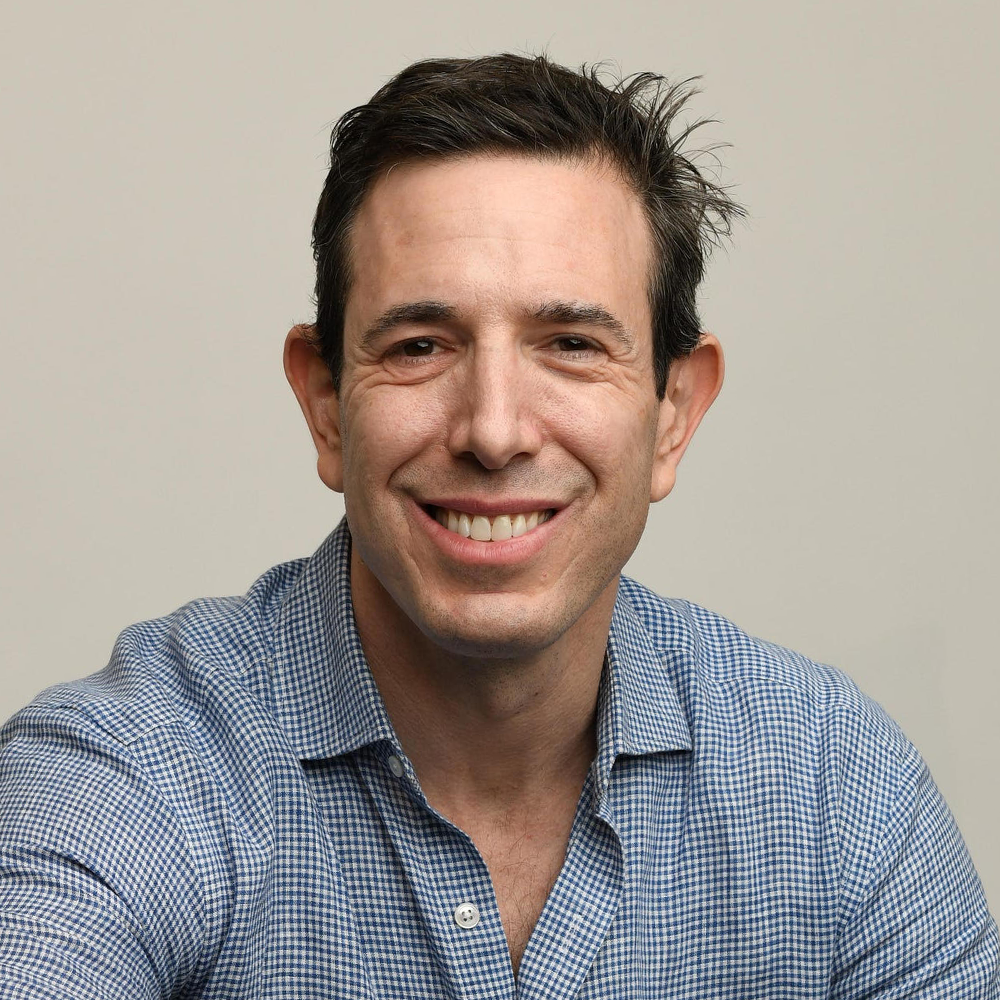
Bradley Tusk
Venture capitalist and political consultant
29
APPEARANCES
16
PODCASTS
Aug 28, 2026


Bradley TuskGUEST
There are some genuine regulatory concerns that I think do need to be addressed.
Bradley TuskGUEST
So for example, um, envi- uh, energy Um, there is no reason that residential homeowners should have to subsidize data centers or Sam Altman or anybody like that.
Bradley TuskGUEST
Um, water consumption, you know, if you have a closed loop system, then you don't need to draw from the lo- local water supply, but that's also, if you don't have that, a genuine concern.
Bradley TuskGUEST
However, um, these are things that the data center world now fully expects to have to do and pay.
Bradley TuskGUEST
Uh, Governor Hochul issued an executive order maybe about six, eight weeks ago now, um, that made that clear, and I think that was seen as like, yeah, of course we have to do that.
Bradley TuskGUEST
Uh, the amount of harm that he has done to the world through his platforms is greater than cigarettes or probably most of the things that have helped destroy humanity over centuries.
Bradley TuskGUEST
Um, you know, I think one of these times that, you know, I talked to you which one, we're talking the difference between the kinda Chinese model to AI compared to the US model, and where I think China's companies have really, or government, however you wanna look at it, have really gotten it right, is just the way that Anthropic and OpenAI and everyone else built their systems assumes that you need the most sophisticated type of AI at all times, and eighty, eighty-five percent of the time that's just not the case Sure, if you were using AI to try to come up with new ways to cure cancer or remove carbon from the atmosphere or achieve nuclear fusion, whatever it is, absolutely.
Bradley TuskGUEST
I've never done those things, and my guess [chuckles] is that you've never done those things.

Ed ElsonHOST
If so many people are so worried about data centers, I was literally walking down the street this morning and saw an AI data center, uh, an anti-data center rally literally walk right by me-

Bradley TuskGUEST
And, yes, we are certainly always in an economic race with China, but the US and China are both part of a much broader global economy that are reliant on each other despite whatever trade wars might be happening at any given moment.
Bradley TuskGUEST
And at the end of the day, the job of the US government is to protect the US consumer and protect the US economy.
Bradley TuskGUEST
And in the case of the hyperscalers, there's tremendous good and benefit that can come from what they're doing, but also tremendous risk.
Bradley TuskGUEST
Um, and you have to be able to protect the American consumer and the American taxpayer from that risk.
Bradley TuskGUEST
AI is wildly unpopular across the US and across every ideological and political part of the spectrum, because people are worried it's gonna take their job, it's gonna raise their energy bills, and it's gonna hurt their kids in some way.
Bradley TuskGUEST
And if you are an elected official, you need to be cognizant of that, and make sure that what you are doing is aimed to protect people.
Bradley TuskGUEST
The first is that there are businesses that can choose to situate themselves in one particular state for tax reasons, regulatory reasons, whatever it is, and it works, but data centers by definition can't all just be in red states.
Bradley TuskGUEST
They, they need to be close enough to population centers to be able to power AI, uh, in those states.
Bradley TuskGUEST
Now, I don't think it's sort of an absolute yes, but let's work off the basic thesis which pretty much defines everything that I do, which is that every policy output is the result of a political input.
Bradley TuskGUEST
Every politician makes every decision solely based on winning the next election and nothing else.
Bradley TuskGUEST
If you assume that's the case, and 34 years in politics has taught me that that's the case, um, then you look at the unpopularity of AI across the board, then of course politicians are going to pass bills and regulations and sign executive orders that come off as anti-AI.
Bradley TuskGUEST
And we've seen lots of stuff happen in this past legislative session, which wrapped up about a month ago kind of across the country, where new laws regulating chatbots, new laws regulating AI use in insurance, new laws regulating AI use in healthcare, in hiring, data centers.
Bradley TuskGUEST
So there's a lot of areas of it because politicians want to seem responsive to the voters, um, and data centers are particularly controversial.

BrettHOST
in
Bradley TuskGUEST
We were a tiny little series A company when, you know, I started working with Travis.
Bradley TuskGUEST
And yet because they were so powerful, we had to mount something equally powerful on our side.
Bradley TuskGUEST
And the thing that Travis understood from day one was that people, once they used Uber, would prefer it so much to having to hail a taxi that they would fight for it.
Bradley TuskGUEST
And the first time this actually happened was in 2012 in D.C. That's a councilwoman who put in a bill that effectively would have banned us.
16 MINS LATER
BrettHOST
Yeah,


Leslie PickerHOST
I'm curious to get your thoughts on that and if you've heard something similar.
Bradley TuskGUEST
So like fundamentally, yes, there are going to be times where you're using AI to figure out how to take carbon out of the atmosphere or create new drugs that cure cancer, and you need the most intense, rigorous models possible.

Carl QuintanillaHOST
Does that feed your view as to whether or not orbital compute eventually is necessary or profitable? I don't


Bradley TuskGUEST
You know, I mean, I think that the broader lesson to take from all of this is this is all a white space, right? And if you think about it, it's not totally unusual in the sense that Uber was a white space, crypto was a white space, autonomous vehicles are the white space.
Bradley TuskGUEST
By definition, the people who are watching this show are involved in exploring and creating technology often that hasn't been done before, otherwise why would you do it? And when it comes to regulation, frequently if it's a new thing, there is no existing framework to work in, um, because if the bureaucrats could've thought of the ideas and built them into companies, they would do that instead of being bureaucrats.
Bradley TuskGUEST
And so then whether it's AI or anything else, the question is: how do we take this new thing, and AI's obviously evolving faster than almost anything else I've ever seen, and come up with the right regulatory framework for it? And I think there are a few different competing factors that it's helpful to understand when you're thinking about AI regulation, whether it's something like Fable or a chatbot, right, or, or anything else which is, one, um, as much as everyone like us likes AI, is excited about it, the public does not.
Bradley TuskGUEST
Um, and that is true in red states, in blue states, at the state level, federal, local.

Bradley TuskGUEST
it was like mainly you know you've got a it was a cluster mobilization building the right immediate lobbying team figuring out their immediate narrative it was campaign 101. we're not talking about anything like particularly insightful or brilliant here but that's not what they did right that's what i do so started working on it and at the same time i had just raised my first venture fund and so we both invested and started working on the underlying issues and you know really what it became was how do we just stay alive in every single state because effectively right now they're saying that we're operating illegally and it was very much the uber playbook right which was People who did fantasy sports betting, so this was before the Supreme Court overturned PAPS, but which was the federal prohibition on sports betting.
Bradley TuskGUEST
It wasn't nearly as voluminous as the number of people who use Uber, but they're really passionate about it, right? Because now we're talking about something like the people who do it, like they, it's not even Uber, which is a lot better than taxi.
Bradley TuskGUEST
It's still just getting you from point A to point B, right? For them, this was like culturally who they were.
Bradley TuskGUEST
And so, We went basically state by state, started rallying our customers, did what we did with Uber and a lot of other companies we've done, which is really have the big expensive public fight in New York because you guys, meaning the media, all see that.

Rohan GoswamiHOST
yeah i've yet to see that really mobilize with parents whose kids are spending winning or losing thousands of dollars but it strikes me right like we had the maha movement are prediction markets and kids access to prediction markets gonna be a midterm or an electoral
Bradley TuskGUEST
It's at a $2.1 trillion market cap, does it make sense to buy shares of a company that throws off at the moment, last I checked, about $17 billion a year in revenue? So for some context, that's about 125 X multiple on revenue.
Bradley TuskGUEST
So the other companies in their ballpark, the other companies that have not only have the potential to do incredible things, but have actually delivered on it-


Mike PescaHOST
Bradley, does the way California run its elections, especially with that mail feature, is that optimal or even OK, in your opinion?
Bradley TuskGUEST
And I worked in Chicago politics for four years and all kinds of bad shit happened, right? I testified in multiple corruption trials.
12 MINS LATER

Bradley TuskGUEST
Um, and, uh, I worked in Chicago politics for four years, and all kinds of bad shit happened, right? I testified in multiple corruption trials.
Bradley TuskGUEST
You know what I never saw one single example of or even allegation of? Voter fraud, right? I don't think it's an actual thing.
12 MINS LATER
Mike PescaHOST
So what are you thinking about this? What are you doing about this, and what have you already done?
Bradley TuskGUEST
I mean, look, not every valuation, but SpaceX at 107 times revenue, OpenAI, I think, you know, 30 times, 35 times revenue, Anthropic, you know, still at like 25 times revenue at least, I'm sorry, closer to 50.
Bradley TuskGUEST
The challenge is when you look at the kinds of companies that command really huge multiples on the public market, it's the typically SaaS type companies that run a 70-80 percent margin.
Bradley TuskGUEST
And a lot of these companies that we're talking about right now are not SaaS companies.
Bradley TuskGUEST
They are companies that have far more infrastructure, far more CapEx, far more OpEx.
Mike SantoliHOST
And so I guess it really just starts to look more like a liquidity event than anything else.
Ed ElsonHOST
How did we get here? And when you look at California, what are the chances that you think this will actually go through?
Bradley TuskGUEST
Yeah, I mean, there's, in my view, no question that we have an income inequality problem in the United States.
Bradley TuskGUEST
Um, the question is: how do you best go about solving it? And to me, you know, there's half a dozen ideas that are a lot better than a billionaire's tax, and I'm saying this as someone who ran the state of Illinois.
Bradley TuskGUEST
And so every year, I had to figure out how we were gonna take in money and then how we were gonna distribute it.
Bradley TuskGUEST
And I know for a fact that every time that someone like Ed Elson sent us a dollar in tax revenue, by the time that money reached the people in need, thirty, forty cents on that dollar was gone.
11 MINS LATER
Bradley TuskGUEST
reacting.Right, I mean, the question for markets is do you think that all this, uh, s- that we're seeing in public is just posturing, it's, you know, performance for domestic political audience, or do you think it indicates a real logjam that's not gonna break anytime soon? I mean, if you go weeks and weeks and weeks with the Strait of Hormuz continuing to be closed, that's a real question.
Bradley TuskGUEST
There are reports out there from other media outlets that the president is considering the idea of putting a deadline on this ceasefire, saying, "You know, this is not indefinite.
Bradley TuskGUEST
This could be a, just a couple of days that we're gonna have an, a ceasefire extension." Uh, the White House pushed back on that to me, uh, earlier today, uh, saying that, you know, the, the other media outlets don't necessarily know what the president's gonna do.
Bradley TuskGUEST
So, uh, is this an indefinite ceasefire that could go for weeks, or is this something that's gonna be days? We, as we sit here, have no idea.
Bradley TuskGUEST
Uh, but it's not clear that the stock market necessarily knows what's gonna happen either.
Ed ElsonHOST
I mean, this news of Sam Altman, two attacks in the span of just a few days, it really is just a striking example of this growing feeling in America that I've talked about, I know you've talked about, and that is a lot of people just-Don't like AI at this point, uh, what do you make of this news, and what does it say about this moment?
Bradley TuskGUEST
And to be clear, regardless of what you think of either AI or Sam Altman, no one should be throwing Molotov cocktails at his home or anyone's home.
Bradley TuskGUEST
But I think you've got a combination of, one, just general distrust or happiness in this country, right? Whether it is the fact that we are twenty-third in the world happiness report or sixty-second for people under the age of twenty-five, whether it's the fact that our government seems to be hijacked by extremists on both sides of the aisle, whether it's the fact that we haven't regulated Internet 2.0 yet, so even things like social media have never been dealt with by Washington, let alone AI.
Bradley TuskGUEST
I saw a YouGov poll that showed that people have a forty-seven to twenty-seven by margin of people distrust of AI.
19 MINS LATER
Bradley TuskGUEST
that in a lot of ways, the excitement that the hyperscalers had kind of got away from them a little bit, and it's starting to face reality.
Bradley TuskGUEST
I understand that if they believe that they have customers for the cloud services and they need more CapEx to be able to then build it and sell it, that makes sense as a business.
Bradley TuskGUEST
But it still fundamentally depends on the model of, We need generative AI powered by incredibly powerful, incredibly expensive, incredibly energy-intensive chips made by companies like NVIDIA or ADM, and then to be put in data centers that will use incredible amounts of energy, and all this is both necessary and will happen.
Bradley TuskGUEST
And I think what we're starting to see is neither of those are good assumptions.

Kelly EvansHOST
If they wanted a long-term sustainable business model at a time when I'm getting Gemini, quote-unquote, for free because of my Google plan, What would you tell them? What would your advice be? Yeah, I

speaker_13UNKNOWN
Mm.
Bradley TuskGUEST
And we had to all of a sudden go all over America and either pass bills to legalize daily fantasy sports betting or at least get them to understand that, that we were ex- complying with the existing laws.
Bradley TuskGUEST
And the way that we did that is we went to our customers and said: "Listen, um, if you like this product, we need you to fight for it." And every time they were on the app, we knew where they were located, and we'd say, "Hey, click here to tell your local state senator or state rep, whoever it might be, that you want FanDuel, uh, to stick around." And enough people did it that, you know, it shifted the political inputs.
Bradley TuskGUEST
If you guys just take a half a step back, in politics, if there's one thing to take away from this interview, it's that every policy output is the result of a political input.
Bradley TuskGUEST
Every politician makes every decision solely based on the next election and nothing else, and there are some exceptions.
7 MINS LATER
speaker_14UNKNOWN
Mm.
Bradley TuskGUEST
And if you are a politician and all you want to do is stay in office, then you cater to those groups at the exclusion of everyone else.

Miles ParksHOST
Do you have any sense of how voters feel about that? I mean, I guess I just wonder about the average American, if they would be open to this sort of change.
Bradley TuskGUEST
We- we've polled this a bunch of times in different places, and what's interesting is before 2020, the results were very consistent across Democrats, independents, and Republicans, where about 75% said, "Yes, if it is secure, we should have this." After 2020, we stayed in the mid 70s with independents and Democrats, but then fell into the 40s with Republicans because of Trump falsely arguing that he was, you know, the election was stolen from him in 2020, um, but that did resonate with a lot of Republicans.
Bradley TuskGUEST
There are individual groups of people for whom voting tends to be harder and they are particularly supportive, so that could be people in rural areas, uh, deployed military, people with disabilities, uh, Gen Z, uh, with a lot of support in the civil rights community because a lot of leaders think that mobile voting is the best anti-voter suppression tool out there.
Bradley TuskGUEST
So, there are specific groups of people, but overall, you know, when I ask groups like, "Hey, who voted in their last state senate primary?" If they're being honest, almost no one raises their hands.
Bradley TuskGUEST
And then when I say, "Okay, if you could do it while you're waiting for your coffee or you're sitting on the bus or whatever it is, how many of you would then consider doing it?" And then pretty much everyone raises their hand.
Bradley TuskGUEST
So, even if we went from...... 10% turn out to 35, it would radically change the composition of the electorate and the underlying political incentives.
Kelly EvansHOST
So as you hear all of these different data points, what are you sitting here thinking about as it relates to whether this is good, prudent U.S. policy to now move forward, including with this supposed export tax?
Bradley TuskGUEST
The first is, I don't understand why we're sending chips to China when there are US allies like the UAE, like Japan, like South Korea, that want these chips, need these chips, and are not our great rival.
Bradley TuskGUEST
So why we're favoring China ahead of our actual allies, to me, is very confusing.
Kelly EvansHOST
In other words, yeah, it's perfectly within their bandwidth, right? But if you're a state- But


Scott GallowayHOST
I'll give you 60 seconds of running room for vote by phone, but then come up with another two or three ideas.
Bradley TuskGUEST
So on mobile voting, we live in a world where, in my experience, every politician makes every decision solely based on the next election.
Bradley TuskGUEST
And because of gerrymandering, the only election that typically matters is the primary.
Bradley TuskGUEST
So who are they? They're the far left or the far right or special interests, and as a result, they dictate not only who wins office, but then what happens once those people are in office.
Bradley TuskGUEST
So either you get the absolute chaos and dysfunction of DC, which is literally shut down, or you get totally one-sided governments, whether it's the city of Portland on the left or the state of Texas on the right.
11 MINS LATER
Ed ElsonHOST
Seems scary to capitalists, but I just wanna get your views on do you think that is the future?


Bradley TuskGUEST
So, uh, once we came up with the idea for mobile voting, and when I founded the Mobile Voting Project in 2017, the first thing we did was test the hypothesis of if you put voting on people's phones, will they do it? And so we funded out of my foundation, this is solely philanthropic, um, elections in seven different states where either deployed military or people with disabilities were able to vote in real elections on their phones.
Bradley TuskGUEST
And what we learned is I think what's pretty obvious to all of us, which is when you put things on people's phones and you make them easier, a lot more people do it.
Bradley TuskGUEST
Then the next question became is the technology good enough to do this at scale? So in those pilot programs, we used the existing te- tech on the market, and for 5,000 soldiers in West Virginia or 6,000 people with disabilities in Oregon, that was fine.
Bradley TuskGUEST
But if the goal is to get turnout from eight to 32, um, you need technology that can be used at scale, and we felt like that didn't really exist.

Morgan BrennanHOST
And let's start right there and have you weigh in on this notion of whether this is getting bubbly or not.
Bradley TuskGUEST
Yeah, I mean, I think, look, I assume that when these companies say we need to invest $10 billion, $100 billion, $500 billion into infrastructure for AI compute and the energy for it, that they're not just throwing away the money for no reason.
Bradley TuskGUEST
They truly believe that for the various plans they have to come to fruition, that amount of compute is necessary, that amount of data centers are necessary.
Bradley TuskGUEST
So if we assume that's true, the challenge that we run into is it's still quite risky, right? Because you effectively about a dozen companies that are driving the market today, spending incredible amounts of money, taking out incredible amounts of debt.
Bradley TuskGUEST
And it is risky because if their perceptions of what's needed turn out to be wrong, or if the timeline is different or anything else, you know, to have only a handful of companies effectively holding all the upside and all the downside is a lot.
Bradley TuskGUEST
And I think there's a revenue source that isn't being talked about, but should be.
Bradley TuskGUEST
So when President Trump did his trade agreements with a bunch of different companies, some of them had components that included foreign investment in U.S. technology and the U.S. tech ecosystem that includes UAE, so it's 1.4 trillion, Japan, 550 billion.
Morgan BrennanHOST
It gets it, I guess, a broader topic, and that is the role that policy plays in all of this, especially if you start to look at this AI buildup globally through a geopolitical lens.

Bradley TuskGUEST
... or if you're, you know, being called for summon for a ride this way or whatever, that's not okay." But those were all just attempts to use regulation to drive us out of the market.
Bradley TuskGUEST
Fast-forward probably eight years later to Bird and to scooters, um, another sort of very local transportation mobility issue, but, um, there wasn't a clear set of rules of what you would do with electric scooters.
Bradley TuskGUEST
Should they be on the street, on the sidewalk, in bike lanes? Where can they be docked? What should charging be like? Should you need a helmet? Should there be insurance? And those, to a certain extent in my view, were reasonable questions.
Bradley TuskGUEST
So I think part of it is there's always a disconnect, to be honest, between the innovator who's saying, "I'm doing something really important and great for society.
Bradley TuskGUEST
Get out of my way," and the regulator who's saying, "Well, it's my job to look after the public good and the safety and everything else." And most of the time no one's actually corrupt.


Bradley TuskGUEST
So- so, you know, eh, because I, you know, talk to founders every single day, whether it's the ones in my portfolio or people pitching us, one of the first things I try to establish is either what do they know, or, by the way, equally important for me, do they know what they don't know? Right? So like take Travis Kalanick who is a very, very brilliant, very, very hard-nosed guy.
Bradley TuskGUEST
And one of the reasons that we were able to work really well together, and we still do and succeed, is he knew what he didn't know, right? And he had his opinions and we might argue about stuff, but at the end of the day, he let me do my job, and that ultimately worked.
Bradley TuskGUEST
So one is, if you are a founder, just because you went to Stanford, just 'cause you were in Y Combinator, just because Andreessen invested in your round, whatever it is, does not mean you know everything about everything.
Bradley TuskGUEST
You might be great at- at the engineering, you might be great at marketing or product or whatever it is.
11 MINS LATER
Scroll for more appearances