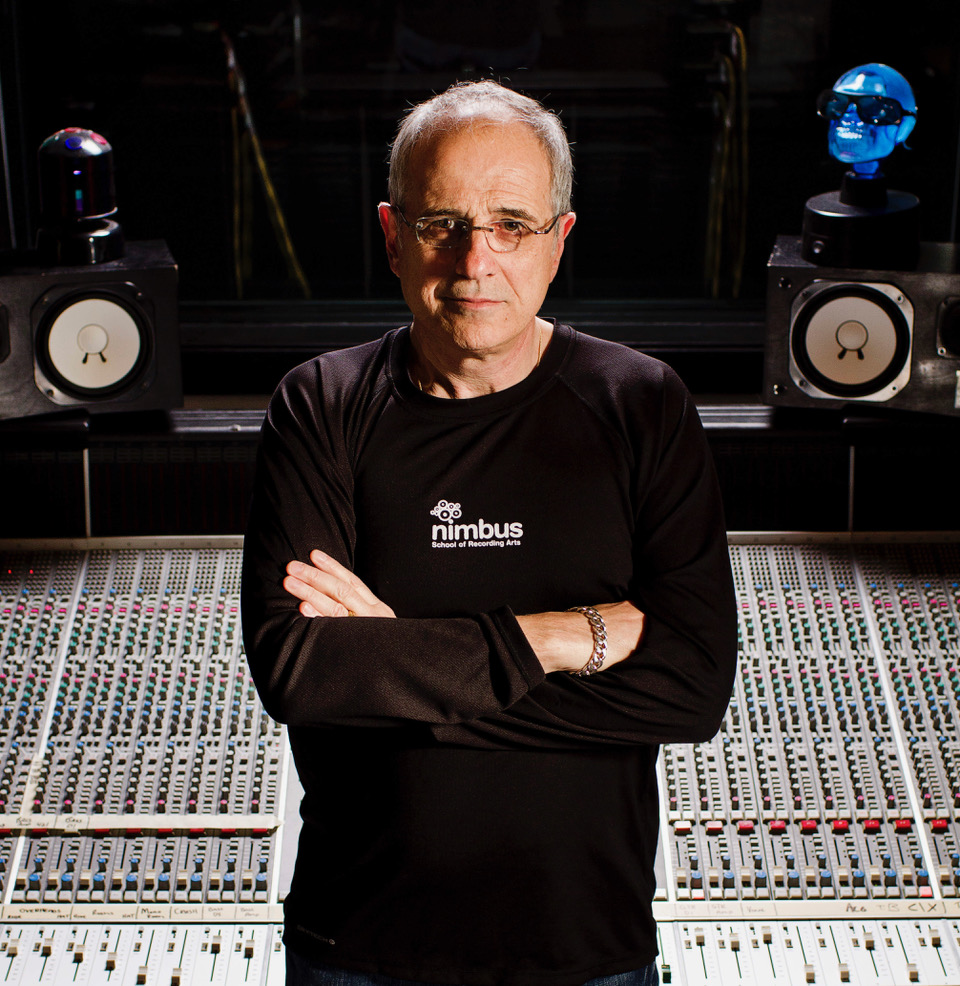
Bob Ezrin
Canadian music producer and keyboard playerWikipedia
63
MENTIONS
37
EPISODES
31
PODCASTS
Search complete. 63 mentions across 37 episodes found for "Bob Ezrin".
Sep 22, 2026

Chuck KlostermanGUEST
So they had to bring in a studio musician named Dick Wagner.
Chuck KlostermanGUEST
Bob Ezrin is the producer.
Chuck KlostermanGUEST
He brings in Dick Wagner from the Alice Cooper band to play on this.
Trey EllingHOST
Fitting name for Kiss.
Trey EllingHOST
Yeah.
Chuck KlostermanGUEST
And I recently learned that on many records that Bob Ezrin produced, he specifically brought in Dick Wagner's wrote wasn't specific to kiss.
Chuck KlostermanGUEST
That's a very minor fact.
Chuck KlostermanGUEST
Okay.

Mark CicchiniHOST
A great example of that is if you bought the Destroyer, uh, Resurrection, where there's different vocal parts.
Mark CicchiniHOST
There was different things that Ezrin brought up in the mix.
Mark CicchiniHOST
That's how come I love the, uh, Resurrection thing so much, because he found parts that were buried on the original.
Mark CicchiniHOST
You can't, you can only do that on a remix.
Michael BrandvoldHOST
...
Michael BrandvoldHOST
if possible.
Michael BrandvoldHOST
I have little interest when bands go, "Yeah, we had this superstar DJ remix it." I'm like, "Who the fuck is this guy? I don't know it." Eddie Kramer doing it, Bob Ezrin doing it.
Michael BrandvoldHOST
You know, if they do something with Crazy Nights next year-

KevinHOST
There's no doubt that through the early 1980s, Vincent Fournier, the artist known as Alice Cooper, suffered through a bit of a rough patch.
KevinHOST
From being a part of the band called Alice Cooper, whose reputation and popularity grew through their final five albums together, that were helmed at the production level by Bob Ezrin, and then into his immediate blazing glory of his solo career under the same name that began with his debut solo album, Welcome to My Nightmare, Alice had created a career through the 1970s that saw fame and fortune, and all of the pitfalls that tend to come with such a thing.
KevinHOST
Along the way, he had committed himself to a sanatorium to deal with his alcoholism, recovered, and then come out the other side to discover that drugs tended to work even better.
KevinHOST
From 1980 to 1983, Alice recorded and released four albums, Flush the Fashion, Special Forces, Zipper Catcher's Skin, and Da Da, that he dubbed his blackout albums, as he now has no memory of actually creating those albums.
KevinHOST
All of this affected his gaunt body change, a look he would eventually dub his apocalyptic Alice stage.
KevinHOST
He was incapable of touring on either Zipper Catcher's skin or Dada.
KevinHOST
In fact, Dada was the final album of his Warner Brothers contract, and privately, if not publicly, believing it would be his last, he brought back Bob Ezrin to produce and Dick Wagner to play and write the album.
KevinHOST
Following the recording of the album, and under the threat of divorce by his wife Cheryl, Alice returned to hospital for his alcoholism and for cirrhosis of the liver.

Lawrence PuryearHOST
I'm your host, Lawrence Puryear.
Lawrence PuryearHOST
This week, we're putting The Tone Arm's needle on famed record producer Bob Ezrin.
Lawrence PuryearHOST
Bob's back working with the Jayhawks on their latest album, Sanctuary Park, 26 years after their first project together.
Lawrence PuryearHOST
We talk about how the reunion started with an offhand remark from Jayhawks singer Gary Loris, how both men left the United States for Canada around the same time, and lots of talk about the craft of record producing.

Chuck KlostermanGUEST
the super producer of the 70s.
Chuck KlostermanGUEST
He becomes like the Bob Ezrin, Ted Templeton type of guy, okay? Where he's just making all of these records.
Chuck KlostermanGUEST
He's producing them.
Chuck KlostermanGUEST
But he's also Andy Warhol, which means he doesn't actually involve himself in a hands-on way.

Shandon SahmGUEST
So once we got signed, you know, you start to shop producers because you're going to make a record.
Shandon SahmGUEST
So we had Bob Ezrin, which was really cool.
Shandon SahmGUEST
And we had dinner with him.
Shandon SahmGUEST
We had dinner with all those guys.
Shandon SahmGUEST
Bob Ezrin, though, wanted to.
Shandon SahmGUEST
completely rewrite your songs.
Shandon SahmGUEST
And we didn't want that.
Tyson BrydenHOST
Did he actually listen to the tracks and tell you what he wanted to turn them into?
KevinHOST
It feels a little like, okay, we've reached this point of the album, we need a ballad, let's find a way to squeeze one in.
KevinHOST
You can almost see Alice, along with his production team of Bob Marlett and Bob Ezrin, discussing just this scenario.
KevinHOST
On the other hand, I Just Want To Be God has a fabulously brawly opening riff, the protagonist telling us exactly how things are going to be and that they are going to be doing it their way, that they will be the omnipresent ruler of the human race.
KevinHOST
And if this song is not Alice Cooper looking 20 odd years into the future and talking about a very specific person in our current timeline, then I am a very bad judge.

Nettie FreedGUEST
So it was like, you know, I just, that was an unbelievable process, having a producer of that caliber sit down and listen to all of my demos, which I didn't, really think of as anything.
Nettie FreedGUEST
Colin was recommended to me by, you know, my good family friend Bob Ezrin, which is insane.
Nettie FreedGUEST
Right.
Nettie FreedGUEST
I mean, it's like, not until I was older did I even understand what Uncle Bob had done.

Anthony J. RestaHOST
Thanks, guys, for listening.
Anthony J. RestaHOST
It's Anthony J. Resta signing off Studio Secrets A to Z. I've booked Bob Ezrin on the show, and I'm going to be tracking that next week.
Anthony J. RestaHOST
And that's going to be a real highlight for the whole series.
Anthony J. RestaHOST
I mean, he's just a legend, and I think it takes us to a whole new place.

Daniel E. Catullo IIIGUEST
It's amazing.
Daniel E. Catullo IIIGUEST
We have that footage of the early days of like Alice Cooper and Johnny Depp with management and Bob Ezrin in Johnny Depp's kitchen discussing, hey, are we going to do this? And even like even like a business discussion with Johnny, like I think it was Bob Ezrin.
Daniel E. Catullo IIIGUEST
And, you know, Bob and Shep were saying, hey, you know, you can make more money in one week doing a movie than you can the entire time doing this project.
Daniel E. Catullo IIIGUEST
And Shire was like, it's not about that.
Daniel E. Catullo IIIGUEST
But we see the band form.
Daniel E. Catullo IIIGUEST
But then more importantly, we show we see the band kind of morph into like being their own, like towards the end there by the second album.
Daniel E. Catullo IIIGUEST
you know, even Bob Ezrin didn't produce the second record.
Daniel E. Catullo IIIGUEST
They kind of produced it internally with Tommy.
27 more episodes mention Bob Ezrin.
Create an account to see the whole feed, search across every transcript, and follow the entities you care about.