blood vessel
33
MENTIONS
8
EPISODES
7
PODCASTS
Search complete. 33 mentions across 8 episodes found for "blood vessel".
Oct 5, 2026

Pradip JamnadasHOST
Hypertension.
Pradip JamnadasHOST
Hypertension is nothing but the lack of vasodilation of blood vessels.
Pradip JamnadasHOST
What makes them not vasodilate properly and therefore they're vasoconstricted? Advanced glycation end products.
Pradip JamnadasHOST
I'll show you.
Pradip JamnadasHOST
Renal failure.
Pradip JamnadasHOST
Because the tiny blood vessels in your kidneys don't work properly.
Pradip JamnadasHOST
Advanced glycation end products.
Pradip JamnadasHOST
Insulin resistance and pancreatic cell dysfunction.
Pradip JamnadasHOST
It's telling your heart rate what to do.
Pradip JamnadasHOST
It's telling your contractility, your blood vessels to constrict or vasodilate.
Pradip JamnadasHOST
Because you can't have the same software at all times.
Pradip JamnadasHOST
How can you have that? You can't have one operating system all the time because your environment is changing.

Tommy WoodHOST
Mm.
Jason HinmanGUEST
There are about 400 miles of brain, uh, blood vessels that feed the brain, and they just provide all the critical nutrients.
Jason HinmanGUEST
They also have this important role in clearing out the toxic aggregates that, um, and, and synaptic proteins that turn over throughout the day, um, and through- over the years, um, as we use our brains.
Jason HinmanGUEST
And so the, the vascular tree of the brain is really one of, in my view, one of the most important and somewhat un- understudied components, particularly in the context of late-stage neurodegenerative disease.
Jason HinmanGUEST
Um, and so, uh, you know, most times when we think about stroke, it involves these large blood vessels of the brain that are injured.
Jason HinmanGUEST
Um, but, you know, the, they, they make up a minority of the, of those 400 miles.
Tommy WoodHOST
Mm.
Jason HinmanGUEST
And so in my view, it's really the most important component, and where a lot of problems with brain fitness start, um, is in not having an, a, a healthy and normally functioning vascular system.

Austin LeeHOST
It's kind of fun.
Austin LeeHOST
If we laid out our blood vessels end to end, you'd have 60,000 miles worth of blood vessels.
Austin LeeHOST
That is crazy.
Austin LeeHOST
It is crazy.
Austin LeeHOST
Jeez.
Austin LeeHOST
It's nuts.
Austin LeeHOST
So we have an entire earth's worth of blood vessels in us.
Austin LeeHOST
In every human body.

MasakiHOST
Or, uh, or a blood vessel.
KinokoGUEST
Bl- blood vessel?
MasakiHOST
Blood vessel, like a 血管.
KinokoGUEST
Um, you mean 結述 in Japanese?
MasakiHOST
Maybe.
KinokoGUEST
Blood vessel.
MasakiHOST
Yeah.
KinokoGUEST
You mean 血管?

SamiHOST
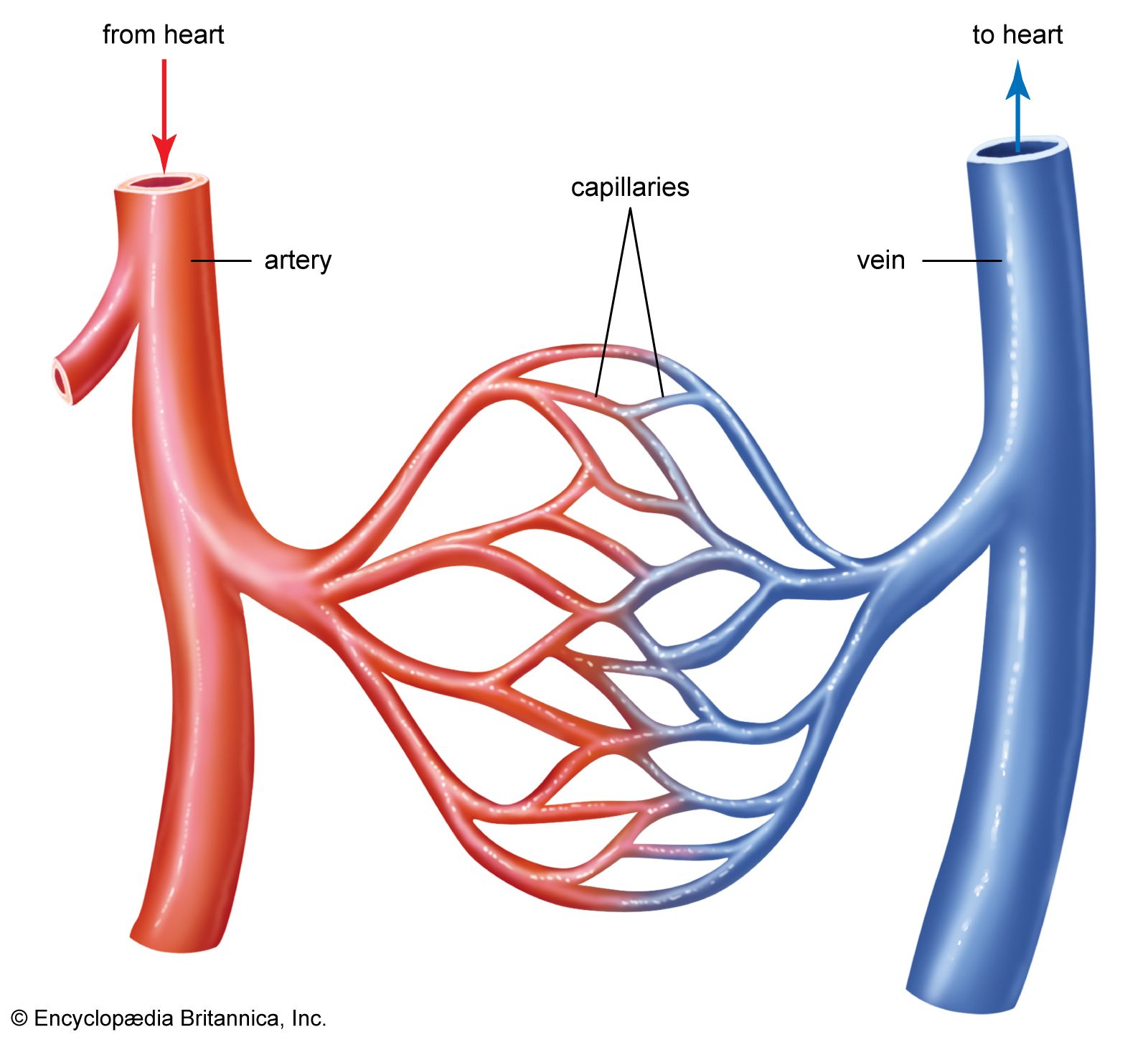
Inside us, there are incredible systems that act as the body's roads, bridges, and structures.
SamiHOST
Like, take blood vessels.
SamiHOST
Humans have 60,000 miles of them inside our bodies for oxygen and nutrients to travel along.
SamiHOST
That windy internal passage is long enough to wrap all the way around the Earth twice.
SamiHOST
I think my brain is really just coming to terms with just how astounding that is.
SamiHOST
This is really what parents should tell their kids when they won't eat their vegetables.
SamiHOST
Eat your broccoli now, Thurston, so your blood vessels can grow long enough to wrap around the Earth twice! So today, we're going to sing the praises of the cardiovascular and lymphatic systems, give our muscles the chance to flex, and sure, we'll talk more about bones, too—all systems that serve as infrastructure for these soft bundles of tissues and organs that we call bodies.
SamiHOST
Hi, I'm Dr. Sami, your friendly neighborhood entomologist, and this is Crash Course Biology! And speaking of flexing, y'all mind if I flex my theme music? After our respiratory and digestive systems have done the job of bringing energy into our bodies, we multicellular organisms need a system to transport life-giving oxygen and nutrients to all the cells.

Avi SlanskyHOST
And this is the cheilev that's al aksalim, the fat of the kelibusta, is gonna be, again, nacham ol, an isur de'oraisa.
Avi SlanskyHOST
Amar Rav Aba, amar Rav Yuda amar Shmuel, chutin shebiyad, the threads, the blood vessels.
Avi SlanskyHOST
In the yad and the foreleg is aser.
Avi SlanskyHOST
Oh, I was gonna say before we get here, excuse me, before we move on to the chutin shebi, shebiyad, let's pull up, let's pull up a picture.
Avi SlanskyHOST
Chutin shebe-arasurin, Amar Rav Safra, Moisha miomer, Rachmana litecha besra.
Avi SlanskyHOST
What do you mean? You're telling me the threads on the foreleg are aser.
Avi SlanskyHOST
Did Moisha Habenu say you can't eat meat? Everything has these chutin, has these blood vessels on it.
Avi SlanskyHOST
Amar Rav Am, Moisha miomer Rachmana achal dama.

Shalom RosnerHOST
Rashi, [Hebrew].
Shalom RosnerHOST
Certain types of blood vessels that come out of the chi-- uh, the lechi are asur, and therefore, [Hebrew].
Shalom RosnerHOST
You shouldn't give it to a kohen if you're choshe that he doesn't know how to remove them.
Shalom RosnerHOST
Because that's basically lifnei iver, right? You're, uh, giving him something that he's going to eat, and it's bishum dam.