Blombos Cave
5
MENTIONS
4
EPISODES
4
PODCASTS
Search complete. 5 mentions across 4 episodes found for "Blombos Cave".
Nov 22, 2026

OlympiaHOST
The earliest signs of such transportation were found in Africa, and this is one of those criteria of behavioral modernity that seems to have appeared much earlier than initially thought.
OlympiaHOST
Do you remember Blombos Cave in South Africa, which I told you before? Because evidence of modernity have been found there earlier than thought possible.
OlympiaHOST
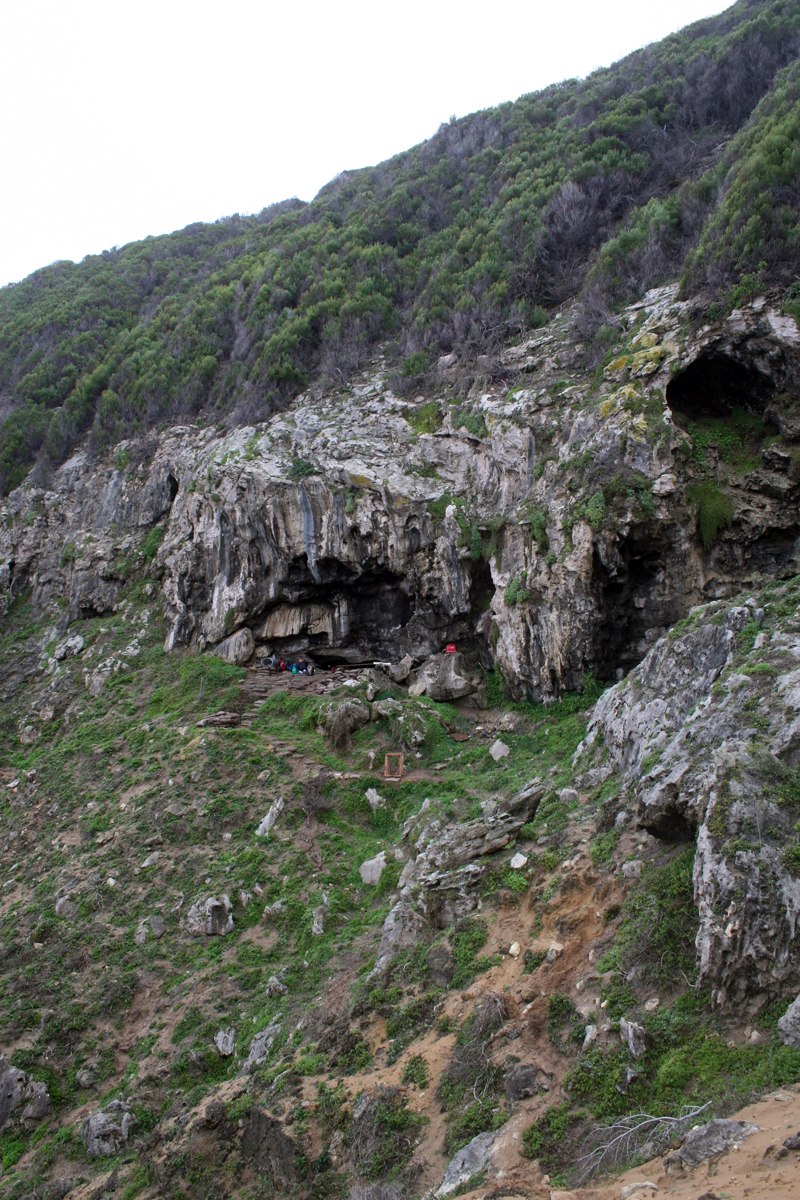
So at Blombos Cave, ochre, a pigment that is generally reddish-brown or yellow, as well as marine shells, have been found.
OlympiaHOST
The site is inland and these shells had to be transported over tens of miles or kilometers.
OlympiaHOST
Even older than that in Kenya.

DannyHOST
You
Greg AndradeGUEST
know, they found these tools that were made 300,000 years ago in these Blombos caves recently in the last couple of years.
Greg AndradeGUEST
And, you know, that's narrative design.
Greg AndradeGUEST
It's a problem solving that has a story to it, right? Because, anyway, I digress.

Maya CrowneGUEST
And then we found formulators, and it was a lot of trial and error to ultimately come up with our formula, which, as I mentioned, is based really on ancient paintmaking practices, which was great because we were able to iterate on something that has already existed and has been tried and true in a lot of different ways.
Maya CrowneGUEST
You know, the minerals that we're using are the same mineral pigments, the same iron oxides, the same, you know, hematites and gothites that we've been using really since the dawn of time, since the Blombos caves.
Maya CrowneGUEST
And we know that these things stand the test of time.
Maya CrowneGUEST
And so, yeah, it was...

Chris KnightGUEST
Well, just, I mean, it wasn't so long ago, about 15, 20 years ago, that we had this extraordinary discovery of the world's first art, which pushed art back from about 30,000, 40,000 years ago in Upper Paleolithic Europe, the cave paintings and so on, right back to 70 and even 80,000 years ago.
Chris KnightGUEST
This was the Blombos Cave in South Africa, a piece of brilliant blood-red ochre, quite a large-ish sort of chunk of ochre with cross hatchings on it, evidently deliberately made, and showing possibly the kinds of markings which would have been made by that ochre on the human body.
Chris KnightGUEST
And in terms of archaeology, we haven't mentioned the main, in some ways, the main people, Wim Tautus Dapsauskas and his colleagues, looking at about a hundred different ochre sites across Africa, dividing the ochre into different frequencies.
Chris KnightGUEST
There's just widespread agreement that that ochre would have been used for purposes of ritual, and the rituals would have been first menstruation rituals.