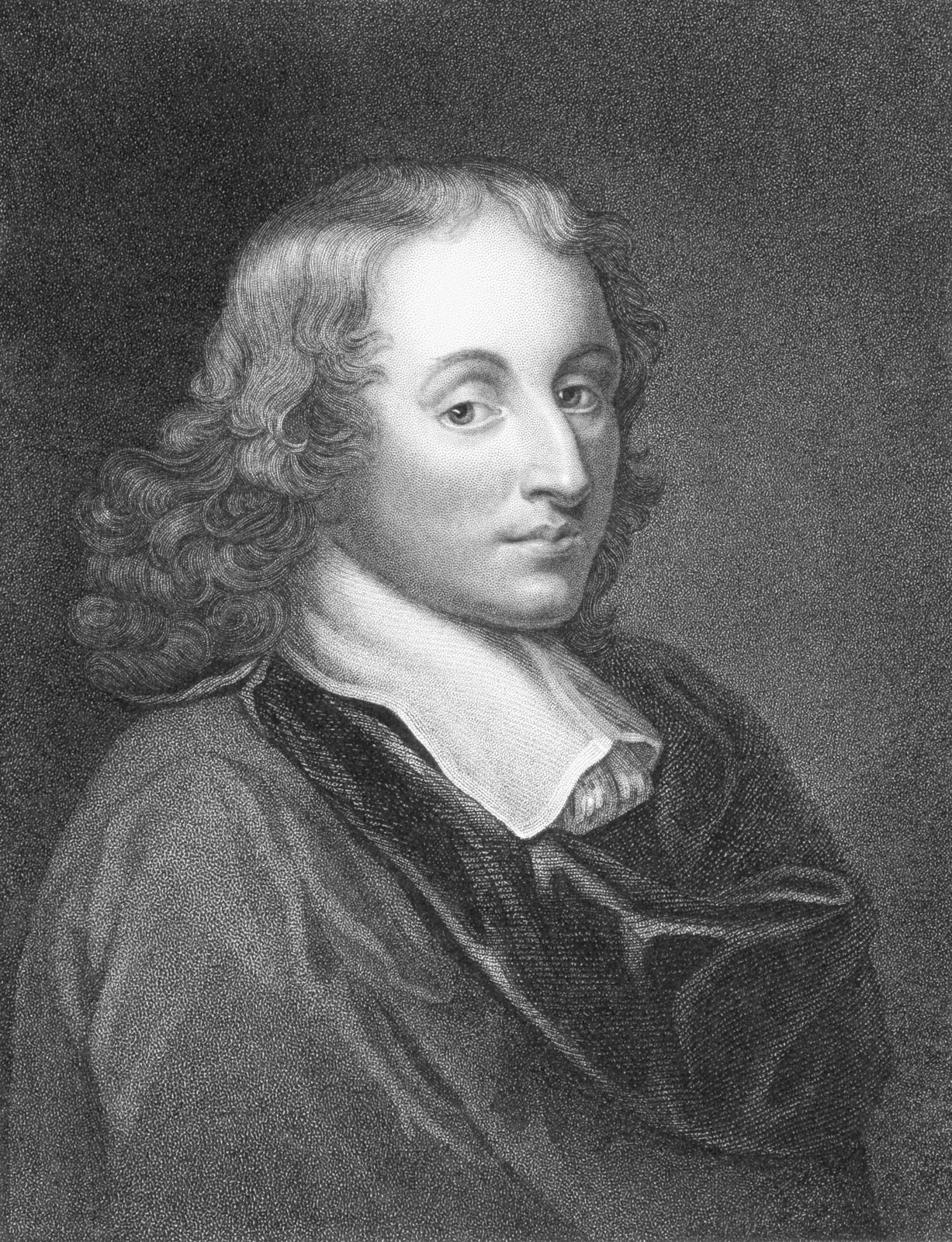
Blaise Pascal
French mathematician and physicistWikipedia
232
MENTIONS
110
EPISODES
97
PODCASTS
Search complete. 232 mentions across 110 episodes found for "Blaise Pascal".
Sep 14, 2026

Mathilde ChevallierGUEST
I would say that I think the question of worldview has been going on for a long time.
Mathilde ChevallierGUEST
Like, I think the question of, like, history and, like, like, kind of like relativism, like Montaigne and Pascal, I think there's this idea of, like, what is true? What is justice? Like, what, you know, what, like...
Mathilde ChevallierGUEST
I guess, like, the world market forming, all these different experiences.
Mathilde ChevallierGUEST
I think, you know, in the colonial period as well, there was, like, a similar kind of, like, the beginnings of, like, anthropology or something, where you have, like, "Wow, there's all of these different societies." Like, what is, what is true? You know, what is...
Daniel TuttHOST
... just, uh, one of Lukács's students, um, this very interesting figure by the name of Lucian Goldmann, he argues in a beautiful way, and this is something we can also introduce later as well, not only is every Weltanschauung kind of tied together by aesthetics and aesthetic production and aesthetic objects, but oftentimes Weltanschauungs become the expression of a philosophical perspective.
Daniel TuttHOST
Hm.
Daniel TuttHOST
And he argues that the philosophical perspective of Pas- Blaise Pascal, which is characterized by, um, a c- a type of unique, um, fatalist resignation from the world, and is characterized by a certain pessimism regarding the human condition and original sin, um, through Pascal's allegiance of course to the conservative Catholic philosophy of Jansenism.
Daniel TuttHOST
Um, Goldmann wrote a book called The Hidden God, and his argument there is that Pascalianism becomes the Weltanschauung of what would become bourgeoisie.

Andrew RootGUEST
I, I...
Andrew RootGUEST
It's not fair to say a dualism, but this goes back, well, from, from, from, uh, Blaise Pascal, who feeds this to Kierkegaard, and then Kierkegaard, who feeds a lot of other people, but eventually James Loder, is this sense that it's not enough just to be a self.
Andrew RootGUEST
You know? It, it...
Andrew RootGUEST
for, for Pascal, it's not enough to just be a rationali- a rationalizing thinking self, that there's something about what it means to be a soul.
Andrew RootGUEST
And the way Loder wants to talk about that, um, picking it up from Kierkegaard, is there's something about ourself, but there's also something about what it means to be spirit, that we are fundamentally spiritual beings.
Andrew RootGUEST
Ex- except spiritual gets hard 'cause then you start to think of, like, woo, uh, you know, like, we're all kind of attracted or our culture's attracted to kind of consumer spiritualities as a way to be selves.

Kristen MaynardHOST
Remember what I have done.
Kristen MaynardHOST
And so that makes me think about, okay, for us today, how do we remember, right? Blaise Pascal in the 17th century, he had this profound encounter with God, his first love.
Kristen MaynardHOST
And what he did was he took this small piece of parchment paper, right? And he wrote a note to himself to try and remember this encounter, this first love.
Kristen MaynardHOST
And he takes this piece of paper, he sews it to the lining of his jacket so that every time he sees it, he'd remember, he'd remember, he'd remember.

Rick WarrenHOST
You can't be genuinely fulfilled.
Rick WarrenHOST
So how do I know who I really am? Well, you know, the famous 17th century French physicist and philosopher Blaise Pascal wrote this.
Rick WarrenHOST
Not only do we not only know God through Jesus Christ, but we only know ourselves through Jesus Christ.
Rick WarrenHOST
We only know life and death through Jesus Christ.

J. D. GreearHOST
Solomon is simply saying that it is good to go through seasons of mourning because seasons of mourning have a way of waking us up to the fragility of life much more than seasons of prosperity and partying do.
J. D. GreearHOST
Blaise Pascal, who was an 18th century French philosopher, once compared life to a grand ballroom where everyone is dressed in their finest clothes.
J. D. GreearHOST
The music is playing, people are laughing and eating and talking and dancing when suddenly he says, the doors burst open and in walks a terrifying monster, grabs one of these guests seemingly randomly and drags him away.
J. D. GreearHOST
At that point, all the music stops.
J. D. GreearHOST
And eventually, eventually it becomes clear that that monster is going to end up taking every single person in that room out.
J. D. GreearHOST
And so these people are just sitting there thinking, what is happening right now? But every single time after sitting stunned for a few seconds, everybody goes back to dancing.
J. D. GreearHOST
Pascal said, that is how most of us live.
J. D. GreearHOST
That monster represents our death.

Timothy MahoneyHOST
And you realize just statistically the probability of all these prophecies coming into being in the nation of Israel, coming back to the land.
Timothy MahoneyHOST
There's a story about the French mathematician Blaise Pascal who believed this.
Timothy MahoneyHOST
And he said to present it to the king as evidence for God.
Timothy MahoneyHOST
Do you have evidence for God? And he says, the Jews, they're very existence.

Russ WhiteHOST
this local government said they were having problems with people cutting down too many trees so they built a department of trees and then they suddenly realized that when people were cutting down trees that was related to streams so they expanded the scope of the department of trees to cover stream and by the end of the little video this one department was like the department of trees and streams and you know chickens log cabins and like everything and this is what this is how organizations expand to fill the time and the reuse the resources they've been given is by doing exactly what it says here they become upper applications masquerading as infrastructure right
Yvonne SharpGUEST
i love it There's that great quote by Blaise Pascal, where he says, if I had more time, I would have written a shorter letter, right? That idea that, and there's another concept that you're not done writing when you have no more to add, you're done writing when you have no more to take away, right? This idea that making things complicated is actually quite easy.
Yvonne SharpGUEST
It's when you can express a thing simply that meets the requirements, but no more.
Yvonne SharpGUEST
That's what requires real mastery.

Andy BarnardHOST
Well, you're basically, this argument was made a while ago.
Andy BarnardHOST
Pascal's wager is a very famous, I'm sure you're, Michael, you're very familiar with that.
Andy BarnardHOST
It's literally what you said.
Andy BarnardHOST
It's like either there is or is not a God.
Andy BarnardHOST
So it's always right to be good.
Andy BarnardHOST
Right.
Michael MuccioGUEST
Yeah, Blaise Pascal was my, of the philosophers, he was my favorite, that's for sure.
Michael MuccioGUEST
And he said that so well.

Conor DonnellyHOST
My Immaculate Mother, Saint Joseph, my Father and Lord, My guardian angel, intercede for me.
Conor DonnellyHOST
The grandeur and misery of man are both central to the thought and enduring message of Blaise Pascal, born four centuries ago in 1623 in Clermont in central France.
Conor DonnellyHOST
From childhood Pascal devoted his life to the pursuit of truth.
Conor DonnellyHOST
By the use of reason, he sought its traces in fields of mathematics, geometry, physics and philosophy, making remarkable discoveries and attaining great fame even at an early age.
Conor DonnellyHOST
but he was not content with those achievements.
Conor DonnellyHOST
In a century of great advances in many fields of science, accompanied by a growing spirit of philosophical and religious skepticism, Blaise Pascal proved to be a tireless seeker of truth, a restless spirit, open to ever new and greater horizons.
Conor DonnellyHOST
Pascal's brilliant and inquisitive mind never ceased to ponder the question, ancient yet ever new, that wells up in the human heart, expressed in the Psalms as, what is man that you are mindful of him, the son of man that you care for him? This question has Pascal asks, what is man in nature? Nothing with respect to the infinite, yet everything with respect to nothing.
Conor DonnellyHOST
The question had been posed by the psalmist in the context of the history of love between God and his people, a history culminating in the incarnation of the Son of Man, Jesus Christ, whom the Father gave up for sickness in order to crown him with glory and honour above every creature.

John LindellHOST
why what's about to happen is gonna happen.
David LindellGUEST
Now, the 17th century philosopher Blaise Pascal said this, and this is so good.
David LindellGUEST
He said, God has instituted prayer so as to confer upon his creatures the dignity of being causes.
David LindellGUEST
Don't miss that.
100 more episodes mention Blaise Pascal.
Create an account to see the whole feed, search across every transcript, and follow the entities you care about.