Black Power
94
MENTIONS
16
EPISODES
16
PODCASTS
Search complete. 94 mentions across 16 episodes found for "Black Power".
Sep 13, 2026

RobHOST
And a good five-year run out of this.
RobHOST
This genre followed the civil rights and black power movements.
RobHOST
These movies starred and featured proud, strong Black heroes and heroines who fought oppressive or criminal figures.
RobHOST
Most notable movies seen as starring this subgenre are Shaft and The Most...

Keke PalmerHOST
Okay.
Tommy DavidsonGUEST
Okay? In first grade, okay, I, I raised the Black Power fist-
Keke PalmerHOST
Yep
Tommy DavidsonGUEST
... and got sent to the principal's office for putting up the Black Power, uh, uh, sign for the, uh, uh, Pledge Allegiance, right? And so they called my mom and said, "Your son is in the office.
Tommy DavidsonGUEST
He put up the Black Power sign, the Black Panther sign in class.
Tommy DavidsonGUEST
Um, we need you to come down here." She kinda liked-
Keke PalmerHOST
What?
Tommy DavidsonGUEST
... "What the is my son doing in your office?" She knew, right?

speaker_1HOST
When the Rasta Movement in Jamaica began to look toward Ethiopia, they were picking up the threads of the redemptive Pan-Africanism that Garvey had first laid down.
speaker_1HOST
Even the Black Power Movement of the 1960s, with its focus on Black-owned business racial pride, and cultural nationalism was essentially a revival of the UNIA's domestic strategies.
speaker_1HOST
Garvey was a visionary who forced the world to realize that the era of European colonial rule was not just wrong, but fundamentally, historically doomed.
speaker_1HOST
He was a man who dared to look into the abyss of white supremacy and declare that the Black race had a future, a destiny, and a power that were entirely of its own making.

Michele GoodwinHOST
And across that and then founding New York Magazine as the founding editor and writer for New York Magazine in 1968, she continued to tell important stories.
Michele GoodwinHOST
And she wrote about how after Black Power, women's liberation would be essential.
Michele GoodwinHOST
This, combined with her work on abortion, was critical because this is the period leading up to Roe v.
Michele GoodwinHOST
Wade.

LucyHOST
But the nonviolence chant last forever.
LucyHOST
As SNCC became more politically active, it shifted away from students and nonviolence and adopted greater militancy after the mid-1960s as an advocate of the burgeoning black power movement, which was a facet of late 20th century black nationalism.
speaker_3ADVERTISER
Mm-hmm.
speaker_3ADVERTISER
So

Myesha T. HillHOST
And...
Myesha T. HillHOST
Also, you had the Black Power, Black Liberation movement that was also being simultaneously destructed by a COINTELPORT from the FBI.
Myesha T. HillHOST
And where I get curious and dreaming and Afro-futuristic, and I think that Black music is a liberation technology, What would have happened if the Black Power Movement and Black Liberation Movement was not disbanded in the 60s and Black people really saw themselves free? Everybody would have been free, like the Combahee River Collective statement says.
Myesha T. HillHOST
So we don't, if we're in this in real time, right, if we're in the same moment in history, the answer is Black liberation.
Myesha T. HillHOST
To center Black liberation on the journey and learn to love that and learn to find ease in you will find more love in yourself when you do center Black people.

Reiland RabakaHOST
What good is political citizenship without economic justice? What good is legal equality without safe housing? What good is formal freedom? without food, healthcare, employment, education, dignity, and power.
Reiland RabakaHOST
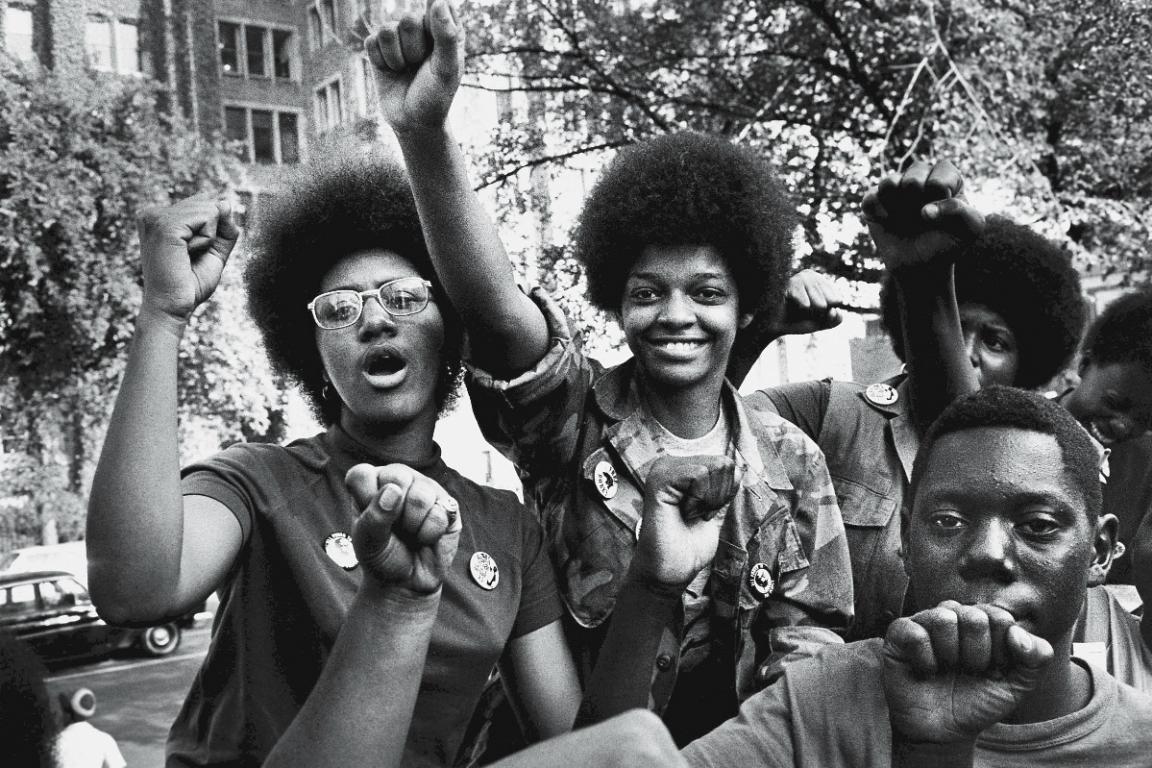
By the middle and late 1960s, Black Power emerged as a powerful current within the wider Black freedom struggle.
Reiland RabakaHOST
The Student Nonviolent Coordinating Committee moved in new directions.
Reiland RabakaHOST
The Black Panther Party linked racial justice to community survival, police violence, housing, food, health, and political self-determination.
Reiland RabakaHOST
The Civil Rights Movement did not end when the cameras moved elsewhere.
Reiland RabakaHOST
Its strategies, moral vocabulary, organizing models, legal victories, songs, symbols, institutions, and unfinished questions traveled.
Reiland RabakaHOST
They entered the Black Power Movement.
Reiland RabakaHOST
They entered the Anti-War Movement.

Mauryell Smith-ElGUEST
with a NYP talk show.
Mauryell Smith-ElGUEST
And we usually start the class out with something called the Black Power Libation.
Mauryell Smith-ElGUEST
And the way that goes, I call out a name and then the response is Black Power.
Mauryell Smith-ElGUEST
So we're going to start out with that.
Mauryell Smith-ElGUEST
All right.
Mikey FeverHOST
All right.
Mauryell Smith-ElGUEST
I say, Asada Sikor.
MarkitaGUEST
Black Power.

Christina ZanfagnaGUEST
And of course, up here we have the images of W.E.B. Du Bois and Booker T. Washington, who were the kind of forefathers of these political insurgencies to be taken up by Martin Luther King Jr. and Malcolm X, respectively.
Christina ZanfagnaGUEST
And we've asked this larger question, right? In what ways can we map these political ideologies onto popular music during these eras of the civil rights and black power movements? We talked about how soul maybe was a little bit more assimilationist.
Christina ZanfagnaGUEST
We're gonna move into funk today.
Christina ZanfagnaGUEST
And as we move into funk, we're gonna kind of cross a little bit more over into the separatist camp and try to think through how does funk embody, how does disco embody these two different ideologies that have been Two of the main political ideologies in the history of black political thought, of course, again, a little bit of a simplification of the complexity of black politics in this country, but these are definitely kind of the two major poles that we can kind of think about in terms of the history of black political thought.
Christina ZanfagnaGUEST
And we also have the linking of religion and racial politics through soul music, something we're going to see in hip hop as well, especially with the adoption of a lot of Muslim kinds of ideologies and aesthetics in early hip hop.
Christina ZanfagnaGUEST
Of course, in the civil rights, we're talking more about Christianity than we are about Islam.
Christina ZanfagnaGUEST
But as black power begins to kind of supplant civil rights, we're going to see a kind of transformation or a shift from Christianity towards Islam.
Christina ZanfagnaGUEST
And lastly, so many of the soul music hits of the 1960s became civil rights anthems in and of themselves.

Scott KurashigeGUEST
And along with that, I, you know, in many ways internalized this myth that Asian Americans are a passive model minority, that, you know, we don't protest, we don't resist, we just try to assimilate.
Scott KurashigeGUEST
And particularly, even when, you know, I got very, very deeply, uh, focused on studying Black history and Black studies in my undergraduate years in college, I was very fortunate to have some, some great teachers who helped me better understand the civil rights movement, the Black Power movement.
Scott KurashigeGUEST
I simply believed, wrongly, [chuckles] that Asian Americans were not involved in any way.
Scott KurashigeGUEST
And of course, um, there were Asian Americans even in the civil rights a- and Black Power movement.
Scott KurashigeGUEST
I, I worked for a long time, uh, with Grace Lee Boggs in Detroit, who was absolutely at the forefront of the civil rights and Black Power movement with, with her husband, an African American autoworker and labor, uh, Black Power, uh, radical and intellectual, um, James Boggs.
Scott KurashigeGUEST
Uh, Yuri Kochiyama in, in Harlem was a close confidant of Malcolm X, but there were also folks in SNCC, the Student Nonviolent Coordinating Committee, like Ed Nakawata, who's, who's now in Philadelphia.
Scott KurashigeGUEST
Um, so there are so many examples, not just of individuals, but of organizations.
6 more episodes mention Black Power.
Create an account to see the whole feed, search across every transcript, and follow the entities you care about.