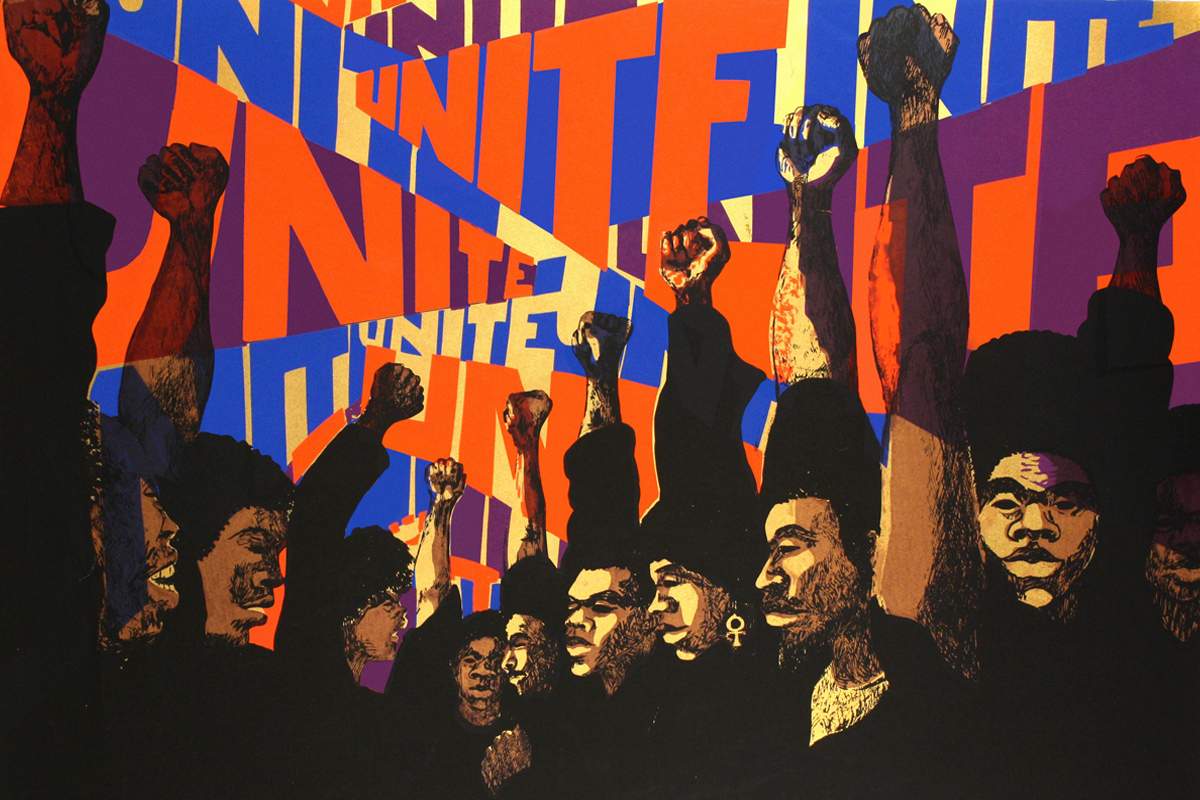
Black Arts Movement
Literary school or movementWikipedia
7
MENTIONS
5
EPISODES
5
PODCASTS
Search complete. 7 mentions across 5 episodes found for "Black Arts Movement".
Nov 19, 2026

Dominique DiPrimaHOST
I do think it's the antidote, whether it's overtly political or not.
Dominique DiPrimaHOST
I mean, you very well know my dad was the founder of the Black Arts Movement.
Dominique DiPrimaHOST
It was all about, is all about using our art for liberation.
Dominique DiPrimaHOST
That's

Brian CrossGUEST
I'm interested in history.
Brian CrossGUEST
And, you know, the first, some of the first people I photographed were, you know, 60s poets from the Black Arts Movement who had inspired, like the Watts Prophets, who had inspired rappers And largely at that moment were I won't say they were forgotten in the community, they were remembered.
Brian CrossGUEST
But but, you know, in terms of kind of getting the kind of.
Brian CrossGUEST
More mainstream recognition that they deserved.

Patrisse CullorsGUEST
But if a community is choosing art in the middle of one of the worst, horrific experiences the world has seen, that means something.
Patrisse CullorsGUEST
To look back at the Black Arts Movement, a movement that I feel like I'm a part of its lineage, and to see how art re-alchemized and reclaimed Blackness, the phrase Black is beautiful, like Black Lives Matter, becomes this searing... mantra for Black people to really be like, oh, no, we don't got to listen to them.
Patrisse CullorsGUEST
We don't got to.
Patrisse CullorsGUEST
So I think It was so inspiring to go back.

Stephen McKinley HendersonGUEST
That's, that's how far back.
Stephen McKinley HendersonGUEST
And, uh, and he was a part of the beneficiary of what was known as the black arts movement that, uh, Amiri Baraka and, uh, you know, Leroy Jones, uh, AKA Amiri, uh, and, and, and, uh, Uh, he, he, he in, in Pittsburgh, he founded Harambee and that with other, uh, poets and playwrights, uh, Rob Penny being among them, you know, there was, there was this black arts movement that went on during the, the, the sixties and early seventies and, uh, playwrights were, you know, and, and then Dale Wasserman who had the Midwest playwrights conference, Dale Wasserman of, um, uh, uh, what did he, he, he wrote, uh, or adapted Cuckoo's Nest, uh, as a play.
Stephen McKinley HendersonGUEST
And, uh, but he had a thing called a Midwest Playwrights Conference and Bob Falls of the Goodman Theater.
Stephen McKinley HendersonGUEST
And, um, oh, the, the, the great director from, uh, from Seattle.

Carol D. LeeGUEST
62 was high school.
Carol D. LeeGUEST
66 in the midst of the Black Power and Black Arts Movement.
Carol D. LeeGUEST
And that introduced me to a whole set of ideas that hadn't really been formerly part of my training.
Carol D. LeeGUEST
At the same time, I grew up in a home where African values, if you will, in terms of the importance of family, extended family connections, relationships with one another, was the norm.
Carol D. LeeGUEST
I did my master's degree at the University of Chicago on the Black Arts Movement.
Carol D. LeeGUEST
Ironically, I met my future husband then.
Carol D. LeeGUEST
Donnell Lee, now Hakeem Atabudi, as part of that at that time.
42 MINS LATER
Carol D. LeeGUEST
is to understand the specific affordances, resources, belief system, practices, systems in communities that are connected to this Pan-African cross the diaspora.