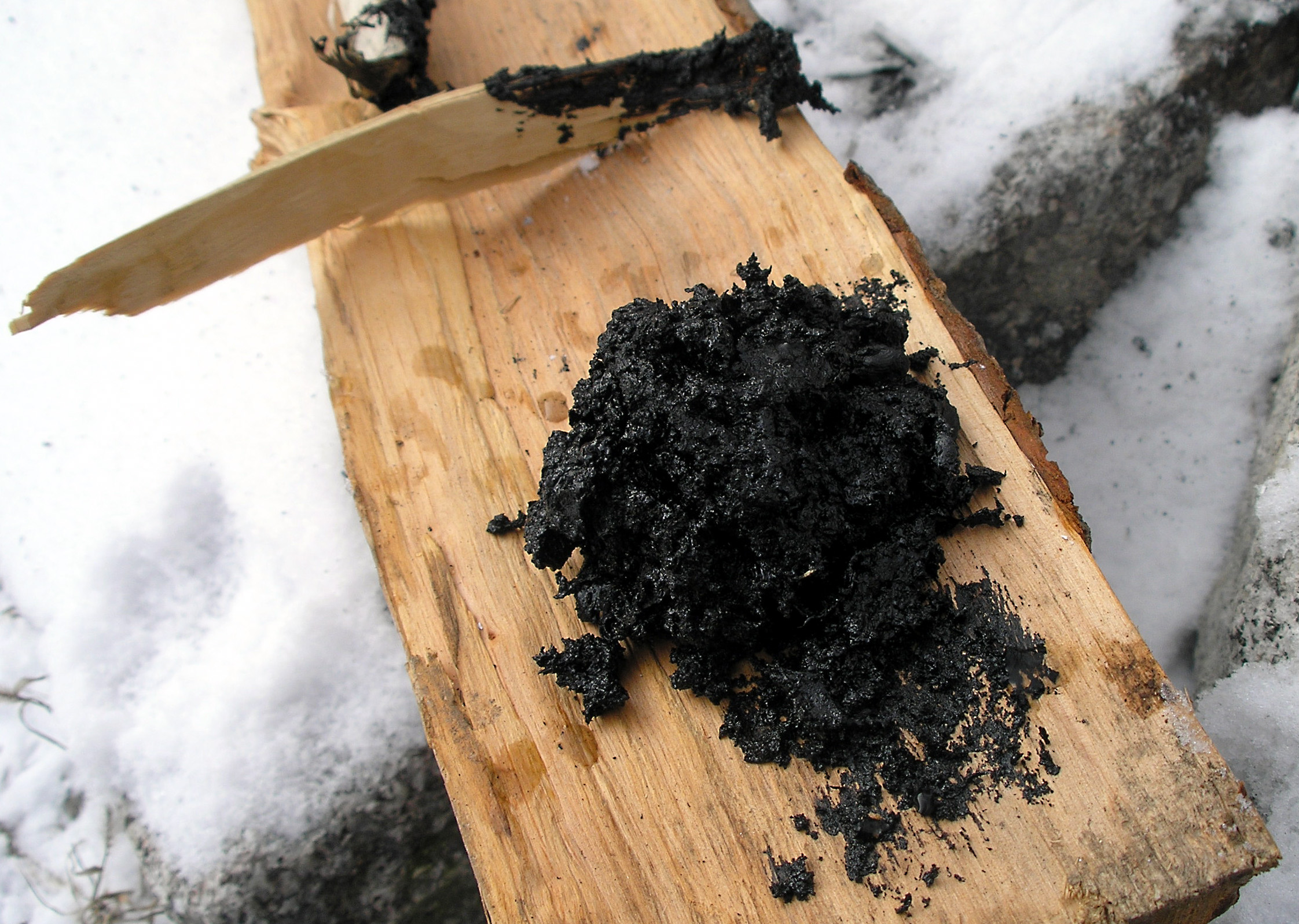
Birch bark tar
14
MENTIONS
3
EPISODES
3
PODCASTS
Search complete. 14 mentions across 3 episodes found for "Birch bark tar".
Oct 19, 2026

Ronald HoffmanHOST
If you had an open wound, A, it would suture the wound together, kind of close it off, but it also had pretty potent antimicrobial effects.
Ronald HoffmanHOST
The researchers tested samples and they found that every type of birch tar that they produce.
Ronald HoffmanHOST
They try to replicate, you know, kind of the way that the Neanderthals would have done it, you know, the simple fire and, you know, like covering it up so that the sap would run out of the birch.
Ronald HoffmanHOST
And The birch tar that they produced was able to inhibit the growth of even Staph aureus.
Ronald HoffmanHOST
That's a bacteria associated with very serious wound infections.
Ronald HoffmanHOST
So researchers are turning their attention to the birch tar.
Ronald HoffmanHOST
They're trying to find out what is the secret sauce within the birch tar that may yield new findings.
Ronald HoffmanHOST
Antibiotic resistance is emerging, and we're looking for new substances to fight our eternal war against bacteria, which...

Gary MannersHOST
Neanderthal birch tar may have doubled as ancient antibiotic.
Gary MannersHOST
For decades, the sticky black tar that Neanderthals cooked out of birch bark has been filed away in the archaeological literature as prehistoric glue.
Gary MannersHOST
A new round of laboratory experiments suggest that label is far too narrow.
Gary MannersHOST
Researchers in Germany, Britain, Belgium, and Canada made birch tar using methods reconstructed from Middle Paleolithic sites, then tested it against bacteria, and every sample inhibited Staphylococcus aureus, the organism behind many infected wounds.
Gary MannersHOST
The work, published in PLOS One, was led by Tjark Siemsen of the University of Cologne and the University of Oxford.
Gary MannersHOST
A glue that did much more than stick.
Gary MannersHOST
Birch tar is found at Neanderthal sites across Europe, often still clinging to stone tools.
Gary MannersHOST
It was made by heating birch bark under low oxygen conditions, a process called dry distillation, and used to bind flint points to wooden shafts, a technique known as hafting.

GorgorodHOST
But as cool as Crane is, the thing that blew my mind wasn't the bone.
GorgorodHOST
It was the tool, the birch pitch tool.
speaker_1HOST
Ah, yes.
speaker_1HOST
The artifacts found by Willy van Wingerden.
speaker_1HOST
They had to build a specialized earth oven, bury the bark in a sealed container, perhaps made of clay, control the vicarious temperature precisely from the outside without any thermometers, and understand the exact sequence of the chemical process.
speaker_1HOST
It definitively proves complex cognitive sequencing.
speaker_1HOST
You simply cannot make Birch Pitch by accident.
speaker_1HOST
It shows forward planning, working memory, and a really deep empirical understanding of material properties.