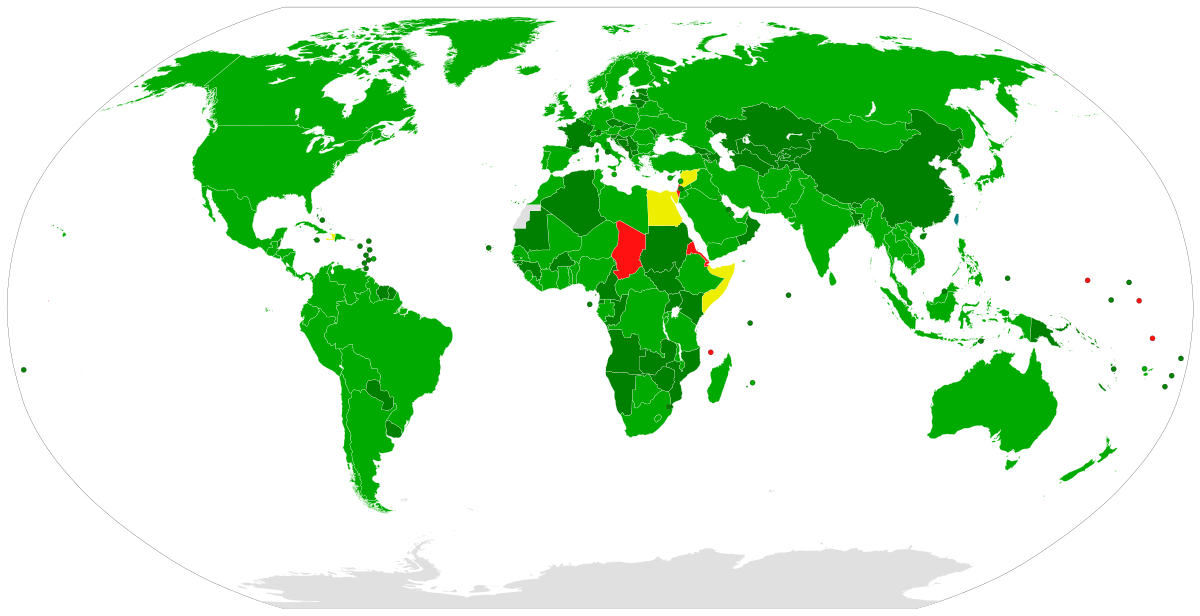
Biological Weapons Convention
28
MENTIONS
16
EPISODES
15
PODCASTS
Search complete. 28 mentions across 16 episodes found for "Biological Weapons Convention".
Sep 25, 2026

Kevin EsveltGUEST
A state actor is probably not interested unless they could build something that wouldn't hit themselves.
Kevin EsveltGUEST
But we shouldn't assume that because the Soviets, despite signing the Biological Weapons Convention saying they wouldn't do anything of the sort, continued their biological weapons program.
Kevin EsveltGUEST
It was called Biopreparat, and one of the things they did was make smallpox evade the vaccine, or at least that's one of the things they tried to do.
Kevin EsveltGUEST
They also tried worse than that.

Peter SchweizerHOST
They violated it.
Peter SchweizerHOST
And there's a lot of people that also believe they violated the Biological Weapons Convention they signed.
Peter SchweizerHOST
They violated it.
Peter SchweizerHOST
So the bottom line is they are not going to abide by any AI agreement.

Jack CarrHOST
What did you learn about some of the status of some of this research when it comes to bioweapons?
Annie JacobsenGUEST
So as you mentioned, there is a treaty, the Biological Weapons Convention Treaty from 1972.
Annie JacobsenGUEST
Spoiler alert, needs to be updated.
Annie JacobsenGUEST
And all the signatories to it vow not to be making biological weapons, but there's a carve-out which allows you to do work for defensive purposes, hence gain of function that we've been discussing.
Jack CarrHOST
Here's what's unknown.
Jack CarrHOST
But I finish it with this line right here in my author's note for The Devil's Hand.
Jack CarrHOST
Of note, the United States signed the Biological Weapons Convention on April 10th, 1972, the same day as Iran.
Jack CarrHOST
So that's how that one ends.

Richard H. EbrightGUEST
And so he called for an international assessment.
Richard H. EbrightGUEST
And what emerged from that very quickly was the Biological Weapons Convention, which sets the aspirational goal that no nation should develop or stockpiled, developed, produced, or stockpiled, or used biological weapons.
Richard H. EbrightGUEST
And in the United States, this was accompanied by passage of a federal law that makes the development, production, stockpiling, or use of biological weapons a federal felony.
Richard H. EbrightGUEST
This was important, but then there's something to note, and that is that the Biological Weapons Convention did not have a verification protocol did not have an enforcement mechanism.
Richard H. EbrightGUEST
And as a result of lacking a verification protocol and an enforcement mechanism, it was almost immediately violated.
Richard H. EbrightGUEST
The Soviet Union maintained a large program of offensive biological weapons research, expanded that program after becoming a signatory to the Biological Weapons Convention, and other nations did as well.
Richard H. EbrightGUEST
Another issue with the Biological Weapons Convention was having been signed in 1972, it predated the recombinant DNA technology and predated all of the technologies that today make it possible for a small organization, a university lab, a corporate lab, an individual to enhance a pathogen or create a new high-risk pathogen.
Richard H. EbrightGUEST
And so those technologies were not even discussed by the Biological Weapons Convention and are not mentioned by the Biological Weapons Convention.

Greg AllenHOST
Well, that might be true.
Greg AllenHOST
You both signed the Biological Weapons Convention during the height of the Cold War.
Greg AllenHOST
But guess what happened? The Soviet Union's violated their obligations on day one and never stopped violating until well after the Cold War ended.
Greg AllenHOST
And it's totally possible, by the way, that Russia has restarted their biological weapons program.

Jim GeraghtyPANELIST
The UN is having its General Assembly later this month, and I think this will probably be a hot topic at it.
Jim GeraghtyPANELIST
Um, I-we live in a world with the Biological Weapons Convention, Chemical Weapons Convention, Treaty on the Non-Proliferation of Nuclear Weapons.
Jim GeraghtyPANELIST
Is the enforcement of those international treaties perfect? No, not at all.
Jim GeraghtyPANELIST
But I'd rather have those treaties than not have them, and let me walk you through it.
Noah RothmanPANELIST
J- Jim and I were talking about this before we recorded.
Noah RothmanPANELIST
I don't know what arms control treaty represents the model here.
Noah RothmanPANELIST
It's not the Limited Test Ban Treaty, which the Soviets violated, the Biological Weapons Convention, which the Soviets violated, SALT I, SALT II, the INF, which Obama himself acknowledged Russia wasn't abiding by and Trump withdrew from.
Noah RothmanPANELIST
The pro side of this thing is, like, I guess the Non-Proliferation Treaty, the Nuclear Non-Proliferation Treaty, but there's teeth associated with that for violators.

TomHOST
A hundred labs, all locatable, all socially connected.
TomHOST
Second case, the Biological Weapons Convention failed.
TomHOST
It was a ban with no verification regime, and the Soviet Union ran Biopreparat for two decades as a signatory.
LeahHOST
Lab, factory, mine, or file?

Dario AmodeiSOUNDBITE_SPEAKER
The small thing is if we could-- US and China could agree that we won't use AI to develop biological weapons or release AI models that bioterrorists could use to develop biological weapons.
Dario AmodeiSOUNDBITE_SPEAKER
We're already both signatories to the Biological Weapons Convention.
Richard ArnoldCORRESPONDENT
Now, step one, more broadly, he is posing some sort of general slowdown.
Dario AmodeiSOUNDBITE_SPEAKER
We can slow down within the margin, within the envelope that we have, particularly if we don't sell chips to authoritarian countries, and if we do more to help our own security so that our technology is not stolen.
Mike HoskingHOST
The small thing is if we could-- US and China could agree that we won't use AI to develop biological weapons or release AI models that bioterrorists could use to develop biological weapons.
Mike HoskingHOST
We're already both signatories to the Biological Weapons Convention.
Richard ArnoldCORRESPONDENT
Now, step one.
Richard ArnoldCORRESPONDENT
More broadly, he is proposing some sort of general slowdown.

Jolene KentCORRESPONDENT
What's the one simple thing? most important solution that they should come to an agreement on in
Dario AmodeiSOUNDBITE_SPEAKER
ai a thing that's small enough we might be able to do it and a thing that's big enough that i think it's going to take a very long time the small thing is if we could u.s and china could agree that we won't use ai to develop biological weapons or release ai models that bioterrorists could use to develop biological weapons We're already both signatories to the Biological Weapons Convention.
Dario AmodeiSOUNDBITE_SPEAKER
If we could just extend that convention to that idea, that would be really valuable.
Dario AmodeiSOUNDBITE_SPEAKER
And then I think the more long-term thing would be working together to put a speed limit on the rate of AI progress.
6 more episodes mention Biological Weapons Convention.
Create an account to see the whole feed, search across every transcript, and follow the entities you care about.