Bioenergy with carbon capture and storage
14
MENTIONS
6
EPISODES
6
PODCASTS
Search complete. 14 mentions across 6 episodes found for "Bioenergy with carbon capture and storage".
Sep 16, 2026

David KippingHOST
So that means that this approach would only work for about four years, after which we'd have no arable land left to grow food, nor indeed is even 100% of the land surface able to support forests anyway.
David KippingHOST
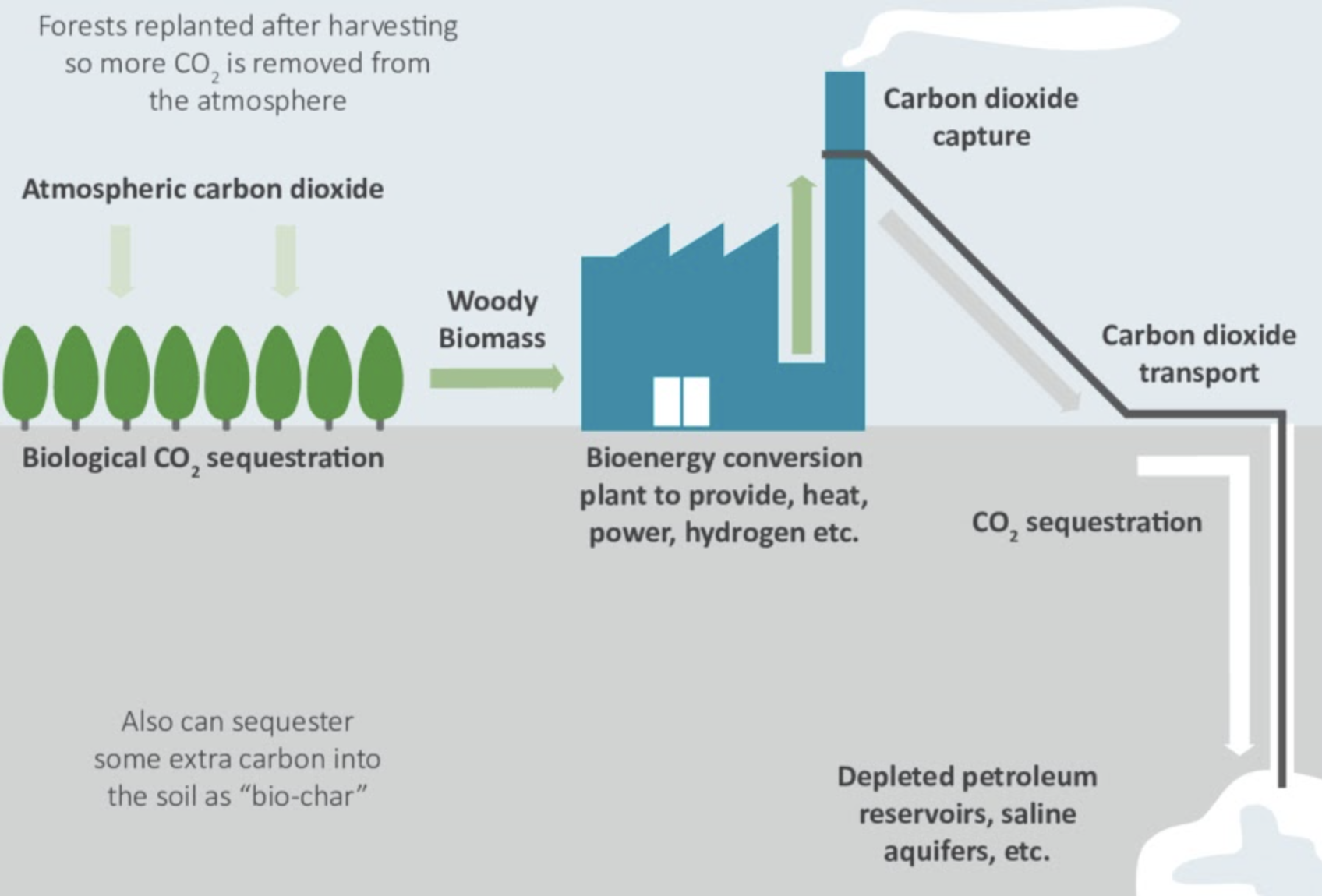
An approach called BECCS tries to improve upon this by essentially slashing the trees or whatever biomass you're using periodically and then storing their locked up carbon somewhere safe where it can't get back into the air.
David KippingHOST
Now that's actually harder than it sounds because biomass has a tendency to eventually rot, thereby re-releasing its carbon store.
David KippingHOST
Yet more, you still have the same basic problem that a huge fraction of Earth's land surface, including most of our arable land, is being diverted to carbon capture, which risks triggering food crises around the world.

Catherine DyerGUEST
So there's all of these things under the hood that really...
Catherine DyerGUEST
In fact, one I'll talk about a little bit was a lot of what's in the modelled pathways is something called BECCS, which is bioenergy with carbon capture and storage.
Catherine DyerGUEST
Now, we already know that BECCS, if you were to try to do it on the scale that you would require for some of those bigger overshoots and returns, that would really compete with land that we need for growing food crops and water supplies and things like that.
Catherine DyerGUEST
And so...
Catherine DyerGUEST
When we talk about whether or not we have the political will to do that, I don't know if I would have the political stomach to make that kind of decision if I was aware of the fact that that was going to cause mass starvation in some parts of the world.

Bill AdamsGUEST
First thing you need to do is upgrade your energy systems at the mill.
Bill AdamsGUEST
So that's going to require... you know, a major investment to allow you to be able to host that because these carbon capture projects, whether they're BECCS or whether they're, you know, fossil-based emissions, they're energy intensive.
Bill AdamsGUEST
And so having, upgrading the pulp mill to not only supply the mill itself with all its own energy, but able to supply the carbon capture technology with its thermal and energy, electrical energy requirements.
Bill AdamsGUEST
So that, and at the end of the day, what we need to do is find a market for the CDRs, the carbon dioxide removal credits.
Bill AdamsGUEST
I think the federal government's done an excellent job.
Bill AdamsGUEST
The investment tax credit level, you know, direct air carbon capture gets 60%.
Bill AdamsGUEST
We'd love BECCS to allow us to qualify for that just because the nice thing about BECCS is that if you're managing a sustainable forest with a stable carbon stock, It's actually just a great way to sequester carbon because it's actually a removal of carbon.
Bill AdamsGUEST
So it's a net zero strategy.

Peter LieseGUEST
It is for now, of course, not clear.
Peter LieseGUEST
For BECCS, it's always important to keep the sustainability criteria for biomass.
Peter LieseGUEST
So we cannot burn trees and import them from the rest of the world.
Peter LieseGUEST
That's not sustainable.

Rene VelasquezHOST
So, so guys, you know, I was just kind of...
Rene VelasquezHOST
Josh and I have been talking a lot lately and, and, and one of the things that, that I've been reflecting on since, you know, we started working together and, and, and speaking for the last, you know, last few months is that, you know, ev- every once in a while, and, and especially in carbon markets, we, we, we have new kind of terms and nomenclature coming into the market, right? We've had direct air capture becoming DAC and bioenergy capture and capture storage becoming BECCS, et cetera, enhanced rock weathering.
Rene VelasquezHOST
And, and there's a new, there's a new introduction into, into the sort of industry jargon, which I wanna unpack with you guys today.
Rene VelasquezHOST
And that, that concept i- is starting or beginning to enter the vocabulary, and that's myco-sequestration.

RebeccaNARRATOR
It's true that natural carbon dioxide removal, through protecting and restoring ecosystems, needs to be a part of creating a safe climate future.
RebeccaNARRATOR
And the world shouldn't bet on dangerous, expensive failures like bioenergy with carbon capture and storage, or BECCS.
RebeccaNARRATOR
Keeping heat-trapping carbon out of the atmosphere is the surest, safest way to avoid more catastrophe.
RebeccaNARRATOR
U.S. leaders must do more to combat the climate crisis and stop putting polluter profits first.