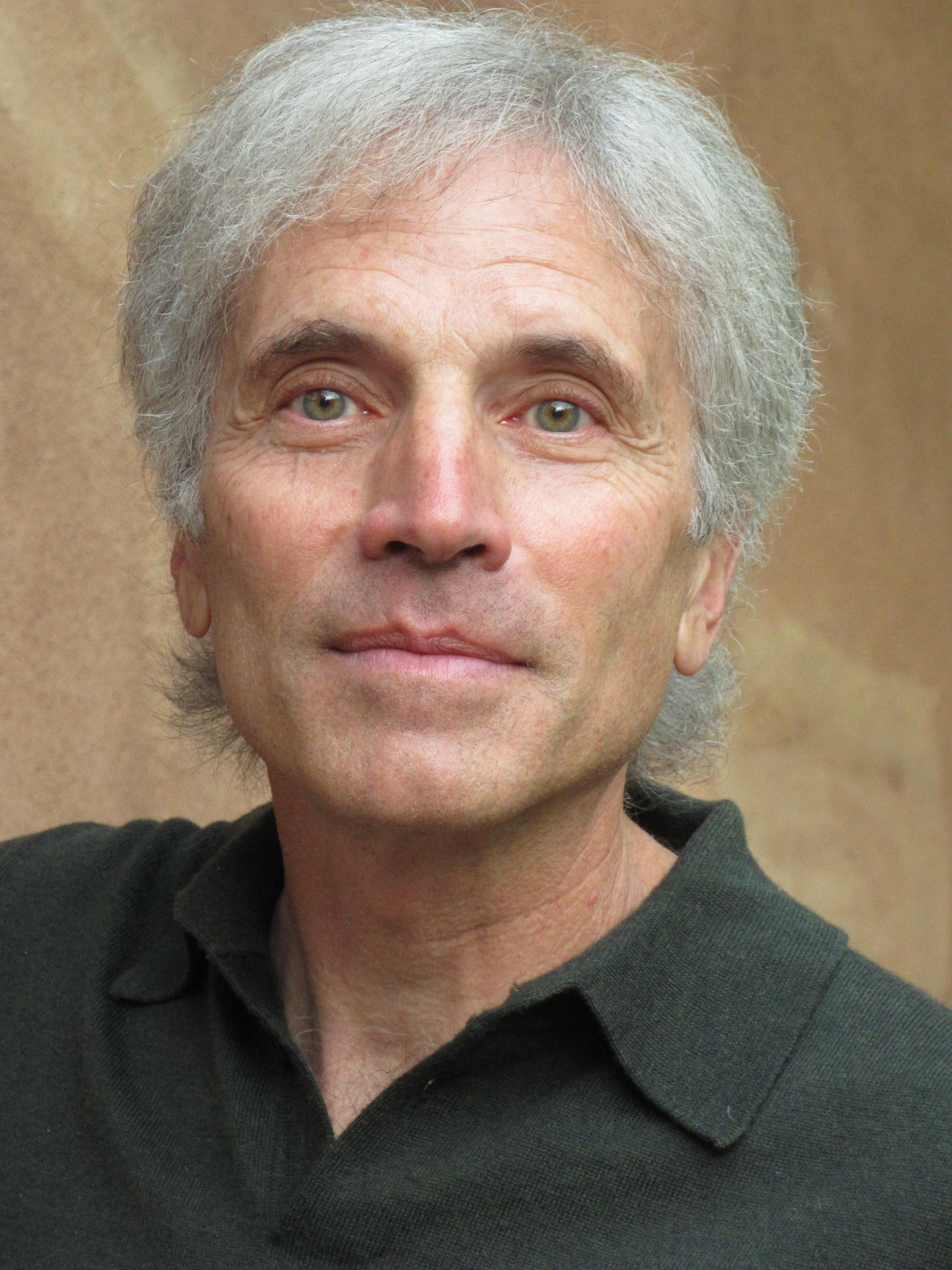
Bill Plotkin
Psychologist
14
MENTIONS
9
EPISODES
8
PODCASTS
Search complete. 14 mentions across 9 episodes found for "Bill Plotkin".
Sep 22, 2026

EchoHOST
I was in victim consciousness.
EchoHOST
But Bill Plotkin speaks of and within the journey of soul initiation.
EchoHOST
He's a wonderful author.
EchoHOST
If you don't know his books, listeners, I really encourage you to dive in.

Jessie NgaioGUEST
I grew up in Aotearoa, New Zealand on a small hobby farm.
Jessie NgaioGUEST
And my first friends were like the creek, were the trees, were the birds, were the freshwater crayfish so I've been lucky to have had relationship with land since I was a child um and I remember I was reading this book by Bill Plotkin and he was talking about how in rites of passage he found that people who had who did really well in the rites of passage and sort of went into their next stage tended to be people who had been able to wander and get lost in nature as children.
Jessie NgaioGUEST
And he suggested that as a species, we are currently in a state of adolescence.
Jessie NgaioGUEST
We haven't moved on to adultship and eldership as a species because we are so disconnected now from nature.

Claire DunnGUEST
I mean, yeah, I do work with frameworks and not just one particular framework, but here's a few that link together for me that feel like they reflect what I see happening to people when they engage deeply in nature-based practice in community.
Claire DunnGUEST
So my understanding is that our culture, and some of this thinking comes from Bill Plotkin and the Animus Valley Institute, that we primarily live in a kind of egocentric world.
Claire DunnGUEST
culture and part of maturing a crucial part of maturing is going through a kind of rite of passage called eco awakening which again our earth-based ancestors didn't need to go through because they grew up eco awakened but for modern culture Eco-awakening is realising not at a cognitive level but really at a somatic and imaginal level, really understanding that we are completely interdependent, you know, one strand in this grand web of life.
Claire DunnGUEST
But for some people it comes as a moment like on a solo immersion or it can just be a gradual shift from a shift in consciousness where you actually really understand at a body level the truth of that.
Claire DunnGUEST
And that's, some might call it initiation.
Claire DunnGUEST
It's the ancient journey that all the Indigenous cultures had practices for, of knowing who one truly is at the deepest level.
Claire DunnGUEST
You might call it the level of soul, and you might also say it's like your deepest authenticity, or Bill Plotkin talks about it like finding your ecological niche, like the place that you belong.
Claire DunnGUEST
And that journey happens when someone is ripe for it or ready for it, and it is a deep exploration or discovery, a journey of usually multi-years of of who am I truly and what's the thing that I can bring to this earth community that only I can bring.

Nate HagensHOST
So I had a realization there while you were speaking, and I'm a little slow on the, uh, uptake today 'cause I'm, I have a bit of a cold.
Nate HagensHOST
But it's that I'm craving being around people that have embodied responses to this and not just, "Well, did you know this?" and "Look at this." And it, y- like, to, to complete your thought, it feels like these are, to use Bill Plotkin's phrase once again, uh, ecological adulthood in humans, where, yeah, okay, I understand roughly the, the shape of what we face, and here's how I'm living and here's how I'm responding.
Nate HagensHOST
And I didn't, I didn't realize my aversion to the fact slingers until you just expressed that.
Nate HagensHOST
So I'm gonna have to process that-

Mike BrcicGUEST
So I'll set up that framework a little bit.
Mike BrcicGUEST
One of my mentors, a guy named Bill Plotkin, who runs the Anime Institute, and they do these, you know, vision quest type retreats in the deserts of southwestern United States.
Mike BrcicGUEST
And it's a metaphor and it's based on the story of these thousands of Japanese soldiers that were scattered all over the South Pacific following World War II.
Mike BrcicGUEST
And it took the government years to find and locate all these soldiers and bring them back home.
Nate HagensHOST
So the biggest thing that would actually change my mind about the future doesn't have a chart or a graph.
Nate HagensHOST
It would be a change in values, um, in aspirations and behaviors for some low double-digit share of the population away from apathy and fear and grievance politics and righteousness and blame, more towards something, [chuckles] and I keep, uh, bringing Bill Plotkin up, I have to have him back on the show, more towards what Bill calls ecological adulthood.
Nate HagensHOST
And I do see this, but at extremely small scales.
Nate HagensHOST
And not so much in elite and hyper-agent circles, which, uh, tend to act as magnets for global throughput.

Rhett TaylorGUEST
We haven't been told, you have now left this phase and we witness you, we see you in this new phase.
Rhett TaylorGUEST
Bill Plotkin talks a lot about this.
Rhett TaylorGUEST
Bill Plotkin's a wonderful man who started the Animas Valley School or Institute and wrote books like Soulcraft and just a really deep thinker in all of this.
Rhett TaylorGUEST
Kind of picked up, I would say, where Native American vision quest left off in the 80s, 70s and 80s.
StephenHOST
Mm-hmm.

Matt DomyancicGUEST
I'll jump to saying what Loyal Soldiers is.
Matt DomyancicGUEST
Bill Plotkin is a great author and a vision quest leader for 40 years.
Matt DomyancicGUEST
Native American desert-type retreats.
Matt DomyancicGUEST
That explains our Loyal Soldiers are patterns or behaviors that you're talking about that helped us survive or thrive early in life, but now they're the obstacle to further growth.
47 MINS LATER
Matt DomyancicGUEST
Joe Dispenza, part of his research is using heart math, HRV, and the EEG brainwaves I told you about to show what meditation can do as far as calming down your physiology and allowing you to access more of your thoughts and your feelings.
Matt DomyancicGUEST
And that's even the feelings in your body, how in touch you are with your body.
Matt DomyancicGUEST
The fact that you talk about nature so much, if you haven't read Bill Plotkin's yet, you should definitely read Bill Plotkin's.
Matt DomyancicGUEST
And you're also touching on something else.

SebastianHOST
Yeah, totally.
SebastianHOST
And, uh, when you were talking about, uh, the idea of making this actually attractive and desirable as a way of being, as a way of looking at the world, I, I felt reminded of you probably have come across the work of Michael Meade or Bill Plotkin-
Sarah WilsonGUEST
Mm-hmm.
Sarah WilsonGUEST
Yep