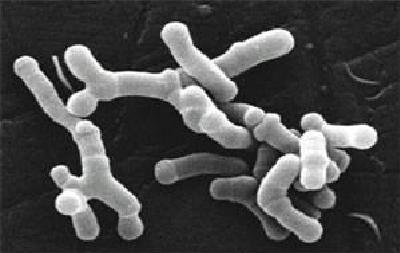
Bifidobacterium
BacteriaWikipedia
78
MENTIONS
38
EPISODES
36
PODCASTS
Search complete. 78 mentions across 38 episodes found for "Bifidobacterium".
Sep 18, 2026

Rob SilvermanHOST
We're going to talk about those for sure.
Rob SilvermanHOST
Today, we're exploring one of the most important and underappreciated members of the human microbiome, Bifidobacterium.
Rob SilvermanHOST
From Infancy to Healthy Aging, we'll look at why this bacteria matters, why modern life may be depleting them, and how supporting them may influence digestion, immunity, cognition, mood, and resilience across a lifespan.
Rob SilvermanHOST
Dr. Piper, how are you doing today?
Rob SilvermanHOST
What is bifidobactam and why does it matter?
Piper DobnerGUEST
Great question.
Piper DobnerGUEST
Bifidobacterium is a really important genus of microorganisms that inhabit our gut, right? And one of the things that's most important about them is in early life.
Piper DobnerGUEST
They're considered the early life colonizers.

Murray ClarkeHOST
The fingerprints.
Murray ClarkeHOST
Bifidobacterium lactis, the bifidum, the longum.
Elisa SongGUEST
And the strain really does matter.
Elisa SongGUEST
So this DDS-1 is really important for the oral microbiome too for kids.

Savita SrivastavaGUEST
But, you know, the breast milk becomes important.
Savita SrivastavaGUEST
And, you know, the fertilizer in breast milk is the human milk, all the saccharides, the sugar that's there just to feed some of these important initial strains or pioneering strains of bacteria, particularly Bifidobacterium infantis, which is an important one for immune system development the right way.
Savita SrivastavaGUEST
And then, you know, as we go along, you know, things like environmental exposures, ongoing skin-to-skin contact.
Savita SrivastavaGUEST
So I oftentimes tell moms, even if you don't breastfeed, even just having that skin-to-skin contact with the nipple is also providing a lot of good gut microbes.
6 MINS LATER
Cassandra QuaveHOST
How does the baby's microbiome or microbiota composition change as they go through that first year or those first thousand days of
Savita SrivastavaGUEST
life? Absolutely.
Savita SrivastavaGUEST
So, of course, you know, in those, let's say, first four months of life, that's when we're getting the seeding process going and some of these important microbes like Bifidobacterium infantis.
Savita SrivastavaGUEST
and bacteroidetes that they're both important ones that we see a gap in our C-section babies, for example.
Bryce WyldeHOST
So you want diversity.
Bryce WyldeHOST
You're moving away from that sort of, you know, sort of mono Bifidobacterium environment.
Bryce WyldeHOST
But microbiome magic, um, and then you'll tell us about the product as well.
Bryce WyldeHOST
But these five things kids can already do every day that can be optimizing their gut immune, gut-brain resilience.

James EllisHOST
Because here's a challenge for you.
James EllisHOST
You know, like, the two biggest strains of bacteria or families of bacteria that we talk about, Lactobacillus i- is one, Bifidobacteria is the other one.
James EllisHOST
You know, if you've already got those in quite good levels in your body, why do you want to be taking a strai- strains of those that are adding another 60 billion in? If you've already got high levels of them, it just doesn't make, make sense.
KevHOST
Yeah.

Heather MunnellyHOST
They love fibers and they are primarily responsible for helping us to digest them and turn them into other things, other nutrients that we can use in our body more readily.
Heather MunnellyHOST
So there was a study where they put people on low-carbohydrate, high-protein diets, so they eliminated a lot of fiber doing this, and the beneficial bacteria, bifidobacteria, dropped by about 50% in just four weeks.
Heather MunnellyHOST
Bifidobacteria is probably my favorite bacteria, and I know I sound like such a nerd saying that I have a favorite bacteria, but the reason it's my favorite, for one, it is very important for human development.
Heather MunnellyHOST
It's the primary bacteria that's given from moms to their infants when they're breastfeeding.
Heather MunnellyHOST
It's very important in early stages of life and it's a keystone species, which means its presence within the gut ecosystem is very, very positive.

Stephanie SeneffGUEST
It's a biological pathway that the human cells don't have, and that's the argument they use to say, you know, this stuff is wonderful because you don't even have the pathway, so how can we be affected by this chemical? But our gut microbes, many of them, over half of them have a susceptibility from that pathway to glyphosate.
Stephanie SeneffGUEST
And so, and especially the beneficial bacteria, uh, Lactobacillus and Bifidobacteria, we claimed those two in our paper.
Stephanie SeneffGUEST
We didn't have any proof, you know, we just had theory.
Stephanie SeneffGUEST
But now papers have come out showing exactly that, that those microbes are suppressed by glyphosate, and furthermore, their products are suppressed.

Stephanie CullerGUEST
It was the big shocker in this study, amongst other findings that we had.
Stephanie CullerGUEST
The infant microbiome and all of the human microbiomes around the world really get started with Bifidobacterium, the key species that thrive in the presence of prebiotics and breast milk called human milk oligosaccharides.
Stephanie CullerGUEST
These are really powerful prebiotics that are essentially the third largest component of breast milk.
Stephanie CullerGUEST
These special sugars are don't feed the child.
Stephanie CullerGUEST
They need the right species of bifidobacterium.
Stephanie CullerGUEST
Our data from this large study, My Baby Biome, found that there were three types of bifidobacterium.
Stephanie CullerGUEST
Bifidobacterium infantis.
Stephanie CullerGUEST
the infant strain, bifidobacterium longum, and breve.

Jack GilbertGUEST
That's irrelevant.
Jack GilbertGUEST
The baby's, uh, poo comes out quite hard and solid, like a solid, um, stool, right? Um, and we were, we puzzled over this for a long time, but it appears that parents growing up or mothers growing up in a, in a developed society have intergenerational loss of certain key organisms, um, especially things like Bifidobacterium longum infantis, which are, have evolved to, uh, be perfect for digesting breast milk, uh, and fermenting breast milk from humans, right? These are, these are bacteria laden with genes that are evolved explicitly, this is bacteria evolved specifically to eat breast milk.
Jack GilbertGUEST
Eat the HMOs in breast milk.
Jack GilbertGUEST
In human breast milk.
Jack GilbertGUEST
No other mammalian breast milk, just human breast milk.
Jack GilbertGUEST
In fact, many other mammals have their own species of Bifidobacterium, which are designed just to consume the HMOs in their breast milk, right? Like cows and, and sheep and dogs, et cetera.
Jack GilbertGUEST
And, uh, if you look at, you know, when we take babies that, uh, don't have the right kind of the human, uh, milk oligosaccharide- - degrading bacteria, these Bifidobacterium, they can't digest the breast milk properly.
Jack GilbertGUEST
So all of those sugary liquids or those sugary fibers that are present in the breast milk just go straight through the gut and are pooped out in this kind of very liquidy formulation, [laughs] right? Uh, it's, uh...

Kara FitzgeraldHOST
Um, I did a little digging into to, to see whether there, you know, there were any bacteria that I were fam- I was familiar with that are at, that support eq- S-equal production, and they were all names that I had not come across.
Kara FitzgeraldHOST
There were some, some distant links to, um, Bifido, you know, and maybe la- you know, some lacto, um, species touching pretty indirectly.
Kara FitzgeraldHOST
But the, you know, the w- what we're familiar with here in, in functional medicine doesn't, you know, doesn't seem to be particularly involved.
Kara FitzgeraldHOST
I, I, you know, a lot of women listening and, and, and-- or a lot of clinicians listening are, you know, we're-- there's a revolution happening in HRT and, and, and we're using it more and more.
28 more episodes mention Bifidobacterium.
Create an account to see the whole feed, search across every transcript, and follow the entities you care about.