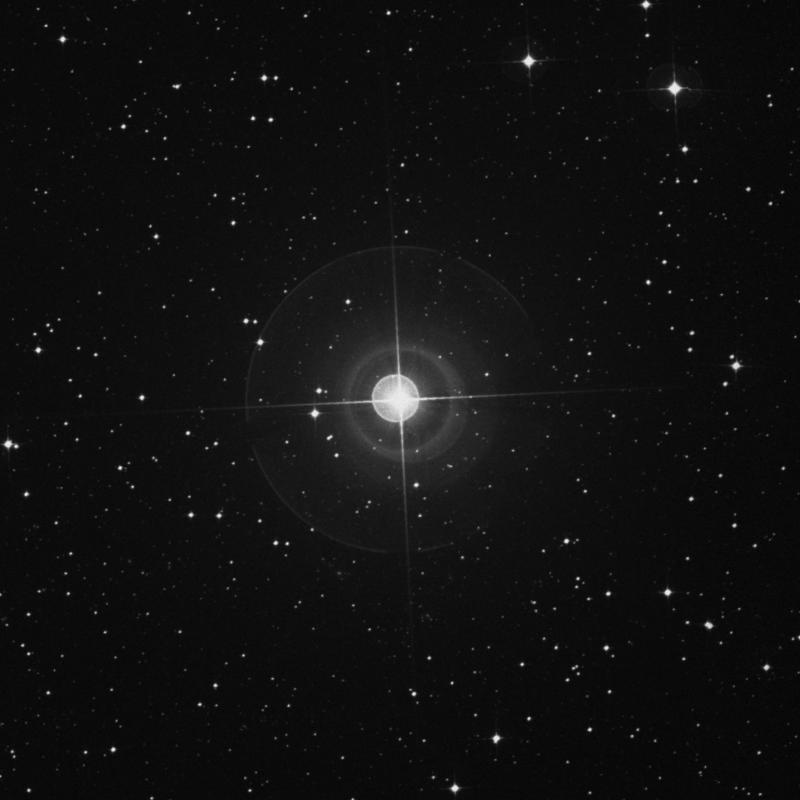
Beta Pictoris
StarWikipedia
67
MENTIONS
38
EPISODES
27
PODCASTS
Search complete. 67 mentions across 38 episodes found for "Beta Pictoris".
Oct 9, 2026

Kiki SanfordHOST
Okay.
Kiki SanfordHOST
and then finally okay for this first part of the show let's talk about outer space signals from outer space from outside of our solar system oh my gosh from an exoplanet beta pictoris b could it be it's a radio signal I
speaker_2NARRATOR
mean
Kiki SanfordHOST
could it
Kiki SanfordHOST
But what it does is that the region of space that's influenced by the magnetic field, this is on our planet as well, At the poles, this is where you get aurora activity.
Kiki SanfordHOST
And that aurora activity is like the speeding up and the interacting of these particles and radio signals can bounce off or like get sent out.
Kiki SanfordHOST
And so this auroral activity, what they think they're seeing from Beta Pictoris B is So far away, 63 light years from Earth.
Kiki SanfordHOST
It's a gas giant.

Ryan GecknerHOST
[laughs]
Kris DalyHOST
So preprint, not yet peer-reviewed, announcing the detection of radio waves from an exoplanet, and it's the Beta Pictoris b exoplanet.
Kris DalyHOST
Love the way they name these things.
Kris DalyHOST
[laughs]

Jesse RogersonGUEST
What are their atmospheres like? What are their surfaces like? What's below the surface? Those are all really difficult questions to ask.
Jesse RogersonGUEST
This study was nailing down a source of radio light that was coming from a place called Beta Pictoris.
Jesse RogersonGUEST
It's a star called Beta Pictoris with planets around it.
Jesse RogersonGUEST
Radio light was coming from it, and they were able to localize it to one of the planets that's orbiting that star and able to isolate the frequency and the pattern with which this radio light was coming.
Jesse RogersonGUEST
And surprise, surprise, it wasn't aliens, but it was a clear, distinct pattern of what happens during aurora, meaning this planet was experiencing like an aurora borealis, like a northern lights, which was generating radio light, and we could detect that from Earth.

Jeff ParkerHOST
I can't wait to see the lawyer that drafts that.
CJ LittleHOST
The planet is called Beta Pictoris b, which honestly sounds like the lesser-known, slightly more boring cousin of Cardi B, and she's broadcasting loud and clear from 63 light-years away.
Jeff ParkerHOST
Wait.
CJ LittleHOST
Not Cardi B, she's down the street.
CJ LittleHOST
Yeah
Jeff ParkerHOST
... is a really long and close place at the same time.
CJ LittleHOST
Beta Pictoris a, by the way, they don't do any broadcasting.
CJ LittleHOST
It's all podcasting.

Vito SquicciariniGUEST
Yeah, and then there are other planets which are really interesting.
Vito SquicciariniGUEST
There is, for instance, Beta Pictoris B, which is quite famous too.
Vito SquicciariniGUEST
That was discovered also in 2008.
Vito SquicciariniGUEST
It's a system that has two planets, a B and then a C planet that is also a giant planet.
10 MINS LATER
JennyHOST
And of course, we want to say thank you to everyone listening.
JennyHOST
Please join us next time on Growing Worlds as we explore another corner of the universe and the people bringing it into view.
LorenzoHOST
As a quick postscript, since we recorded this episode, astronomers have announced the discovery of a third planet in the Beta Pictoris system, which is Beta Pictoris D, which is a perfect reminder of how fast this field moves.

Tammy TrujilloCORRESPONDENT
Astronomers say they've detected the first-ever radio signal from a planet outside the solar system.
Tammy TrujilloCORRESPONDENT
The discovery traces repeated radio bursts that seem to come from the exoplanet Beta Pictoris b, about sixty-three light-years from Earth.
Tammy TrujilloCORRESPONDENT
I'm Tammy Trujillo.
Tammy TrujilloHOST
Astronomers say they've detected the first-ever radio signal from a planet outside the solar system.
Tammy TrujilloHOST
The discovery traces repeating radio bursts that seem to come from the exoplanet Beta Pictoris b, about sixty-three light-years from Earth.
Tammy TrujilloHOST
The planet's about twelve times the size of Jupiter and is one of three planets orbiting a young star that is nearly two times the size of the Sun.
Tammy TrujilloHOST
I'm Tammy Trujillo.
Rob MartirHOST
Astronomers say they have detected the first-ever radio signal from a planet outside the solar system.
Rob MartirHOST
The discovery traces repeating radio bursts that seem to come from the exoplanet Beta Pictoris b, about 63 light-years from Earth.
Rob MartirHOST
The planet is about 12 times the size of Jupiter and is one of three planets orbiting a young star that is nearly two times the size of the Sun.
Rob MartirHOST
Researchers say processes tied to the planet's magnetic field created the radio signal.

Steve KatesGUEST
And one in particular, it's a constellation called Pictoris in the southern hemisphere.
Steve KatesGUEST
The star Beta Pictoris has a strange exoplanet How creative may the pictorius be? And radio astronomers, John, have detected some
Bruce BlakemanGUEST
sort of radio transmission coming from it.
Bruce BlakemanGUEST
What makes it unusual?
28 more episodes mention Beta Pictoris.
Create an account to see the whole feed, search across every transcript, and follow the entities you care about.