Beringia
53
MENTIONS
26
EPISODES
21
PODCASTS
Search complete. 53 mentions across 26 episodes found for "Beringia".
Sep 13, 2026

DavidHOST
Connections between land masses that are usually sunken under sea level are exposed during this time.
DavidHOST
We talked about this a whole bunch in episode 219 about Beringia.
DavidHOST
So during glacial periods, you get a lot of rearranging of populations and species on the planet, some being separated by the ice, others being brought together by these lower sea levels.
WillHOST
Yeah.

Joseph ParkinsonHOST
It was here that humans had made their home for at least 10,000 and perhaps as far back as 12,000 years.
Joseph ParkinsonHOST
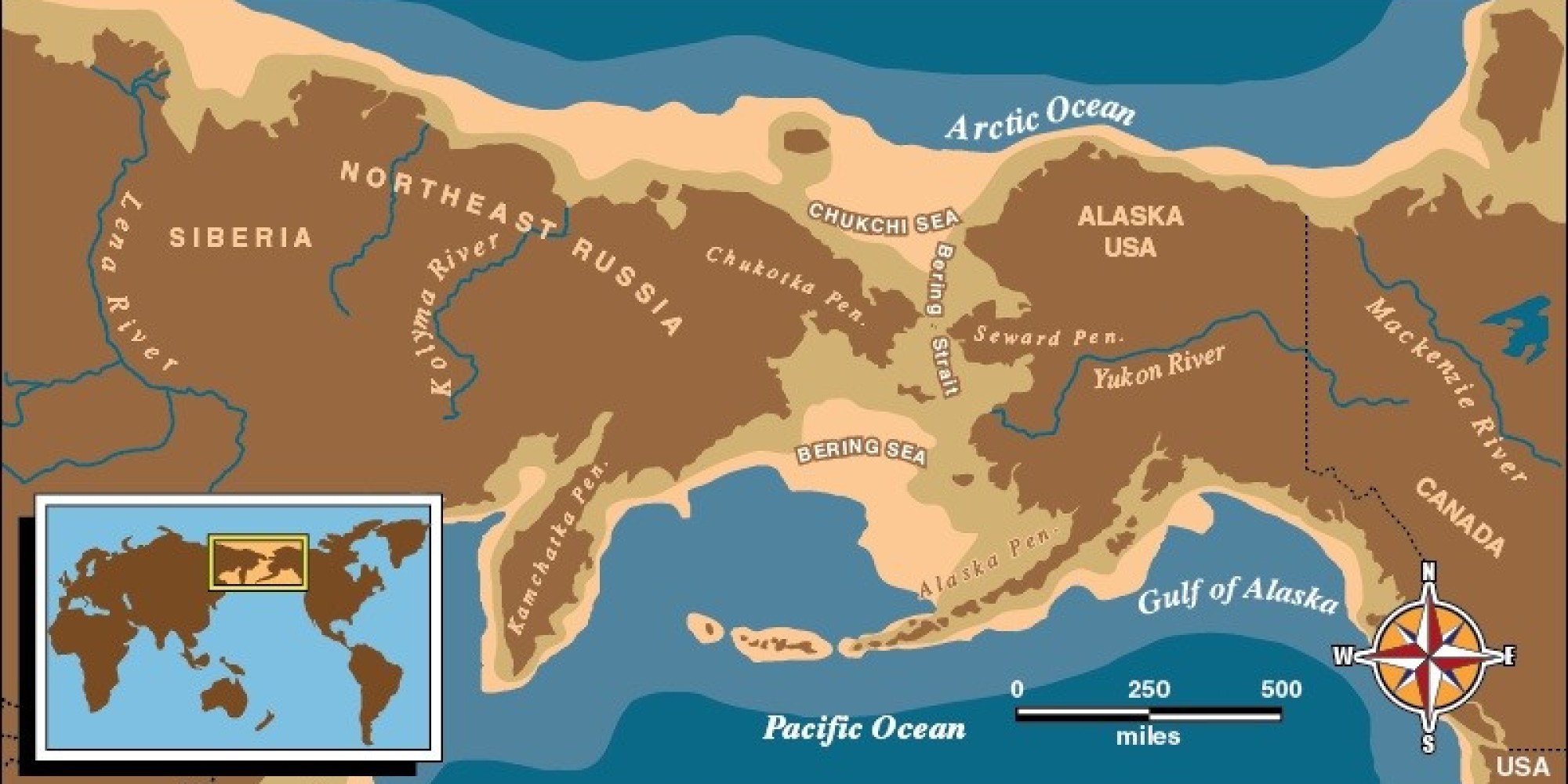
Their ancestors had moved eastward from Asia, across Beringia, the landmass that once connected Russia and North America at a time when sea levels were lower, into what is now Alaska and eventually south into the modern-day United States.
Joseph ParkinsonHOST
They were drawn south by changing weather patterns at the end of the last ice age that made the vast grasslands appealing.
Joseph ParkinsonHOST
The climate was mild.

CoryHOST
Bathsheba DeMuth is the author of Floating Coast, an environmental history of the Bering Strait, winner of the 2021 Bermuda American Historical Associations, John H. Dunning Prize, among many others.
CoryHOST
It's billed as the first comprehensive history of Beringia, the Arctic lands and waters that stretch from Russia to Canada.
CoryHOST
It's part natural history.
CoryHOST
Big chunks of the book revolve around hunting whales, walruses, and reindeer in the region.
CoryHOST
It's part geology and the search for and mining of gold and tin.
CoryHOST
But what's really interesting about Bathsheba's book is her framing of the last 150 years or so in this part of the world as a race between two encroaching civilizations, the Russian socialists and the American capitalists, and their determination to turn the region's ecological wealth into economic growth and state power.
CoryHOST
Bathsheba also draws a really sharp contrast between the mindsets of those foreigners and the area's original inhabitants, the Beringians themselves.
CoryHOST
I don't think it's much of a spoiler to say that the foreigners in this book are takers and extractors.

speaker_5NARRATOR
During the Ice Age, when sea levels were lower, it was dry land.
speaker_5NARRATOR
This vast region is often called Beringia.
speaker_5NARRATOR
It connected Asia and North America, but it was more than a bridge people simply crossed in a single dramatic migration.
speaker_5NARRATOR
For thousands of years Beringia was a world of its own.
speaker_5NARRATOR
Much of it was cold, but not uniformly buried under ice.
speaker_5NARRATOR
Parts of it were open grassland and steppe, supporting animals and human groups adapted to the harsh northern environment.
1 HR 12 MINS LATER
speaker_5NARRATOR
Humans had been living in the Americas for at least 15,000 years, and perhaps earlier.
speaker_5NARRATOR
The exact dates and routes are still debated.

Salimah ShivjiHOST
That unique behavior makes Zazula want to rename the northern population Yukon cheetah.
Ed MilibandSOUNDBITE_SPEAKER
When we think of these predators of Beringia, we always wanna envision them, like, chasing animals and eating mammoths and hunting and preying upon smaller things.
Ed MilibandSOUNDBITE_SPEAKER
But these Yukon cheetahs were actually developed a whole new behavior that we've never seen before.
Salimah ShivjiHOST
Thanks so much for being with us.

Micah HanksHOST
And a few researchers started saying, hey, you know, back during the Ice Age, sea levels were lower and portions of land were exposed.
Micah HanksHOST
And it may have been the case that there was a land bridge, much like there was once one between Asia and the northwestern North American continent known as the Bering Land Bridge.
Micah HanksHOST
Now, of course, it's the Bering Sea.
Micah HanksHOST
Well, beneath the Irish Sea is another area of land that at one time was exposed, and so some archaeologists have begun to say, hey, maybe the same thing happened here.
speaker_5NARRATOR
During the last ice age, sea levels dropped more than 100 metres.
speaker_5NARRATOR
that exposed a land bridge between Siberia and Alaska called Beringia, a broad, cold, but surprisingly productive step stretching for hundreds of miles.
speaker_5NARRATOR
At some point late in the game, maybe around 16,000 years ago, people walked across that bridge from Northeast Asia into what's now Alaska.
speaker_5NARRATOR
Then, as the great ice sheets covering Canada began to retreat, a gap supposedly opened between them, a long, deglaciated corridor running down through the interior of the continent.
speaker_5NARRATOR
Either they got into the Americas long before the corridor was open, by some other route, or our understanding of the timing and nature of that corridor is wildly wrong and it was traversable far earlier than most current reconstructions allow.
speaker_5NARRATOR
Most researchers lean toward the first option, because there's another pathway that has been gaining ground for decades, the coast.
speaker_5NARRATOR
Imagine the same lowered sea levels, but instead of focusing on a single bridge in the middle, trace your finger along the edge of the continent, from Japan and the Russian Far East, along the Kuril Islands, down the coast of Kamchatka, across Beringia's southern rim, and then along the pacific shore of alaska and british columbia a kind of kelp forest highway rich in fish shellfish marine mammals birds and seaweed if humans had already developed decent boats nothing spectacular just seaworthy enough for near-shore travel and short crossings They wouldn't need a giant continental highway through the ice.
speaker_5NARRATOR
They could hug the coastline exploiting marine resources, slipping past glaciated interior regions by moving along ice-free refugia on the outer shelf and scattered pockets of habitable land.

BrittanyUNKNOWN
Yeah.
Ricardo CalvarioGUEST
So it couldn't come from Beringia.
Ricardo CalvarioGUEST
He couldn't cross the strait through the ice.
BrittanyUNKNOWN
So he had to

Katrin PilkingtonCORRESPONDENT
He figured out the cheetahs had turned pescatarian, surviving almost exclusively off salmon.
Katrin PilkingtonCORRESPONDENT
Researchers say the study reshuffles their understanding of carnivore species in Beringia, the region where Russia, Alaska, and Canada were once connected.
Katrin PilkingtonCORRESPONDENT
Katrin Pilkington, CBC News, Whitehorse.
Tricia KindermanHOST
And finally, Swifties know the pain of the ticket resale market.

Jason ConcepcionHOST
We're getting to my favorites now.
Jason ConcepcionHOST
Beringia?
Tyler ParkerHOST
Well, Sundaland, that was the largest that was ever dry.
Jason ConcepcionHOST
Yes.
Tyler ParkerHOST
Ever fully dry, walkable land.
Tyler ParkerHOST
That was the biggest one.
Jason ConcepcionHOST
Beringia, potentially the most historically impactful for Americans.
Jason ConcepcionHOST
This is the land bridge that let people walk from Asia straight over to the North American continent.
16 more episodes mention Beringia.
Create an account to see the whole feed, search across every transcript, and follow the entities you care about.