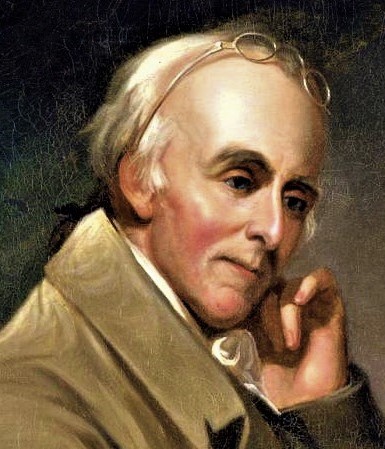
Benjamin Rush
Revolutionary and former Treasurer of the United States MintWikipedia
139
MENTIONS
47
EPISODES
43
PODCASTS
Search complete. 139 mentions across 47 episodes found for "Benjamin Rush".
Sep 11, 2026
Fear God and Declare Your Independence
P
49:31Philip JaureguiHOST
From Virginia, George Wythe, Richard Henry Lee, Thomas Jefferson, Benjamin Harrison, Thomas Nelson Jr., Francis Lightfoot Lee, Carter Braxton.
P
49:46Philip JaureguiHOST
From the state of Pennsylvania, Robert Morris, Benjamin Rush, Benjamin Franklin, John Morton, George Clymer, James Smith, George Taylor, James Wilson, George Ross from the state of Delaware, Cesar Rodney, George Reed, Thomas McKean from the state of New York, William Floyd, Philip Livingston, Francis Lewis, Lewis Morris from the state of New Jersey, Richard Stockton, John Witherspoon, Francis Hopkinson, John Hart, Abraham Clark, From the state of New Hampshire, Josiah Bartlett, William Whipple.
P
50:27Philip JaureguiHOST
From the state of Massachusetts, Samuel Adams, John Adams, Robert Treat Payne, Elbridge Gary.
P
50:37Philip JaureguiHOST
From the state of Rhode Island, Stephen Hopkins, William Ellery.
Summer Family Bible Conference 2026: Episode 4
B
7:03Bob McEwenGUEST
And so they're hanging on till January 1st, when their enlistments are up, and if they don't have a victory somewhere, this thing's gonna come to a halt.
B
7:11Bob McEwenGUEST
And so, as David mentioned, Benjamin Rush, his-- George Washington's friend and prayer partner, came down from New York and he said, "You know, we need to have a victory here." He said, "Yeah, that'd be a good idea.
B
7:21Bob McEwenGUEST
Why, why don't we do that?"
S
7:22speaker_3UNKNOWN
[laughs]
233. Phobia
H
7:32Helen ZaltzmanHOST
Phobias as psychological conditions have been recognized and written about for more than 1,000 years, but only started being named as such in a humorous text from 1786.
H
7:42Helen ZaltzmanHOST
I was, uh, very interested to learn that one of the founding fathers of things being called phobias was one of the founding fathers of the United States, Benjamin Rush.
S
7:54Sam JonesGUEST
Hmm.
H
7:54Helen ZaltzmanHOST
It's him who is attributed with the trend of putting phobia on the end of things.
H
9:20Helen ZaltzmanHOST
[sighs] It's thought provoking, isn't it?
D
9:23Deboki ChakravartiGUEST
Yeah.
H
9:23Helen ZaltzmanHOST
I think when Benjamin Rush was first writing about them, he was being quite tongue in cheek about it, and he listed 18 of them, but a lot of them are funny ones, like wantphobia he said is confined to old people, but he didn't really explain.
S
9:38Sam JonesGUEST
Huh.
Chronicles of America Volume 15 - Jefferson and his Colleagues-Allen Johnson
C
16:02Christine RuckerNARRATOR
He was by instinct a rationalist and a foe to superstition in any form, whether in science or religion.
C
16:09Christine RuckerNARRATOR
His indefatigable pen was as ready to discuss vaccination and yellow fever with Dr. Benjamin Rush as it was to exchange views with Dr. Priestly on the ethics of Jesus.
C
16:20Christine RuckerNARRATOR
The diversity of Jefferson's interests is truly remarkable.
C
16:23Christine RuckerNARRATOR
Monticello is a monument to his almost Yankee-like ingenuity.
Summer Family Bible Conference 2026: Episode 2
A
1:47Andrew WommackHOST
And David is giving quotes from their own writings and showing things.
A
1:52Andrew WommackHOST
Yesterday, he started talking about Benjamin Rush.
A
1:55Andrew WommackHOST
WHICH WAS ONE OF THE SIGNERS OF THE DECLARATION.
A
1:57Andrew WommackHOST
WE'RE GOING TO BACK UP AND JUST SHARE A LITTLE BIT OF THE ENDING OF HIS PROGRAM YESTERDAY SO YOU GET THE ENTIRE THING ABOUT BENJAMIN RUSH.
A
2:05Andrew WommackHOST
AND THEN WE'RE GOING TO CONTINUE THIS.
A
2:07Andrew WommackHOST
AND I PROMISE YOU, YOU NEED THIS.
A
2:37Andrew WommackHOST
This is the second half of his session at our Summer Family Bible Conference.
A
2:41Andrew WommackHOST
Watch this and I'll be back at the end of the program.
Washington’s Most Revolutionary Moment Was Surrendering Absolute Power
R
19:01Richard LimGUEST
And as a result of that, factions would then fight with each other.
R
19:06Richard LimGUEST
And as we know from any type of system with democratic features, the drawback is that eventually it, it could become tyranny of the majority, right? And there's a quote by Benjamin Rush, who became a, an American founder, where he says there's actually more of a danger to liberty with parliament than there is with king because with parliament you have this idea that they have the legitimacy 'cause they are representing the people, but they can turn into a dictatorship of the majority just as much as a king can become a tyrant.
R
19:37Richard LimGUEST
And so for them, this idea was that the king existed to check those factions, and his welfare was tied up in the welfare of the whole country, as opposed to an individual member of parliament's welfare was tied up with the welfare of his individual constituents, right? So there's this idea that parliament can be just as tyrannical as a king.
R
20:00Richard LimGUEST
And so now the idea of that monarch that the Americans looked at was the type of monarch who would check the factions and who was essentially focused on what was good for the whole realm.
Inquiry into the Effects of Ardent Spirits upon the Human Body and Mind-Dr. Benjamin Rush
S
2:39speaker_3NARRATOR
All LibriVox recordings are in the public domain.
S
2:42speaker_3NARRATOR
For more information or to volunteer, please visit LibriVox.org. An Inquiry into the Effects of Ardent Spirits Upon the Human Body and Mind, with an account of the means of preventing and of the remedies for curing them, by Benjamin Rush, M.D. part i by ardent spirits i mean those liquors only which are obtained by distillation from fermented substances of any kind to their effects upon the bodies and minds of men the following inquiry shall be exclusively confined fermented liquors contain so little spirit and that so intimately combined with other matters that they can seldom be drunken in sufficient quantities to produce intoxication and its subsequent effects without exciting a disrelish to their taste or pain from their distending the stomach they are moreover when taken in a moderate quantity generally innocent and often have a friendly influence upon health and life the effects of ardent spirits divide themselves into such as are of a prompt and such as are of a chronic nature the former discover themselves in drunkenness and the latter in a numerous train of diseases and vices of the body and mind one i shall begin by briefly describing their prompt or immediate effects in a fit of drunkenness this odious disease for by that name it should be called appears with more or less of the following symptoms and most commonly in the order in which i shall enumerate them one unusual garrulity two unusual silence three captiousness and a disposition to quarrel four uncommon good-humour and an insipid simpering or laugh five profane swearing and cursing six a disclosure of their own or other people's secrets seven a rude disposition to tell those persons in company whom they know their faults eight certain immodest actions i am sorry to say this sign of the first stage of drunkenness sometimes appears in women who when sober are uniformly remarkable for chaste and decent manners nine a clipping of words ten fighting a black eye or a swelled nose often mark this grade of drunkenness eleven certain extravagant acts which indicate a temporary fit of madness these are singing hallooing roaring imitating the noises of brute animals jumping tearing off clothes dancing naked breaking glasses and china and dashing other articles of household furniture upon the ground or floor after a while the paroxysm or drunkenness is completely formed the face now becomes flushed the eyes project and are somewhat watery winking is less frequent than is natural the upper lip is protruded the head inclines a little to one shoulder the jaw falls belchings and hiccough take place the limbs totter the whole body staggers the unfortunate subject of this history next falls on his seat he looks around him with a vacant countenance and mutters inarticulate sounds to himself he attempts to rise and walk in this attempt he falls upon his side from which he gradually turns upon his back he now closes his eyes and falls into a profound sleep frequently attended with snoring and profuse sweats and sometimes with such a relaxation of the muscles which confine the bladder and the lower bowels as to produce a symptom which delicacy forbids me to mention in this condition he often lies from ten twelve and twenty-four hours to two three four and five days an object of pity and disgust to his family and friends his recovery from this fit of intoxication is marked with several peculiar appearances he opens his eyes and closes them again he gapes and stretches his limbs he then coughs and pukes his voice is hoarse he rises with difficulty and staggers to a chair his eyes resemble balls of fire his hands tremble he loathes the sight of food he calls for a glass of spirits to compose his stomach now and then he emits a deep-fetched sigh or groan from a transient twinge of conscience but he more frequently scolds and curses everything around him in this state of languor and stupidity he remains for two or three days before he is able to resume his former habits of business and conversation pythagoras we are told maintained that the souls of men after death expiated the crimes committed by them in this world by animating certain brute animals and that the souls of those animals in their turns entered into men and carried with them all their peculiar qualities and vices this doctrine of one of the wisest and best of the greek philosophers was probably intended only to convey a lively idea of the changes which are induced in the body and mind of man by a fit of drunkenness in folly it causes him to resemble a calf in stupidity an ass in roaring a mad bull in quarrelling and fighting a dog in cruelty a tiger in fetter a skunk in filthiness a hog and in obscenity a he goat it belongs to the history of drunkenness to remark that its paroxysms occur like the paroxysms of many diseases at certain periods and after longer or shorter intervals they often begin with annual and gradually increase in their frequency until they appear in quarterly monthly weekly and quotidian or daily periods finally they afford scarcely any marks of remission either during the day or the night there was a citizen of philadelphia many years ago in whom drunkenness appeared in this protracted form in speaking of him to one of his neighbors i said does he not sometimes get drunk you mean said his neighbor is he not sometimes sober it is further remarkable that drunkenness resembles certain hereditary family and contagious diseases i have once known it to descend from a father to four out of five of his children i have seen three and once four brothers who were born of sober ancestors affected by it and i have heard of its spreading through a whole family composed of members not originally related to each other these facts are important and should not be overlooked by parents in deciding upon the matrimonial connections of their children let us next attend to the chronic effects of ardent spirits upon the body and mind in the body they dispose to every form of acute disease they moreover excite fevers in persons predisposed to them from other causes this has been remarked in all the yellow fevers which have visited the cities of the united states hard drinkers seldom escape and rarely recover from them the following diseases are the natural consequences of the habitual use of ardent spirits that is one a decay of appetite sickness at stomach and a puking of bile or a discharge of a frothy and viscid phlegm by hawking in the morning two obstructions of the liver the fable of prometheus on whose liver a vulture was said to pray constantly as a punishment for his stealing fire from heaven was intended to illustrate the painful effects of ardent spirits upon that organ of the body three jaundice and dropsy of the belly and limbs and finally of every cavity in the body a swelling in the feet and legs is so characteristic a mark of habits of intemperance that the merchants of charleston i have been told cease to trust the planters of south carolina as soon as they perceive it they very naturally conclude industry and virtue to be extinct in that man in whom that symptom of disease has been produced by the intemperate use of distilled spirits four hoarseness and a husky cough which often terminate in consumption and sometimes in an acute and fatal disease of the lungs five diabetes that is a frequent and weakening discharge of pale or swedish urine six redness and eruptions on different parts of the body they generally begin on the nose and after gradually extending all over the face sometimes descend to the limbs in the form of leprosy they have been called rum buds when they appear in the face in persons who have occasionally survived these effects of ardent spirits on the skin the face after a while becomes bloated and its redness is succeeded by a death-like paleness thus the same fire which produces a red color in iron when urged to a more intense degree produces what has been called a white heat 7.
S
12:50speaker_3NARRATOR
A fetid breath, composed of everything that is offensive in putrid animal matter.
S
12:56speaker_3NARRATOR
8.
44 MINS LATER
S
56:58speaker_3NARRATOR
to aid the operation of these laws would it not be extremely useful for the rulers of the different denominations of christian churches to unite and render the sale and consumption of ardent spirits a subject of ecclesiastical jurisdiction the methodists and society of friends have for some time past viewed them as contraband articles to the pure laws of the gospel, and have borne many public and private testimonies against making them the objects of commerce.
S
57:29speaker_3NARRATOR
Their success in this benevolent enterprise affords ample encouragement for all other religious societies to follow their example.
S
57:39speaker_3NARRATOR
End of section 2 section three of an inquiry into the effects of ardent spirits upon the human body and mind by benjamin rush m d this librivox recording is in the public domain part three we now come to the third part of this inquiry that is to mention the remedies for the evils which are brought on by the excessive use of distilled spirits these remedies divide themselves into two kinds one such as are proper to cure a fit of drunkenness and two such as are proper to prevent its recurrence and to destroy a desire for ardent spirits one i am aware that the efforts of science and humanity in applying their resources to the cure of a disease induced by an active vice will meet with a cold reception from many people but let such people remember the subjects of our remedies are their fellow-creatures and that the miseries brought upon human nature by its crimes are as much the subjects of divine compassion which we are bound to imitate as are the distresses which are brought upon men by the crimes of other people or which they bring upon themselves by ignorance or accidents let us not then pass by the prostrate sufferer from strong drink but administer to him the same relief we would afford to a fellow-creature in a similar state from an accidental and innocent cause one the first thing to be done to cure a fit of drunkenness is to open the collar if in a man and remove all tight ligatures from every other part of the body the head and shoulders should at the same time be elevated so as to favour a more feeble determination of the blood to the brain two the contents of the stomach should be discharged by thrusting a feather down the throat it often restores the patient immediately to his senses and feet should it fail of exciting a puking three a napkin should be wrapped round the head and wetted an hour or two with cold water or cold water should be poured in a stream upon the head in the latter way i have sometimes seen it used when a boy in the city of philadelphia it was applied by dragging the patient when found drunk in the street to a pump and pumping water upon his head for ten or fifteen minutes the patient generally rose and walked off sober and sullen after the use of this remedy other remedies less common but not less effectual for a fit of drunkenness are for plunging the whole body into cold water a number of gentlemen who had drunken to intoxication on board of a ship in the stream near fell's point at baltimore in consequence of their reeling in a small boat on their way to the shore in the evening overset it and fell into the water several boats from the shore hurried to their relief they were all picked up and went home perfectly sober to their families five terror a number of young merchants who had drunken together in a compting house on james river above thirty years ago until they were intoxicated were carried away by a sudden rise of the river from an immense fall of rain they floated several miles with the current in their little cabin half filled with water an island in the river arrested it when they reached the shore that saved their lives they were all sober it is probable terror assisted in the cure of the persons who fell into the water at baltimore six the excitement of a fit of anger the late dr witherspoon used to tell the story of a man in scotland who was always cured of a fit of drunkenness by being made angry the mean chosen for that purpose was a singular one it was talking against religion seven a severe whipping this remedy acts by exciting a revulsion of the blood from the brain to the external parts of the body eight profuse sweats by means of this evacuation nature sometimes cures a fit of drunkenness their good effects are obvious in laborers whom quarts of spirits taken in a day will seldom intoxicate while they sweat freely if the patient be unable to swallow warm drinks in order to produce sweats they may be excited by putting him in a warm bath or wrapping his body in blankets under which should be placed half a dozen hot bricks or bottles filled with hot water 9.
S
62:45speaker_3NARRATOR
Bleeding.
Why America's Prisons Keep Failing
C
9:32C.J. CiaramellaGUEST
And instead you almost immediately have this, um, sort of descent into, you know, pretty typical punishments for the time, corporal punishments and brutality.
N
9:44Nick GillespieHOST
Well, I was going to ask, you know, because Benjamin Rush, who is one of the, you know, he's one of the founding fathers, he's a huge figure in Philadelphia.
N
9:53Nick GillespieHOST
He helped found the University of Pennsylvania and he's kind of the godfather of Eastern State Penitentiary.
N
10:00Nick GillespieHOST
So you have a guy who created an Ivy, what became an Ivy League college and one of the most scarifying prisons, you know, on the planet.
Summer Family Bible Conference 2026: Episode 1
D
19:20David BartonGUEST
And beside him is William Williams.
D
19:22David BartonGUEST
And below him, Benjamin Rush.
D
19:24David BartonGUEST
And beside him, Elbridge Gerry.
D
19:25David BartonGUEST
And just keep going.
D
21:21David BartonGUEST
But not just stop with Hancock.
D
21:23David BartonGUEST
Go past Hancock.
D
21:24David BartonGUEST
Let's take Benjamin Rush.
D
21:26David BartonGUEST
Benjamin Rush... is probably the most unknown founding father who deserves really to be known.
Inquiry into the Effects of Ardent Spirits upon the Human Body and Mind-Dr. Benjamin Rush
S
1:09speaker_5NARRATOR
All LibriVox recordings are in the public domain.
S
1:12speaker_5NARRATOR
For more information or to volunteer, please visit LibriVox.org. An Inquiry into the Effects of Ardent Spirits Upon the Human Body and Mind, with an account of the means of preventing and of the remedies for curing them, by Benjamin Rush, M.D. part i by ardent spirits i mean those liquors only which are obtained by distillation from fermented substances of any kind to their effects upon the bodies and minds of men the following inquiry shall be exclusively confined fermented liquors contain so little spirit and that so intimately combined with other matters that they can seldom be drunken in sufficient quantities to produce intoxication and its subsequent effects without exciting a disrelish to their taste or pain from their distending the stomach they are moreover when taken in a moderate quantity generally innocent and often have a friendly influence upon health and life the effects of ardent spirits divide themselves into such as are of a prompt and such as are of a chronic nature the former discover themselves in drunkenness and the latter in a numerous train of diseases and vices of the body and mind one i shall begin by briefly describing their prompt or immediate effects in a fit of drunkenness this odious disease for by that name it should be called appears with more or less of the following symptoms and most commonly in the order in which i shall enumerate them one unusual garrulity two unusual silence three captiousness and a disposition to quarrel four uncommon good humor and an insipid simpering or laugh five profane swearing and cursing six a disclosure of their own or other people's secrets seven a rude disposition to tell those persons in company whom they know their faults eight certain immodest actions i am sorry to say this sign of the first stage of drunkenness sometimes appears in women who when sober are uniformly remarkable for chaste and decent manners nine a clipping of words ten fighting a black eye or a swelled nose often mark this grade of drunkenness eleven certain extravagant acts which indicate a temporary fit of madness these are singing hallooing roaring imitating the noises of brute animals jumping tearing off clothes dancing naked breaking glasses and china and dashing other articles of household furniture upon the ground or floor after a while the paroxysm or drunkenness is completely formed the face now becomes flushed the eyes project and are somewhat watery winking is less frequent than is natural the upper lip is protruded the head inclines a little to one shoulder the jaw falls belchings and hiccough take place the limbs totter the whole body staggers the unfortunate subject of this history next falls on his seat he looks around him with a vacant countenance and mutters inarticulate sounds to himself he attempts to rise and walk in this attempt he falls upon his side from which he gradually turns upon his back he now closes his eyes and falls into a profound sleep frequently attended with snoring and profuse sweats and sometimes with such a relaxation of the muscles which confine the bladder and the lower bowels as to produce a symptom which delicacy forbids me to mention in this condition he often lies from ten twelve and twenty-four hours to two three four and five days an object of pity and disgust to his family and friends his recovery from this fit of intoxication is marked with several peculiar appearances he opens his eyes and closes them again he gapes and stretches his limbs he then coughs and pukes his voice is hoarse he rises with difficulty and staggers to a chair his eyes resemble balls of fire his hands tremble he loathes the sight of food he calls for a glass of spirits to compose his stomach now and then he emits a deep-fetched sigh or groan from a transient twinge of conscience but he more frequently scolds and curses everything around him in this state of languor and stupidity he remains for two or three days before he is able to resume his former habits of business and conversation pythagoras we are told maintained that the souls of men after death expiated the crimes committed by them in this world by animating certain brute animals and that the souls of those animals in their turns entered into men and carried with them all their peculiar qualities and vices this doctrine of one of the wisest and best of the greek philosophers was probably intended only to convey a lively idea of the changes which are induced in the body and mind of man by a fit of drunkenness in folly it causes him to resemble a calf in stupidity an ass in roaring a mad bull in quarrelling and fighting a dog in cruelty a tiger in fetter a skunk in filthiness a hog and in obscenity a he goat it belongs to the history of drunkenness to remark that its paroxysms occur like the paroxysms of many diseases at certain periods and after longer or shorter intervals they often begin with annual and gradually increase in their frequency until they appear in quarterly monthly weekly and quotidian or daily periods finally they afford scarcely any marks of remission either during the day or the night there was a citizen of philadelphia many years ago in whom drunkenness appeared in this protracted form in speaking of him to one of his neighbors i said does he not sometimes get drunk you mean said his neighbor is he not sometimes sober it is further remarkable that drunkenness resembles certain hereditary family and contagious diseases i have once known it to descend from a father to four out of five of his children i have seen three and once four brothers who were born of sober ancestors affected by it and i have heard of its spreading through a whole family composed of members not originally related to each other these facts are important and should not be overlooked by parents in deciding upon the matrimonial connections of their children let us next attend to the chronic effects of ardent spirits upon the body and mind in the body they dispose to every form of acute disease they moreover excite fevers in persons predisposed to them from other causes this has been remarked in all the yellow fevers which have visited the cities of the united states hard drinkers seldom escape and rarely recover from them the following diseases are the natural consequences of the habitual use of ardent spirits that is one a decay of appetite sickness at stomach and a puking of bile or a discharge of a frothy and viscid phlegm by hawking in the morning two obstructions of the liver the fable of prometheus on whose liver a vulture was said to pray constantly as a punishment for his stealing fire from heaven was intended to illustrate the painful effects of ardent spirits upon that organ of the body three jaundice and dropsy of the belly and limbs and finally of every cavity in the body a swelling in the feet and legs is so characteristic a mark of habits of intemperance that the merchants of charleston i have been told cease to trust the planters of south carolina as soon as they perceive it they very naturally conclude industry and virtue to be extinct in that man in whom that symptom of disease has been produced by the intemperate use of distilled spirits for hoarseness and a husky cough which often terminate in consumption and sometimes in an acute and fatal disease of the lungs five diabetes that is a frequent and weakening discharge of pale or swedish urine six redness and eruptions on different parts of the body they generally begin on the nose and after gradually extending all over the face sometimes descend to the limbs in the form of leprosy they have been called rum buds when they appear in the face in persons who have occasionally survived these effects of ardent spirits on the skin the face after a while becomes bloated and its redness is succeeded by a death-like paleness thus the same fire which produces a red color in iron when urged to a more intense degree produces what has been called a white heat 7.
S
11:20speaker_5NARRATOR
A fetid breath, composed of everything that is offensive in putrid animal matter.
S
11:25speaker_5NARRATOR
8.
43 MINS LATER
S
54:14speaker_5NARRATOR
to aid the operation of these laws would it not be extremely useful for the rulers of the different denominations of christian churches to unite and render the sale and consumption of ardent spirits a subject of ecclesiastical jurisdiction The Methodists and Society of Friends have for some time past viewed them as contraband articles to the pure laws of the gospel, and have borne many public and private testimonies against making them the objects of commerce.
S
54:45speaker_5NARRATOR
Their success in this benevolent enterprise affords ample encouragement for all other religious societies to follow their example.
S
55:02speaker_5NARRATOR
section three of an inquiry into the effects of ardent spirits upon the human body and mind by benjamin rush m d this librivox recording is in the public domain part three we now come to the third part of this inquiry that is to mention the remedies for the evils which are brought on by the excessive use of distilled spirits these remedies divide themselves into two kinds one such as are proper to cure a fit of drunkenness and two such as are proper to prevent its recurrence and to destroy a desire for ardent spirits one i am aware that the efforts of science and humanity in applying their resources to the cure of a disease induced by an active vice will meet with a cold reception from many people but let such people remember the subjects of our remedies are their fellow-creatures and that the miseries brought upon human nature by its crimes are as much the subjects of divine compassion which we are bound to imitate as are the distresses which are brought upon men by the crimes of other people or which they bring upon themselves by ignorance or accidents let us not then pass by the prostrate sufferer from strong drink but administer to him the same relief we would afford to a fellow-creature in a similar state from an accidental and innocent cause one the first thing to be done to cure a fit of drunkenness is to open the collar if in a man and remove all tight ligatures from every other part of the body the head and shoulders should at the same time be elevated so as to favor a more feeble determination of the blood to the brain two the contents of the stomach should be discharged by thrusting a feather down the throat it often restores the patient immediately to his senses and feet should it fail of exciting a puking a napkin should be wrapped round the head and wetted an hour or two with cold water or cold water should be poured in a stream upon the head in the latter way i have sometimes seen it used when a boy in the city of philadelphia it was applied by dragging the patient when found drunk in the street to a pump and pumping water upon his head for ten or fifteen minutes the patient generally rose and walked off sober and sullen after the use of this remedy other remedies less common but not less effectual for a fit of drunkenness are four plunging the whole body into cold water a number of gentlemen who had drunken to intoxication on board of a ship in the stream near fell's point at baltimore in consequence of their reeling in a small boat on their way to the shore in the evening overset it and fell into the water several boats from the shore hurried to their relief they were all picked up and went home perfectly sober to their families five terror a number of young merchants who had drunken together in a compting house on james river above thirty years ago until they were intoxicated were carried away by a sudden rise of the river from an immense fall of rain they floated several miles with the current in their little cabin half filled with water an island in the river arrested it when they reached the shore that saved their lives they were all sober it is probable terror assisted in the cure of the persons who fell into the water at baltimore six the excitement of a fit of anger the late dr witherspoon used to tell the story of a man in scotland who was always cured of a fit of drunkenness by being made angry the mean chosen for that purpose was a singular one it was talking against religion seven a severe whipping this remedy acts by exciting a revulsion of the blood from the brain to the external parts of the body eight profuse sweats by means of this evacuation nature sometimes cures a fit of drunkenness their good effects are obvious in laborers whom quarts of spirits taken in a day will seldom intoxicate while they sweat freely if the patient be unable to swallow warm drinks in order to produce sweats they may be excited by putting him in a warm bath or wrapping his body in blankets under which should be placed half a dozen hot bricks or bottles filled with hot water 9.
S
60:01speaker_5NARRATOR
Bleeding.
37 more episodes mention Benjamin Rush.
Create an account to see the whole feed, search across every transcript, and follow the entities you care about.