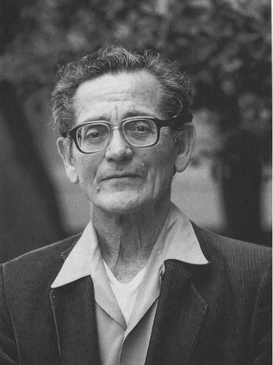
Benjamin Libet
American neuroscientistWikipedia
18
MENTIONS
5
EPISODES
5
PODCASTS
Search complete. 18 mentions across 5 episodes found for "Benjamin Libet".
Sep 17, 2026

HallowayGUEST
Oh, that is the center of the controversy.
HallowayGUEST
To understand this, we have to travel back to the 1980s, to Benjamin Libet's lab.
HallowayGUEST
The Libet experiments.
HallowayGUEST
Right.
HallowayGUEST
Libet set up an experiment that dropped a bomb on the concept of free will, and the scientific community is still dealing with the fallout.
Anna DeanHOST
Walk us through that setup, because it's iconic in neuroscience.
HallowayGUEST
It's brilliant in its simplicity.
HallowayGUEST
Picture yourself as the participant.

RalphHOST
Does free will actually exist? Well, tonight we're going to find out just how difficult it is to answer that question when we cannot even agree on who is doing the choosing.
RalphHOST
In the early 1980s, neuroscientist Benjamin Libet asked volunteers to do something almost absurdly simple.
RalphHOST
Just sit still, watch a clock, and whenever you feel like it, move your wrist.
RalphHOST
There wasn't any countdown or signal, or no one telling you when to do it.

speaker_2NARRATOR
named
Kevin AyoHOST
Benjamin Libet.
Kevin AyoHOST
He conducted experiments involving voluntary movement.
Kevin AyoHOST
Participants were asked to make simple movements whenever they felt like doing so, while researchers measured electrical activity associated with movement preparation in the brain.

speaker_5GUEST
If the interpreter module is constantly spinning stories to explain actions after they happen, it challenges the deeply held intuition that our conscious self is the author initiating the action.
speaker_5GUEST
We have to look at the work of neurobiologist Benjamin Libet in the 1980s.
speaker_4HOST
Oh, I know Libet's experiments.
speaker_4HOST
They are basically the boogeyman for anyone defending free will.