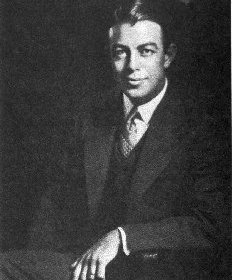
Benjamin Lee Whorf
American linguistWikipedia
4
MENTIONS
3
EPISODES
3
PODCASTS
Search complete. 4 mentions across 3 episodes found for "Benjamin Lee Whorf".
Sep 9, 2026

Kamwende GatendeHOST
Is that because of the difficulty of the Japanese language, the complexity of it, or what would you describe as being particularly hard about learning Japanese?
Martin HeißwolfGUEST
Well, I'm a strong adherent of the Benjamin Lee Whorf thesis, which says that languages are the way they are for a reason, because they help us to think the way we think.
Martin HeißwolfGUEST
Determinism, I think it's called.
Martin HeißwolfGUEST
And the Japanese don't focus on facts as we do.

Michael StevensHOST
Well, it, it, it's, it's more than just that, that silly example.
Michael StevensHOST
The, the Sapir-Whorf hypothesis is this really well-known sociological, anthropological, psychological theory that the words you have, your vocabulary, affects your ability to, to think, perceive, and, and act in the world.
Hannah FryHOST
That it literally changes your experience of reality when you have words for things.
Hannah FryHOST
And there is some, there is a bit [laughs] of evidence for this.
Hannah FryHOST
They would, like, chuck them around even though they still had flammable vapors in them.
Hannah FryHOST
Even though people kind of knew that they had flammable vapors in them anyway, they sort of didn't treat them with the respect that they deserved because they read the word empty and assumed that that meant the danger just, just wasn't, wasn't there.
Hannah FryHOST
So, so the, the kind of strong version of this, the strong version of the Sapir-Whorf hypothesis says that your language determines your thought, right? If your language lacks a concept, you cannot think it, and therefore it doesn't exist to you, which is neat but also probably wrong.
Michael StevensHOST
Why do you say probably wrong? Because, uh, the, the most concrete, convincing examples I've seen are in the realm of color perception, where if a culture has a word for a particular kind of, say, green, then they can pick that green out better than people from cultures that don't have that word.

Colin GorrieGUEST
It's based on two, uh, linguists who didn't actually write together about this.
Colin GorrieGUEST
They're just sort of both vaguely associated with it, Edward Sapir and Benjamin Lee Whorf.
Colin GorrieGUEST
And the idea is that language in some way influences or determines thought.
Colin GorrieGUEST
And so it, I put in influences or determines because it usually comes in two flavors, which people talk about as strong and weak Sapir-Whorf.