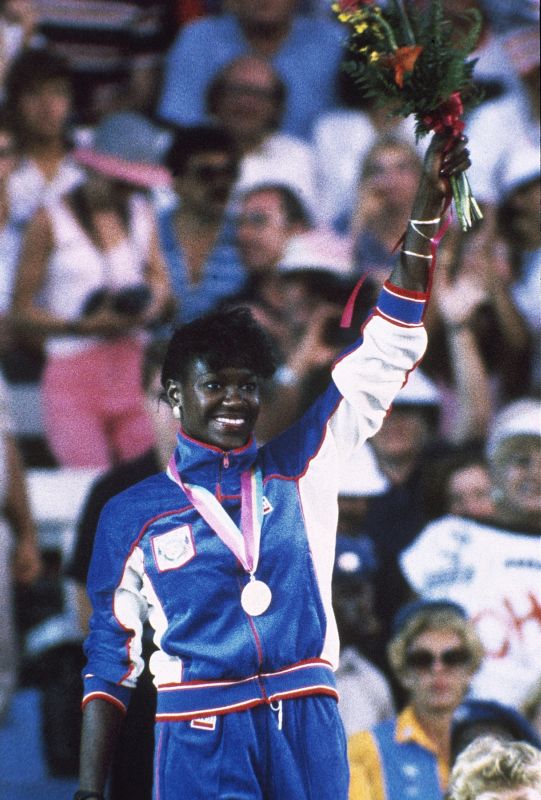
Benita Fitzgerald-Brown
Retired American athlete
4
APPEARANCES
4
PODCASTS
Sep 15, 2026

44:02

All right, so I'm an engineer, as I just mentioned by degree, I'm an industrial engineer.
44:08
So they kind of do time and motion studies and always trying to make things quicker, faster, more efficient.
44:13
So I feel like I've taken that approach to every job I've ever had.
44:18
And so on my very first day, I told the team that I wanted to gather feedback.
44:24
Certainly, I have feedback and knowledge as an athlete, as an executive with the USOPC and USA Track and Field and other nonprofits.
15 MINS LATER

Jessica O'BeirneHOST
And so what's being done specifically to address caseload and the time to resolution?

9:15
I approach every new job that I have or every job that I have like it's a race, quite frankly.
9:22
I know there's going to be hurdles in front of me, but I very keenly focused on the vision and the ultimate finish line for where we want to take the organization.
9:33
As an athlete, as an executive in the Olympic movement, in sports and nonprofit, this job is more than just a job for me.
9:44
And because I'm an engineer by training, I feel like it's given me this perspective to be able to take more of a systems approach to every leadership role I've had.
8 MINS LATER
18:22
When you look ahead to the next decade, what does success look like? How will you measure whether safe sport is making sports safer?

Piper KlemmHOST
andBeing an athlete, and then also what your role is now and how that impacts the, the s- vision of SafeSport
6:11
I know firsthand the positive impact that sport can have on the trajectory of someone's life because I experienced it personally, right? I competed, uh, for the U- USA Track & Field and, and AU and local track club.
6:26
I competed for my middle school and high school and college at University of Tennessee, my alma mater, and of course, on, on the Olympic stage as well.
6:34
And, uh, I have two kids, uh, now grown, but one just completed her track and field career at University of Maryland, as she graduated in May.
6:43
And, uh, so, you know, up until a month ago, [laughs] I was watching my kids compete in sport and have seen how my now adult children can... are fulfilling their dreams because of the lessons they learned through sport.
7:00
I believe that, um, as an athlete, I always felt safe and supported and strengthened in my career.
Piper KlemmHOST
... everything under the sun, I'm sure, which is amazing and, um, also involves a lot of work for you all.


Sarah SpainHOST
How do you imagine tackling the backlog that tends to occur, slow response and action time that sometimes people complain about? And does it feel like SafeSport, as it's built with its current staff, is even capable of handling the number of reports that are coming in?
11:25
I think the more awareness there is of the entity, the more people say, hey, I have a place to turn, which is a positive thing.
11:36
We are blessed to have that funding from the USOPC and from the Department of Justice, which has renewed a small grant, about $2.5 million each year.
18 MINS LATER
Sarah SpainHOST
Is SafeSport in the business of getting to the root of the problems that cause abuse or relying on others to do that work while you respond to the instances and outcomes of abuse?