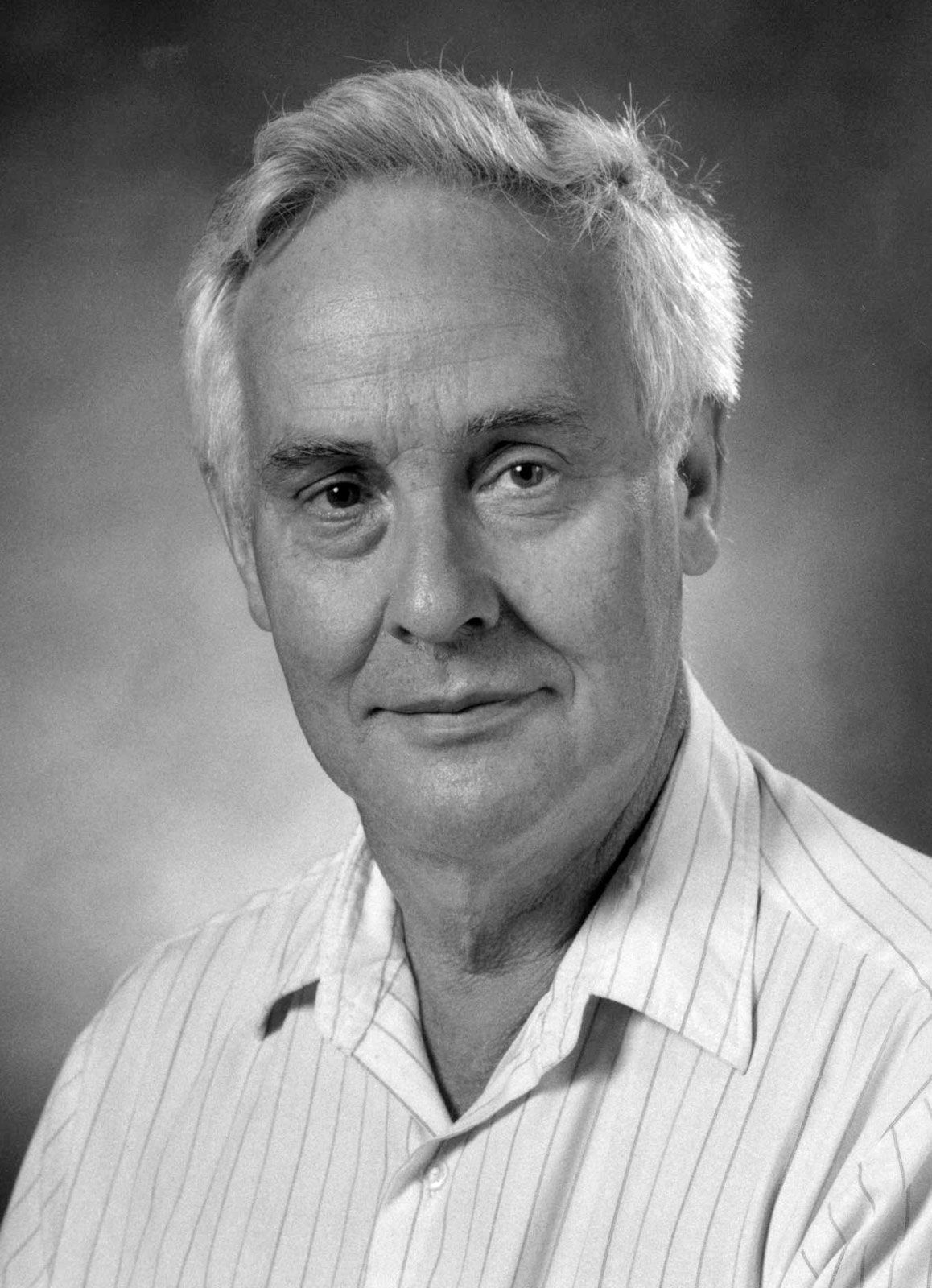
Benedict Anderson
Irish political scientist and historianWikipedia
25
MENTIONS
23
EPISODES
22
PODCASTS
Search complete. 25 mentions across 23 episodes found for "Benedict Anderson".
Sep 28, 2026

Max PortmanGUEST
You can say that the Hammers kind of keep bringing you back to the idea of, you know, working class club in the docks, you know, forged in iron as we constantly keep banging on about, which is such a cliche, but it
PhilipHOST
works, you know? Well, now we just need to quote Benedict Anderson and then we have the trinity of cliches, right? Yeah.
PhilipHOST
Do you have a suggestion for a new
Max PortmanGUEST
crest? I think just dropping to London would do the job.

George HoareHOST
Yeah, it just made me kind of think back to this, you know, as you framed it, this kind of the debate between kind of liberalism and communitarianism, which was, I think it was like 90s, like kind of classic kind of political theory discussions, the communitarians saying that the liberals are all kind of unrooted and the liberals saying all the communitarians are too conservative, essentially, too attached to kind of arbitrary factors of different sorts.
George HoareHOST
But yeah, I thought that it just kind of made me think that the, like, what is a kind of openness, like shared definition of place? What is a political place? this is kind of what got me thinking that there is a you know just trying to think of benedict anderson and the idea that you have like any place any community that's political you have to have some boundedness or limitedness, some sovereign decision-making capacity, and some imagined kind of community, some like ability to imagine the relations that you have of sameness with people that you're ultimately never gonna meet, or you're not gonna meet all of them.
George HoareHOST
You could, but you're not gonna meet every single one.
George HoareHOST
Yeah, and the cosmopolitanism.

Jason PackHOST
And if we don't, we can't achieve X and Y and Z.
Jason PackHOST
We need to have a better story about who we are as Americans, as Britons, as Westerners, because that story has been subjected to various truncations, deletions, errors, and what Benedict Anderson would call imagined communities.
Jason PackHOST
And I think that we can have even a better imagined community story that stresses the stresses the assimilation, the shared values, but it is going to exclude some people.
Jason PackHOST
And I understand and I have empathy for why in Piddington they've had this vote.

Matthew Raphael JohnsonGUEST
Hobsbawm, of course, is Jewish.
Matthew Raphael JohnsonGUEST
The book, uh, Benedict Anderson's, um, Imagined Communities became very famous, uh, mostly about Indonesia, but, but he, you know, it has full, uh, im- applications everywhere else.
Matthew Raphael JohnsonGUEST
Nationalism is, in academia, is always considered a myth in the sense that it's largely in people's imagination, you know, poets and writers, and, um, but doesn't have any objective reality.
Matthew Raphael JohnsonGUEST
That's what myth means in this case.

Andrew SmolskiGUEST
No.
Andrew SmolskiGUEST
What is the Benedict Anderson thing? It's an imagined community.
Andrew SmolskiGUEST
And that imagined community can be used to steal your money, to make you a mark based upon the utilization of those symbols.
Andrew SmolskiGUEST
And I think that these are clear cases in point where,

Matthew Raphael JohnsonGUEST
Hobsbawm, of course, is Jewish.
Matthew Raphael JohnsonGUEST
The book Benedict Anderson's Imagined Communities became very famous.
Matthew Raphael JohnsonGUEST
Mostly about Indonesia, but it has full implications everywhere else.
Matthew Raphael JohnsonGUEST
Nationalism in academia is always considered a myth in the sense that it's largely in people's imagination, you know, poets and writers, but doesn't have any objective reality.

StefanHOST
a,
QuinnPANELIST
you know, in like a Benedict Anderson kind of way, a project of nation building.
StefanHOST
Yeah, yeah, yeah, 100%.
StefanHOST
Yeah, because they're all depicting the war with Russia.

Miriam FrancoisHOST
Isn't it literally what we're Yes,
Jennifer CassidyGUEST
but the reason why I really critique the work is that it stems from the Benedict Anderson's imagined communities.
Jennifer CassidyGUEST
It's more like community based and it's not looking at tech actors specifically.
Jennifer CassidyGUEST
It's like more norms and values and actually just on how powerful meta is a 2025 study.

Mark Thomas GibsonGUEST
Mm-hmm
Tyler GreenHOST
... uh, which has been a rich area of scholarly study in the laft h- last half century, um, arguably beginning with Benedict Anderson and continuing through, uh, Philadelphian Rogers M. Smith, who is, I don't know, fair to say the, the dean of United States thinkers on, on our civic narrative.
Mark Thomas GibsonGUEST
[laughs]
Tyler GreenHOST
One of the ways you have played with and nudged and tweaked and updated our civic narrative is, uh, with your addresses of a very specific George Washington painting, and that is, uh, Emanuel Leutze's 1851 Washington Crossing the Delaware.

Nora Fisher OnarGUEST
Um, it's because it was, you know, articulated in a, in, in a context where Western experiences were presumed to be universal.
Nora Fisher OnarGUEST
Um, but there are many different examples, right? You have Benedict Anderson talking about imagined communities that's inspired by a, um, Indonesian context, and you have also James Scott thinking about, you know, how states think, likewise inspired by an Indonesian very pluralistic context in terms of the default social pluralism.
Nora Fisher OnarGUEST
Um, and so that's what I did with this book basically, is I to- I said, "Why do we only have to look at, you know, capital L liberal, uh, readings of pluralism as a way to make sense of diversity in the world? Um, why not look at, uh, late Ottoman, post-Ottoman trajectories and experiences of diversity and how to, um, strive to thrive within it, um, and the different, um, strategies that actors are, um, are pursuing?" And so it is, so it is basically I did offer a, um, complexity inspired theory or, or, or framework.
Nora Fisher OnarGUEST
Um, one of the reviewers of the book in Political Science Quarterly described it as a robust heuristic that travels, um, uh, in order to, to make sense of, yeah, how we are all in our different pockets of the world coming to terms with, um, the challenge of living together and thriving in our default diversity.
13 more episodes mention Benedict Anderson.
Create an account to see the whole feed, search across every transcript, and follow the entities you care about.