Beit Yala
TownWikipedia
8
MENTIONS
6
EPISODES
6
PODCASTS
Search complete. 8 mentions across 6 episodes found for "Beit Yala".
Oct 16, 2026

SteveGUEST
Let's go." I said, "All right." So we head to this neighborhood called Gilo, which is a f- uh, southern s- suburb of Jerusalem facing Bethlehem.
SteveGUEST
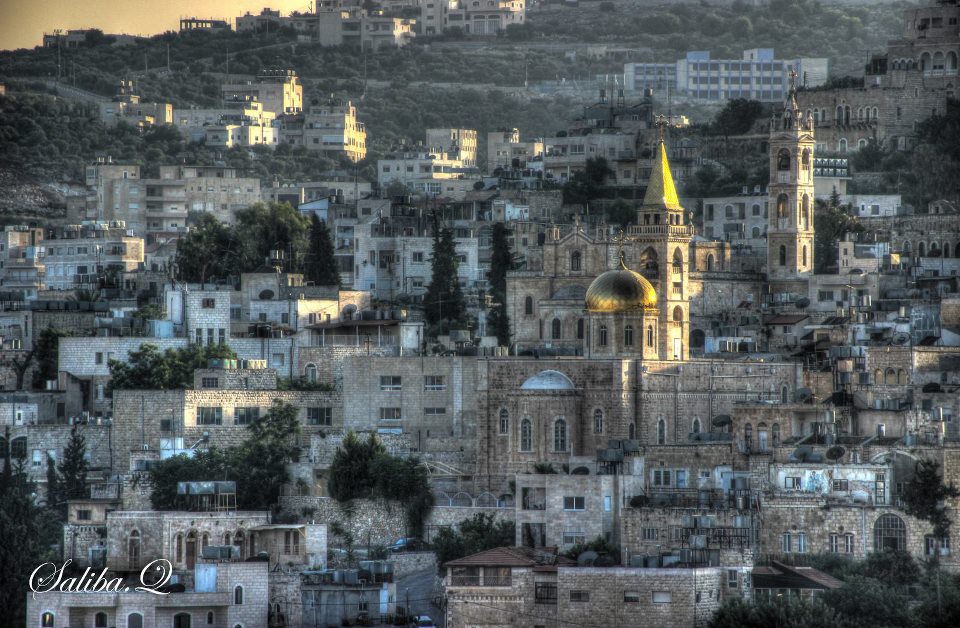
Bethlehem and a place called Beit Jala are on one hill.
SteveGUEST
The Jerusalem neighborhood Gilo is on another hill, and there's this teeny little canyon, a wadi, separating the two neighborhoods.
SteveGUEST
And every night on the news for the past month, you would see snipers shooting from the Bethlehem, uh, area, Beit Jala, at the Jerusalem suburb of Gilo, and I remember seeing this every night on the news.
SteveGUEST
So I said to my bus driver, I'm like, "Are we in Gilo? What in the world are we doing here?" Uh, and he says, "Oh, don't worry about it.
SteveGUEST
All the, all the action was happening at night.

Lawrence ShenkinGUEST
Uh, you know, my tzitzit hanging out, and I go in there.
Lawrence ShenkinGUEST
And, um, a few times when I go in, eventually throughout the year, there was a guy there called Nabil from Beit Jala, and he was interested in me.
Lawrence ShenkinGUEST
He was interested in, in, uh, in why is this guy, you know, coming here and, and, and, and doing this.
Lawrence ShenkinGUEST
And I-- we started talking.

Melissa BrodskyGUEST
Jewish families lived north of Jerusalem in Atrot and Neve Yaakov, and south of the city in the four communities of Gush Etzion.
Melissa BrodskyGUEST
Jewish-owned parcels were scattered through East Jerusalem, Hebron, Bethlehem, Silwan, Beit Jala, Beit Iksa, Beit Safafa, and other places that ended up under Jordanian control.
Melissa BrodskyGUEST
Some of the property belonged to individual families.
Melissa BrodskyGUEST
Other parcels belonged to banks, religious trusts, the Jewish National Fund, the Hebrew University of Jerusalem, and Jewish organizations.
5 MINS LATER
Melissa BrodskyGUEST
The owners included private individuals, the Jewish National Fund, the Palestine Jewish Colonization Association, the Anglo-Palestine Bank, the Hebrew University of Jerusalem, and Jewish religious trusts.
Melissa BrodskyGUEST
The Jewish cemeteries in Hebron and Nablus appeared among the properties as well.
Melissa BrodskyGUEST
Individual Jews held land in East Jerusalem, Silwan, Beit Jala, Beit Iksa, Beit Safafa, Hebron, and elsewhere.
Melissa BrodskyGUEST
Some of those properties had been purchased under the Ottoman Empire, and others during the British Mandate.

Yehuda CohenHOST
Okay.
Inon Dan KehatiGUEST
Also in Beit Jala.
Yehuda CohenHOST
Uh-huh.
Inon Dan KehatiGUEST
And he purchased lands in many, many places.

CornHOST
Six to 70.
Herman PoppleberryHOST
What happened on the 27th of June 1967 was that Israel extended West Jerusalem's municipal boundaries eastward, absorbing that six square kilometer Jordanian sector, plus roughly 64 square kilometers of West Bank land belonging to 28 villages in the Bethlehem and Beit Jala area.
Herman PoppleberryHOST
The municipality tripled in size overnight.
Herman PoppleberryHOST
Jerusalem became the largest city in Israel by both territory and population.

Nadi AbusaadaGUEST
And stone is a really big feature of the Palestinian landscape, especially the central hills, highlands of Palestine, if we want to call them that.
Nadi AbusaadaGUEST
Especially the area of Beit Jala and Beit Lahem, just south of Jerusalem.
Nadi AbusaadaGUEST
But also a place where generations upon generations, Palestinian craftsmen worked with stone.
Nadi AbusaadaGUEST
And that knowledge was always key, even in the modern history, even in colonial history.