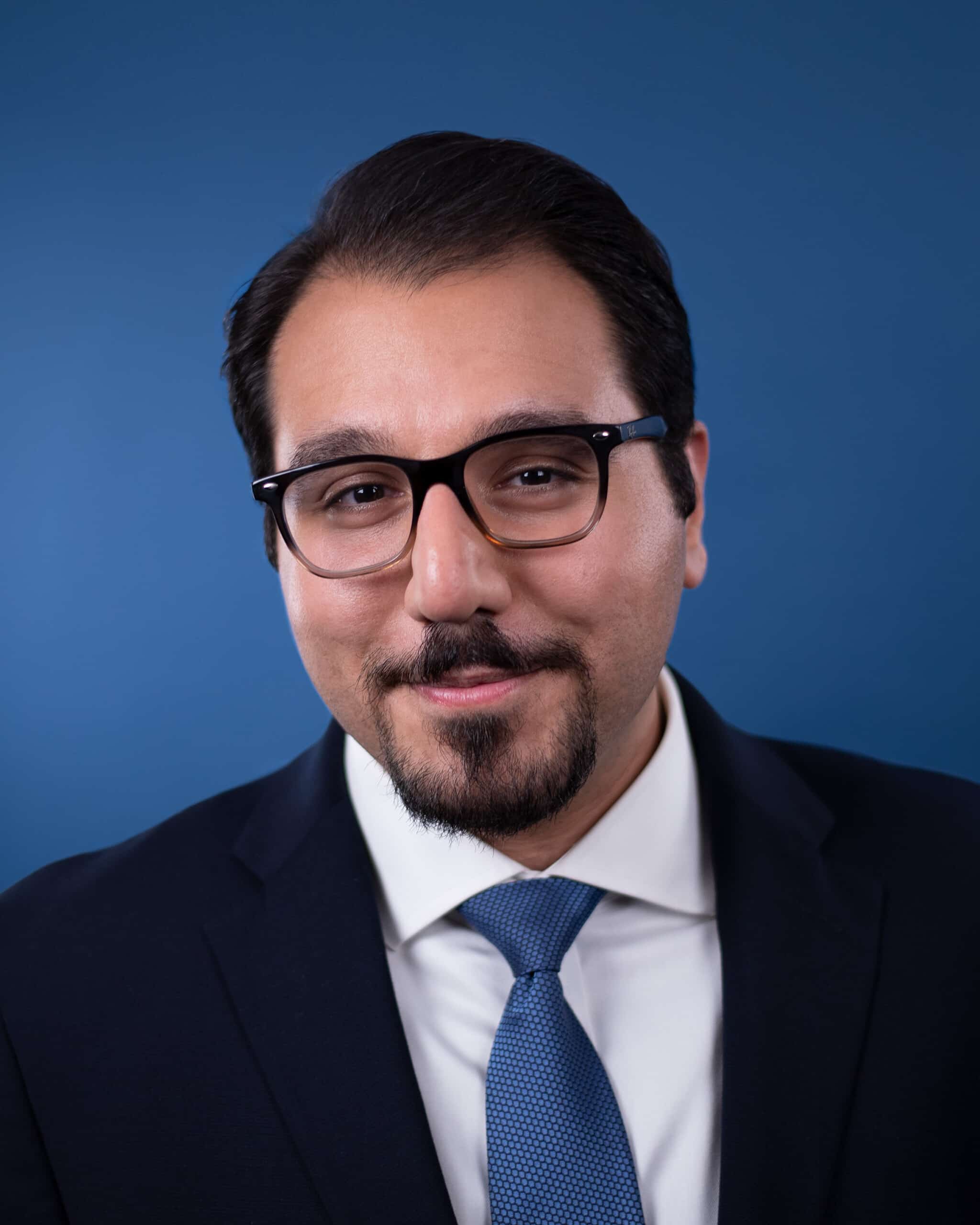
Behnam Ben Taleblu
90
APPEARANCES
39
PODCASTS
Oct 20, 2026

7:59
When we're turning back to the physical warfare or the kinetic warfare that you were talking about earlier, walk me through how Iran's use of proxy warfare has enabled it to expand its capabilities in the region and threaten its adversaries that it doesn't necessarily have the enough manpower in Iran physically to take on.

Behnam Ben TalebluGUEST
You know, proxy warfare, use of these transnational terror militias or what the regime itself really since the Arab Spring has called the axis of resistance, has really been part and parcel of Iranian foreign and security policy since the Islamic Republic for four decades now.
Behnam Ben TalebluGUEST
In the first decade or one to two decades, it was really about creating or co-opting these terror groups using local kind of disgruntled populations.
Behnam Ben TalebluGUEST
But now the period that we've lived through is the ability to take these local disgruntled populations, often in jurisdictions of weak central authority.
Behnam Ben TalebluGUEST
I mean, you look at the places... that the Islamic Republic has proxies today, they aren't well-functioning states.
21 MINS LATER
30:18
I'm curious to hear from you, having one foot here and one foot there, Do you think it's realistic in the hopes of bringing about regime change in Iran? And if so, who in your eyes is most likely to be able to be that person to lead the Iranians?


Behnam Ben TalebluGUEST
So one reason why the regime was able to spook us, and by us I don't mean just countries, I don't mean people, I mean the things that make money matter from that region, which is the shippers, the insurers, the energy sector, the private sector largely, uh, in that part of the world, was because of the unfinished business from two thousand twenty-three to two thousand twenty-five that we had with the Houthis in Yemen, and the problem, the fact that the, and the problem that the Houthis were able to create with Iranian weapons for commercial traffic in the Red Sea.
Behnam Ben TalebluGUEST
At the start of the campaign in February, March, and then moving into April, once the forty-day war ended, what the Islamic Republic had did is it weaponized the fears that existed in the private sector about what if the Iranians do this in the Persian Gulf, and then they ultimately did it.
Behnam Ben TalebluGUEST
But the it was simply deploying mines along the critical international, uh, zone, uh, in the Strait of Hormuz, which at its narrowest part, uh, you know, bridges territory from Oman and Iran and has a lot of large commercial tankers pass through on a daily basis.
Behnam Ben TalebluGUEST
About a quarter or a fifth of the world's oil, uh, goes through this critical waterway pre-war, uh, and they look to impede that.
Behnam Ben TalebluGUEST
And then the Trump administration fought Iran's blockade with a blockade of its own, and you saw Iranian oil exports from February at two point one million barrels a day, March, one point one five million barrels a day, April, nine hundred thousand barrels a day as the war came to a close and a blockade came into effect, and then May, uh, sixty-four thousand barrels a day.
Behnam Ben TalebluGUEST
So a record crash, zero crude oil, only sixty-four thousand, uh, barrels a day, uh, and on four ships.
6 MINS LATER


Hairianto DimanHOST
Madam, what has the US ultimately achieved by being militarily involved in Iraq for over 20 years? And what does it leave behind?
Behnam Ben TalebluGUEST
Well, the US hasn't been militarily involved in the Islamic Republic of Iran.
Behnam Ben TalebluGUEST
once in 2025 and for 40 days directly in 2026, and then during a 67-day ceasefire period where the regime did not cease firing, which led to negotiations, which led to a memorandum of understanding, which the regime violated by firing on Qatari ships earlier this summer.
Behnam Ben TalebluGUEST
And now the U.S. has actually very slowly and quietly and patiently decided Despite media, markets, banks, businesses, and even some regional states having skepticism, the U.S. has slowly taken leverage away from the Islamic Republic, which had closed the Strait of Hormuz earlier this year.
Behnam Ben TalebluGUEST
We're nearly at 70% restoration of pre-war level export capacity, and with regional countries like Saudi Arabia and the UAE looking infrastructurally to get around this bit of strategic geography.
9 MINS LATER

Rani SamtaniHOST
What would a durable end game require this time? What's it going to take to move the needle to get to an agreement that both sides won't turn their backs on?


Eben BrownHOST
Um, uh, how effective can it be? Is the world, is the Gulf, is the, are the Americans, are they capable of defending against that on the other side of the Arabian Peninsula?
Behnam Ben TalebluGUEST
Uh, I would say that they are capable of defending against it, but this stuff, despite, you know, our adversaries, whether they're states like the Islamic Republic or non-state actors like the Houthis, uh, despite these guys being conventionally weaker, uh, they are still lethal, and weak can still be dangerous, as we see with the Islamic Republic, as we see with the Houthis.
Behnam Ben TalebluGUEST
Uh, because, you know, these are guys who have less to actually live for and a heck of a lot to fight, kill, and die for.
Behnam Ben TalebluGUEST
So you see that with the way the Islamic Republic has prosecuted the war against Israel, against America, against the Arab border, against international shipping, and it's tried to create almost like the horns of a bull, a pincer on the international economy, uh, with the way not just oil and, uh, you know, petrochemicals and other kind of oil derivatives flow, but really the way East-West global trade flows by trying to export the policy they created and perfected Uh, in the Persian Gulf at the height of the Iran-Iraq War, and move that over to the Red Sea and the Bab el-Mandeb.
Behnam Ben TalebluGUEST
And you saw them do that from 2023 to 2025 in the a- aftermath of the various cycles of violence in the post-October 7 Middle East, when you remember the Houthis even got involved in that multi-front war.
Behnam Ben TalebluGUEST
And much is indeed riding on can America hold together the Arab order? Can America articulate a political vision as to what the use of force is supposed to serve? And can America actually empower, uh, its regional partners? You know, there are reports of pretty significant and sustained Saudi airstrikes against Houthi positions, despite the fact that just a few days ago, the Houthis were able to take the entire corridor on the left side of that country along the Red Sea.
Behnam Ben TalebluGUEST
Uh, so despite some strategic geography changing hands and the Houthis controlling more, uh, there are more reports of Saudi airstrikes, and there's rumors of, you know, will the US be able to support them with intelligence, or will other actors, perhaps even the Israelis, be able to support the Saudis with intelligence? And to that degree, uh, does that open the door for future collaboration once the shooting stops to be able to solidify some of those political wins that we talked about, uh, on the back end of this conflict?
Eben BrownHOST
Um, it, it's created a very weird relationship at the southern end of the peninsula, hasn't it?

Behnam Ben TalebluGUEST
Because on the macroeconomic side, the health and wealth of the Iranian economy is not doing well at all.
Behnam Ben TalebluGUEST
And these penalties that are on the books and are now being much more aggressively enforced and scaled up really are targeting how the Islamic Republic survived maximum pressure 1.0.
Behnam Ben TalebluGUEST
I mean, on Economic D-Day, a lot of folks were saying it's a nothing burger.
Behnam Ben TalebluGUEST
but the strategic identification of five sectors of the Iranian economy, aviation, shipping, technology, gold slash precious metals and crypto slash digital currency.
Behnam Ben TalebluGUEST
I mean, these are all ways that the regime has breathed and found ways to develop and get revenue after american sanctions and max pressure 1.0 now this is proof to me that treasury has done its homework is identifying them one by one and coming down like a ton of bricks on them that's why we saw recently the entire commercial aviation sector in iran gets subject to u.s sanctions and why i fear the success of it is that it's actually not a super heavy lift for america unless we choose to mesh this issue into a larger kind of u.s china issue and force the chinese into this fight other than that this is a fairly manageable economic pressure proposition but it'll be really impactful in iran it'll be impactful because you have you're doing this economic pressure when there's a blockade you have a de facto aerial blockade at the same time now really the walls are coming in on tehran diplomatically in this town in new york city for example you have the unga coming up you have a vote on the 1737 sanctions committee coming up You have the Europeans enforcing their snapback sanctions, which happened last year.
9 MINS LATER

Brittany LewisHOST
Do you think he's made the case to the American people that this is worth it? And if not, how do you think he does make that case?


Mike BakerHOST
Well, [laughs] where do we even start? Um, give me your assessment of, of, of where we're at right now with the Iran conflict, and I know that's a huge playing field I've just given you, but take it away and, and tell me what your assessment is, what you're thinking.
Behnam Ben TalebluGUEST
You know, I, I, just gotta say the Iran conflict is playing out right now just in the shadow of the quarter-century anniversary of the 9/11 attacks, and that really does focus the mind about the capabilities that America's adversaries, even if they're weak, even if they're unorganized, even if they're scattered, uh, can still pose to us and to the homeland and to American citizens, uh, all around the world.
Behnam Ben TalebluGUEST
Uh, you know, zooming in, I think the president is adopting something of a zero-tolerance policy towards, uh, Iranian instability in the Persian Gulf and Strait of Hormuz.
Behnam Ben TalebluGUEST
Actually, I see a pretty successful streak of moves by the US since leaving the MOU.
Behnam Ben TalebluGUEST
Uh, I see, you know, those thirteen days of strikes against Iran South, that's really blinded the regime to what the US was doing on the opposite side of the strait, which was really digging around, uh, the Strait of Hormuz, moving rocks around to make sure that larger ships could pass through there, slowly using the US Navy to escort them.
Behnam Ben TalebluGUEST
So I see actually the US, you know, militarily having opened the strait, and then even, you know, Admiral Cooper of CENTCOM saying that there was de-mining in that, um, that central part of the strait wasn't subject to mines.
8 MINS LATER
Mike BakerHOST
And from my perspective, again, I don't know that you can call it a win if we end up with an open strait, but the same leadership in place in, in Iran, uh, and we've kicked the can down the road at some point because they're not going to give up, uh, their nuclear ambitions, I don't believe.

Behnam Ben TalebluGUEST
Moving backwards, why weren't these things in position? That's because the institutional support was not built for them.
Behnam Ben TalebluGUEST
But I have been coming and going in Congress, coming and going in television, coming and going, meeting with think tanks, tech people, different administrations since 2019 when 1,500 people were killed under the cover of darkness in Iran.
Behnam Ben TalebluGUEST
That should have been the wake up call that the next time the lights go off, the killing is going to start.
30 MINS LATER

Dan PfeffermanHOST
But they have been, you know, I've heard different reports on the missile capacity and then the drone capacity, which is what they've been using to terrorize the Gulf Arab states.

James BoltHOST
have to think Donald Trump is to go that he would possibly consider using a nuclear weapon against civilians?
Behnam Ben TalebluGUEST
Sitting here in Washington, D.C., I've heard this comment come about in the policy community, believe it or not.
Behnam Ben TalebluGUEST
I've even heard it among some of the anti-Trump elements of the Iranian diaspora, believe it or not.
Behnam Ben TalebluGUEST
And all three of them, again, don't assume to malice what you can ascribe to stupidity or lack of information.
Behnam Ben TalebluGUEST
Within all three domains, I would say whatever their political orientation is, I've seen this come out of a more political and politicized assessment and understanding of the Trump administration, that Trump is some madman president and that in a situation where he can't clearly get a political win out of the Iran war, well, then he's just going to drop a nuke and walk away.


Brian KilmeadeHOST
How aggressive w- should we be, and do you think we will be, on China not buying their oil?
Behnam Ben TalebluGUEST
Well, I think we should be fairly aggressive, even though the Chinese have proven in the past that they do respond to market incentives anyway.
Behnam Ben TalebluGUEST
The art of the deal for the Trump administration is how to get the Chinese to sell out the Islamic Republic- Uh, for the right price, and the key word there is for the right price.
Behnam Ben TalebluGUEST
Because how the Iran sanctions issue, the threat of secondary sanctions, and the real threat potentially against moving against foreign financial institutions, particularly in mainland China, that's something that's gonna have to be nested and racked and stacked in terms of the list of the priorities, uh, the president has, uh, with the Chinese based on the US national interest.
Behnam Ben TalebluGUEST
I mean, as you know, other things include safety in the Pacific, and perhaps most importantly, uh, for the US where the administration has been racking up some wins, uh, cooperation on fentanyl, where the cooperation is good but could be significantly better.
Behnam Ben TalebluGUEST
So I think the president is really gonna have to learn how to fit in the Iran issue into the larger China challenge, but that doesn't mean he has to hold back on sanctions.
Behnam Ben TalebluGUEST
If anything, there's a whole bunch of regional countries, uh, that could, uh, you know, uh, be finger-wagged and subject to sanctions.
Brian KilmeadeHOST
So I want you to take that on and the JCPOA, which I hear every Democrat bring up as if we don't remember that Ben Cardin, Chuck Schumer, Senator Menendez, and others wouldn't vote for it because it would've expired by now anyway.


Behnam Ben TalebluGUEST
Um, no, but to, to the heart of the question, there's a couple, couple media narratives to dispel about what's going on in Tehran.
Behnam Ben TalebluGUEST
500,000 foot, what you're watching right now is musical chairs among the Islamic Republic.
Behnam Ben TalebluGUEST
You heard really from late February, February 28th, up until you could say end of July, early August, uh, this one kind of consistent, some in the Iran expert community, some, uh, for example, in the media, saying that, "Okay, oh my goodness, the US and Israel made this gigantic strategic mistake.
Behnam Ben TalebluGUEST
They attrited the revolutionary leadership, and the restraint-oriented faction was gone, and now this younger, more hardline generation is there." Let's take apart the first word, younger.
Behnam Ben TalebluGUEST
The heart of the Islamic Revolutionary Guard Corps, of the people with their fingers on the trigger, the heart of the people making key national security decisions, they are all age 50 to 70.
Behnam Ben TalebluGUEST
They are all Islamists, largely from the provinces, not from Tehran, and they are all Iran-Iraq war veterans who fought in that eight-year conflict.
36 MINS LATER


Hugh HewittHOST
I want to give you the floor for your assessment of where we stand in the battle with Iran as of today, August 11th.
Behnam Ben TalebluGUEST
The president is picking up on a strategy that was actually successful in term one, but he's adding to it something and that's the blockade.
Behnam Ben TalebluGUEST
that after the 13 days of strikes, that after the attempt to open up the Strait of Hormuz, the president is going to be relying on two pillars, particularly before the midterms.
10 MINS LATER
Hugh HewittHOST
How do you assess the Iranian missile magazine depth now after six months of on and off war?


Negar MojtahediHOST
What do you make of what Alex is saying in terms of a, a, a fragmented IRGC and this acceleration or, you know, the process being sped up of the IRGC essentially holding c- more control, uh, over the country? Like, how do you compare that before the war and after the war? As Alex mentioned, they were still in control before the war, so how has it really changed?
Behnam Ben TalebluGUEST
Um, and I think we, we, we can have this con-- we, we may have had this conversation before.
Behnam Ben TalebluGUEST
I think this is the trend line to watch because, uh, you know, it's in so many ways been the most important political, military, economic institution in the Islamic Republic for so many years, and I think it will continue to be.
Behnam Ben TalebluGUEST
Uh, that necessarily means there will be more factional, uh, fighting with veterans of the IRGC and others in the state or in society.
18 MINS LATER


Behnam Ben TalebluGUEST
You know, there-- it's not by accident that FD during max pressure 1.0 was talking about a blockade, because it physically complements the economic and the financial and the legal architecture the president resurrected when he left the nuclear deal in 2018 and that he expanded and built from 2018 to 2021.
Behnam Ben TalebluGUEST
Those actually, in terms of whether you look at stagflation or inflation in the Iranian economy, the ability to export oil, the ability to repatriate funds, all the things that sustain the most dangerous destabilizing programs, missile, military, drone, nuclear, terrorism, all, almost all come from energy revenues.
6 MINS LATER
Eben BrownHOST
Benham Ben Taleblu is the Iran program's senior director and a senior fellow at the Foundation for the Defense of Democracies.
Behnam Ben TalebluGUEST
There's no way to say this other than coming straight out with it, but with President Trump, all options are on the table at the same exact time.
Behnam Ben TalebluGUEST
Uh, throughout the course of last week, there was a steady drumbeat, a wider and wider array of targets, uh, that US CENTCOM was striking on Iranian territory, uh, missile sites, drone sites, storage facilities, radars, electronic equipment, transporter erector launchers, uh, you know, military bases, you name it.
Behnam Ben TalebluGUEST
Uh, these things were being struck, and the president was even teasing the resumption of potential critical infrastructure and even civilian strikes against, um, bridges and tunnels and power plants, uh, if I'm not mistaken.
Behnam Ben TalebluGUEST
At the same time, after an unlucky number of thirteen days of consecutive bombings and Iranian responses every night against Jordan, against Kuwait, against Bahrain, and in particular US facilities there, uh, it seems that both sides have hit pause.
8 MINS LATER
Eben BrownHOST
So what does that have to do with Iran other than Iran and Russia have been helping each other in, in both things? Um, this unfurls a whole other dynamic, doesn't it?

Behnam Ben TalebluGUEST
I certainly think the way the president has teed it up is that escalation is coming, and it's a matter of when, not if.
Behnam Ben TalebluGUEST
Remember, about a week ago, there was an unnamed administration official saying, we want to slap them around a bit more.
Behnam Ben TalebluGUEST
And the question I asked was, really, to what end? I think here, you know, the administration loves options, whether that's continuing to take away options from Tehran, continuing to make it a bit easier for ships to go through the strait.
Behnam Ben TalebluGUEST
continuing to at least level the playing field between the state and the street in Iran, or at least continuing to set the table potentially to go back to negotiations and a deal.
Behnam Ben TalebluGUEST
And this whole week, it looked like the president was escalating, escalating.

Mark HalperinHOST
I know your general orientation towards solving this crisis, but what do you think about the prospects that escalation of the kind that's being discussed will lead to a humanitarian crisis that will be something the United States and its allies have to grapple with?

14:06

They're not waving the white flag, um, e-even as we pound their military, right? The, the, what, what we would call legitimate targets according to the, you know, laws of war and the rules-based international order and all, all the things that I think continue to, uh, tie the hands of the administration, right? So if they're hitting civilian infrastructure now, um, I mean, d- do you think that this is something that the administration should be doing? And I know I'm not asking you to condone war crimes here, but I am, I think, asking you, if the regime will not surrender and will not cede that it is losing under the current circumstances, does the administration have a choice?
Behnam Ben TalebluGUEST
I think the administration certainly has a choice, but more importantly, the administration needs a strategy and it needs to articulate what it wants versus what it will settle for.
Behnam Ben TalebluGUEST
You know, it's good that it's all options on the table, but it's bad that it's all breadth and no depth with respect to those options.
6 MINS LATER
21:03
But are they organized enough to do what needs to be done to supplant this regime if and when the time comes?


Behnam Ben TalebluGUEST
You know, this is a regime that, thanks to US and Israeli military action, is less capable, but unfortunately because it has survived that action, is more confident.
Behnam Ben TalebluGUEST
And despite the supreme leader, the so-called supreme leader, Khamenei Sr., no longer being at the helm, and Khamenei Jr., uh, his son and the new supreme leader, no, uh, uh, being not seen nor heard from in the past few months, uh, this is a regime that is still living with the foreign and security policy of the father.
Behnam Ben TalebluGUEST
So that means responding to every attack, being seen as closing the round, and trying to drive a cycle of violence that leads to Israeli and American defeats and that leads to the expansion of the Islamic Republic's regional network and of its terrorist-sponsoring ideology.
Behnam Ben TalebluGUEST
And, uh, they just recently stumbled on, despite having threatened this for a very long time, uh, the way that the Strait of Hormuz, uh, is an international Achilles heel.
Mark HalperinHOST
What's giving you optimism about a good, a good outcome, and what's making you pessimistic about a good outcome?
Behnam Ben TalebluGUEST
Well, first of all, great to be with you as always, and, uh, as well as with your viewers and listeners.
Behnam Ben TalebluGUEST
Uh, great question, because it really is a fork-in-the-road moment for the Trump administration.
Behnam Ben TalebluGUEST
What's giving me optimism is that the president realized there was a need for a course correction.
Behnam Ben TalebluGUEST
His rhetoric about a day and a half ago, uh, particularly alongside the NATO summit, seemed to signal that.
8 MINS LATER
Mark HalperinHOST
Uh, Behnam, uh, what's good in the MOU right now or is it, or is it, it not, not serving any good purpose at this point?


Sean LayHOST
I asked Behnam Ben Taleblu, senior director of the Ir- Iran program at the foundation, what he makes of the renewed attacks.
Behnam Ben TalebluGUEST
Well, sadly, I think the latest escalation between the US and Iran was entirely predictable.
Behnam Ben TalebluGUEST
You know, this is a regime that unfortunately can play a bad hand well, but also tends to overplay its hand.
Behnam Ben TalebluGUEST
And despite someone like me being critical of the memorandum of understanding due to how heavily slanted it was in Iran's favor, it still played to the edge and then overplayed its hand, continuing to attack ships traversing the Strait of Hormuz that did not use pre-approved Iranian routes.
Sean LayHOST
Do you think the mere fact that there was a memo of understanding, the fact that the United States negotiated this with the Iranians, might have given them their impression that they had more room for maneuver than they actually had? In other words, may the American signals have been actually a bit confused on this to the Iranians?
Behnam Ben TalebluGUEST
Well, I do think some of the American signals have been confused, uh, whether you try to marry the rhetoric with the reality or the diplomatic playing field versus the actual battlefield, but I don't think that's how we got into this.

Behnam Ben TalebluGUEST
Surely he made his presence felt, but also, uh, Turkish president, Recep Tayyip Erdogan, went quite out of his way, uh, to make, uh, Trump feel welcome, stylistically and substantively.
Behnam Ben TalebluGUEST
Uh, the big question that was dangled here was over sanctions relief or the prospect of waiving sanctions, sanctions which, by the way, are congressionally mandated, uh, pursuant to older legislation which the Trump administration actually, uh, enforced, uh, in term one, uh, previously, as it related to the S-400 purchase, the s- the strategic air defense system that the Turks had purchased.
Behnam Ben TalebluGUEST
Uh, and so I think any, uh, NATO member, uh, is, uh, a bit shaky today, despite the plussing up of some of their defense commitments because of the prospects of, uh, waiving sanctions on Turkey, uh, despite, uh, the lingering presence, uh, of this Russian air defense system.

John BickleyHOST
Now, in regard to the US force posture, the placement of our forces in Europe as part of NATO, I know it's impossible to predict, uh, but where do you see that going? Do you see the signs that we'll actually pull out troops and munitions out of Europe?
Behnam Ben TalebluGUEST
You know, call me crazy, but I see a lot of this as public bargaining, just like I see a lot of the president's rhetoric, or hopefully, uh, the president's rhetoric about, you know, waiving sanctions as bargaining, trying to see if there's room to go soft so that he doesn't have to go hard later, uh, on, um, on some country that he believes is a NATO partner, a NATO ally, and a potential US strategic partner in the Middle East.
Behnam Ben TalebluGUEST
But ultimately here, I don't think the president is gonna be doing a 180 when it comes to the style, uh, of his criticism of NATO.
Mike BakerHOST
Um, but do you think that the, the strategy of the Iranian regime is going to work? Uh, and by that I mean where do you think the White House will settle on this? What do you think the White House will agree to call a win or a victory?
Behnam Ben TalebluGUEST
victory?Well, I'm yet to see at least the administration publicly articulate the strategy and the direction, uh, that they wanna go in, uh, with this.
Behnam Ben TalebluGUEST
You know, we have broad, big-picture understanding of the things that, uh, the Trump administration wants to deal with in terms of threats, whether that's missile, whether that's nuclear, whether that's Strait of Hormuz.
Behnam Ben TalebluGUEST
But the tactics, how to get there, you know, those are very much up in the air, and that's actually where the administration is weak and it- and it excels at the exact same time as both its allies and its adversaries, domestic and abroad, are left wondering, hedging, you know, even fearful, uh, of what may come next.
Behnam Ben TalebluGUEST
And some of that is wielded strategically by the administration, and some of that, uh, can be a little bit of a- of a political mess.
Behnam Ben TalebluGUEST
Uh, in the MOU, it- it actually links Lebanon, a ceasefire in Lebanon to the- to the agreement over the Strait of Hormuz between the U.S. and Iran.
8 MINS LATER
Mike BakerHOST
But, um, I'm just wondering, you know, what makes this different than previous efforts?
Negar MojtahediHOST
How plausible, Behnam, do you think that is? And especially given Article 150 of Iran's constitution and this, of course, the IRGC being the you know, identity of the Islamic Republic there to to guard the Islamic revolution.
Behnam Ben TalebluGUEST
Let me zoom out before I zoom in and just say, as a young man in Washington, I have a lot of self-destructive habits.
16 MINS LATER
Negar MojtahediHOST
So Benham, I'll start with you and then Shahram, what do you make of the question that Alex posed? And as the threat of war recedes, are we going to get, you know, are the knives going to come out? And is the infighting something genuine that could potentially either transform this regime, maybe into more of a oligarchy type system that disguises a theocracy, if you will, or in a maybe topple the regime?
Negar MojtahediHOST
How plausible, Behnam, do you think that is? And especially given Article 150 of Iran's constitution and this, of course, the IRGC being the you know, identity of the Islamic Republic there to to guard the Islamic revolution.
Behnam Ben TalebluGUEST
Let me zoom out before I zoom in and just say, as a young man in Washington, I have a lot of self-destructive habits.
16 MINS LATER
Negar MojtahediHOST
So Benham, I'll start with you and then Shahram, what do you make of the question that Alex posed? And as the threat of war recedes, are we going to get, you know, are the knives going to come out? And is the infighting something genuine that could potentially either transform this regime, maybe into more of a oligarchy type system that disguises a theocracy, if you will, or in a maybe topple the regime?


Bill RoggioHOST
So in your estimation, is the US in a better position today vis-à-vis Iran than it was on February twenty-seventh? Or are we in a stronger position, or do you think we're in a weaker position?
Behnam Ben TalebluGUEST
I think there's-- It's a, it truly, this is not, I don't mean this to be a cop-out answer, but it truly is a mixed bag here.
Behnam Ben TalebluGUEST
I think the president, the individual, the office, the White House, the power of the bully pulpit certainly is in a weaker position.
Behnam Ben TalebluGUEST
And the way I measure that is simply the credibility of American threats versus the credibility of Iranian threats.
Behnam Ben TalebluGUEST
How many threats have you seen the president make in the past two, three, four months that have not been followed up on? And I know that he does share the quiet part out loud.
Behnam Ben TalebluGUEST
I know that he, you know, folks always in DC have said for many, many years, "Take him seriously, not literally," and that should shape your understanding of what he's trying to say, not exactly the one thing that he's trying to do.
10 MINS LATER


Carine HajjarHOST
So I just want you to reflect on some of the whiplash that we've seen with Iran and why is this the nut that we can't crack? What are we doing wrong?
Behnam Ben-TalebluGUEST
Well, certainly talking about what America is doing wrong versus what America is doing right does remind me not just of our conversations and great to be with you here in studio, but of all the scars from all the fights in Washington pre-deal, during deal, post-deal and into conflict and now into diplomacy with the Islamic Republic.
Behnam Ben-TalebluGUEST
Listen, I think everyone knows the history of the Trump administration, maximum pressure, leaving the deal, going further than ever, even rhetorically.
Behnam Ben-TalebluGUEST
And then even second admin, playing to the edge, doing things that would take a normal administration four to eight years, all within a matter of months, resurrecting maximum pressure, engaging in negotiations, backstopping Israel, actually engaging in military operations against Iranian nuclear sites, supporting Europe at the UN Security Council.
Behnam Ben-TalebluGUEST
Trump term two year one was proof that Trump term two is gonna be all options on the table, but all options on the table at roughly the same time.
19 MINS LATER
Carine HajjarHOST
And yet on top of that, we're willing to let them call shots with proxies that the president once said had to be neutralized.
Scroll for more appearances