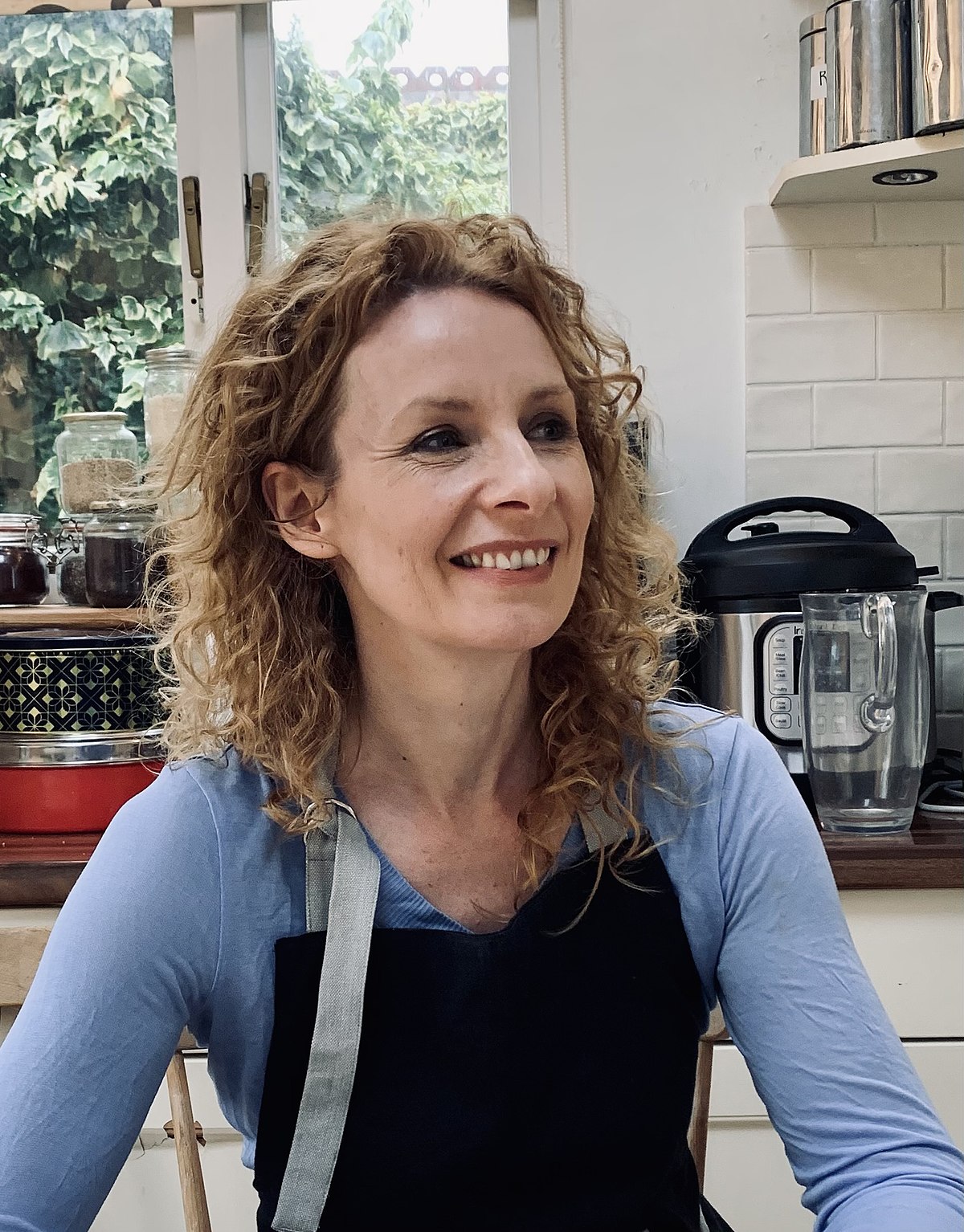
Bee Wilson
British food writer and journalistWikipedia
5
MENTIONS
3
EPISODES
3
PODCASTS
Search complete. 5 mentions across 3 episodes found for "Bee Wilson".
Sep 18, 2026

Tash McGillHOST
And he was just like, where are the ethnic restaurants? Where are the actual cultures that fill our streets?
Lucy CorryGUEST
Do you know the best book about food that I've read, I was going to say written, read in recent years would be The Way We Eat Now by Bea Wilson, who's an English food writer.
Lucy CorryGUEST
That takes, it's not a recipe book.
Lucy CorryGUEST
It's about what's happening with food in the world.

EllieHOST
We'll also be sharing some more of your thoughts on why reading matters and how books help build connections between people.
SteveHOST
So to kick things off, I caught up with award-winning food writer Bee Wilson at what was one of the mo- most moving talks of the festival.
SteveHOST
Now, Bee was discussing her book, The Heart-Shaped Tin: Love, Loss, and Kitchen Objects, a deeply personal exploration of how everyday items can be bound up with memory, grief, love, and identity.
SteveHOST
Now, the conversation clearly resonated with the audience, and there's more than, than a few tears shed during the event.
Bee WilsonGUEST
I hope that readers will, first of all, be interested in these stories, but secondly, I really hope they'll relate it to the objects in their own lives and that they'll think, "Oh, this reminds me of that rolling pin that belonged to my granny, and maybe even if I don't use it that often, why can't I let go of it, and what does it mean?" And that's the best response I could possibly have.
Bee WilsonGUEST
If somebody looks anew at their own kitchen drawers and either thinks, "This is why I want to keep this thing," or maybe it's finally time to say goodbye to it.
SteveHOST
That was Bee Wilson, the effect on the ob- objects we keep and the memories that they carry.
SteveHOST
Now, Ellie, a question for you.

Jimi FamurewaHOST
But that wasn't always the case.
Jimi FamurewaHOST
So how did the fork make its way from curiosity to culinary essential? To find out, we spoke to Bee Wilson, a food writer and historian who has spent years thinking about that question.
Jimi FamurewaHOST
Her book, Consider the Fork: A History of How We Cook and Eat, explores the surprising stories hidden behind everyday utensils.
Jimi FamurewaHOST
I started by asking her about the Byzantine princesses whose forks caused such a stir in medieval Europe.
11 MINS LATER
Ify AdenugaGUEST
... to teach us how to eat like the colonial master.
Jimi FamurewaHOST
Mm.
Jimi FamurewaHOST
Here's Bea Wilson again on the theme of colonialism and cutlery.
Bee WilsonSOUNDBITE_SPEAKER
There was hideous prejudice-