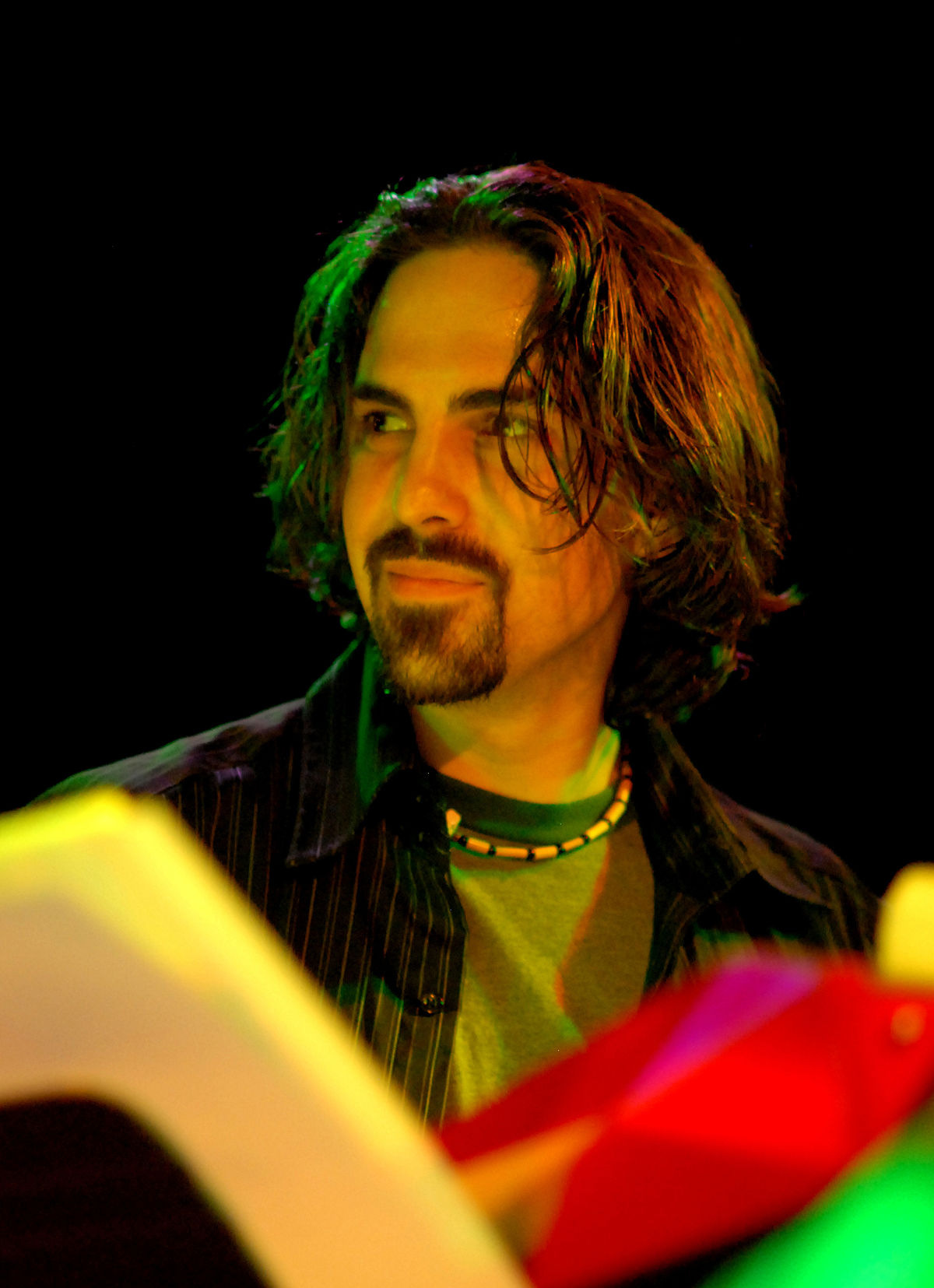
Bear McCreary
American composer
9
APPEARANCES
8
PODCASTS
Sep 7, 2026


Bear McCrearyGUEST
There's a revenue stream when something broadcasts, when it is on television, it is on the radio, or it is in a the- a theater overseas, not domestic, but overseas.
Bear McCrearyGUEST
According to copyright law, if you hire someone to write music for you, i.e. you're a film studio and you hire a composer, you own both those things.
Bear McCrearyGUEST
Traditionally and historically, those are split between the studio that keeps the publishing and the writer that keeps the writer's share.
Bear McCrearyGUEST
So I'm saying that to say that, like, a song that I really care about and poured my heart into, when it gets some spins on Spotify or when I go, you know, I go into Warsaw on tour last year and I played a song from my new record and I saw people singing along to it, I honestly wanted to cry on stage.

14:23

Did you have any of those people in mind for when you were recording it? Or is it just happenstance and luck and reach
Bear McCrearyGUEST
I mean, I definitely started off my rock projects with my first record that came out in 2024, The Singularity, and now this one, with a wish list, as I moved into rock.
Bear McCrearyGUEST
But also, I was very lucky, because I started off knowing a few of these folks socially.
Bear McCrearyGUEST
I became friends with Serge Tonkian from System of a Down and Scott Ian from Anthrax, and just knew these guys well enough that I could write some sketches and send it to them and say, I don't know, is this any good? What do you think? Because I thought...
Bear McCrearyGUEST
They will be honest with me if this sucks, right? So their encouragement, the fact that I had encouragement from people like that right out of the gate is part of the reason I did it.
Bear McCrearyGUEST
On the new record, there were a couple of people that I had wanted to work with on the first record and the schedules didn't work out who ended up working on the second one.
19:11
Is that the case for you? Or are you like the Brian Setzer Orchestra, where it's cripplingly complex, where 40 onstage people are traveling every show?


John KiernanHOST
But what does it mean to you to put out a record that's that is in this rock and metal vein for those who know you from the media, film, video game ecosystem.
Bear McCrearyGUEST
Yeah, look, I'm very fortunate to have worked in a lot of different genres and scored a lot of different things.
Bear McCrearyGUEST
It was sort of odd to me that around 2018, going into 2019, I was realizing I was not happy.
Bear McCrearyGUEST
I still felt this burning desire that I felt when I was 22, 21, just getting started.
Bear McCrearyGUEST
And I thought, well, I'm scoring TV shows, I'm scoring games, I'm scoring big movies.
Bear McCrearyGUEST
What's missing here? What's the problem? And I realized I was not challenging myself as an artist in the way that I think I really wanted to.
26 MINS LATER
John KiernanHOST
But the fact that you and your brother have worked together on this record and the second record, what does it mean for you as a composer, as somebody who's putting out their solo records? What does it mean for you to work with your brother again on Eclipses?

Bear McCrearyGUEST
It was more like it wasn't that I was given more creative freedom in the second season of Lord of the Rings.
Bear McCrearyGUEST
I was more confident in exerting my own influence and bringing more of my personality.
Brian PattonHOST
Yeah, I thought it was great, but I like Meshuggah and Lord of the Rings so much.

Sean MottHOST
and to add to not only to add to the the list from the first album and so when you're going into these collaborations what is your mindset you kind of briefly gave away a little bit of it but was it you wrote a song and you're like hey this person would be cool for this let me reach out to them or is it oh hey i want to do a song with x person let's write a song together or is it like kind of a mishmash of all of those things
Bear McCrearyGUEST
I never thought of it that way, but like, you don't see this a lot, maybe more in the hip hop world than the rock world where it's like, oh, there's just tons of guests.
Bear McCrearyGUEST
One of the reasons I think I've been able to do it, A, is it takes a long time, but B, In my career as a film composer, one of the skills that I developed is being able to meet someone and figure out how they want to work.
Bear McCrearyGUEST
Every time a filmmaker, a new filmmaker meets with me and they go, okay, well, how do you like to do this? I always turn it around and go, hey, tell me about your creative process.
10 MINS LATER


Bear McCrearyGUEST
Interestingly, like, the, there, there, there, there was a sort of darkness and thematic, um, lyrical thematic unity across these songs in Eclipses even more cohesive than the, the first record.
Bear McCrearyGUEST
So while I don't wanna be too prescriptive and say, like, this is how it fits, because I want people to be able to, if they know the story from the first record, to be able to feel for themselves where it fits, I mean, I definitely have my idea of, of what part of that story, what chapter in the story this is.
Bear McCrearyGUEST
Um, there is definitely this commentary about where we are as a society, as a world, as a, as a planet, and I think oddly Black Box really, um, uh, the lyrics that we wrote with Joe Duplantier were, were actually very, like, emblematic of what I think a lot of the record is about.
Bear McCrearyGUEST
So it was cool when I discovered, like, Eclipses is this Ancient Greek word, 'cause I was like, eclipse was a word, it's a good word.
7 MINS LATER
7 MINS LATER
Brian PattonHOST
Every track is so diverse and unique that it's an interesting listening experience without being like... random or just like doesn't make sense as as a collection how is that writing process especially like the the track with store copeland i mean it almost sounds like a modern police song and so like

SonnyHOST
That
Bear McCrearyGUEST
part of it really was a surprise early in my career, because I think part of it is therapeutic.
Bear McCrearyGUEST
Now that you mention it, I don't think about this a lot, but now that you mention it, I've been writing music every day since I was 12.
Bear McCrearyGUEST
When I was about 12, I started writing with my keyboard, my Yamaha PSR-510, and my mom got me a four-track cassette recorder.
15 MINS LATER
SonnyHOST
um i feel like that question right there the whole bulgarian thing it's you're kind of tapping into joe's niche already because his background and just the way he sings you like he even knows like oh that's i know why he's approaching me with that type of uh subject and and that track was ridiculous that's the one i probably put the replay button on the most but

Bear McCrearyGUEST
I mean, I don't mean to be hyperbolic, but I, but, but I feel very much I'm writing a score for someone else's vision.
Bear McCrearyGUEST
And if the director had the training, skill, and time, they would score their own movie.
Tony TolardoHOST
If he can get a chance to rescore a film that's already been done, which ones would he do?