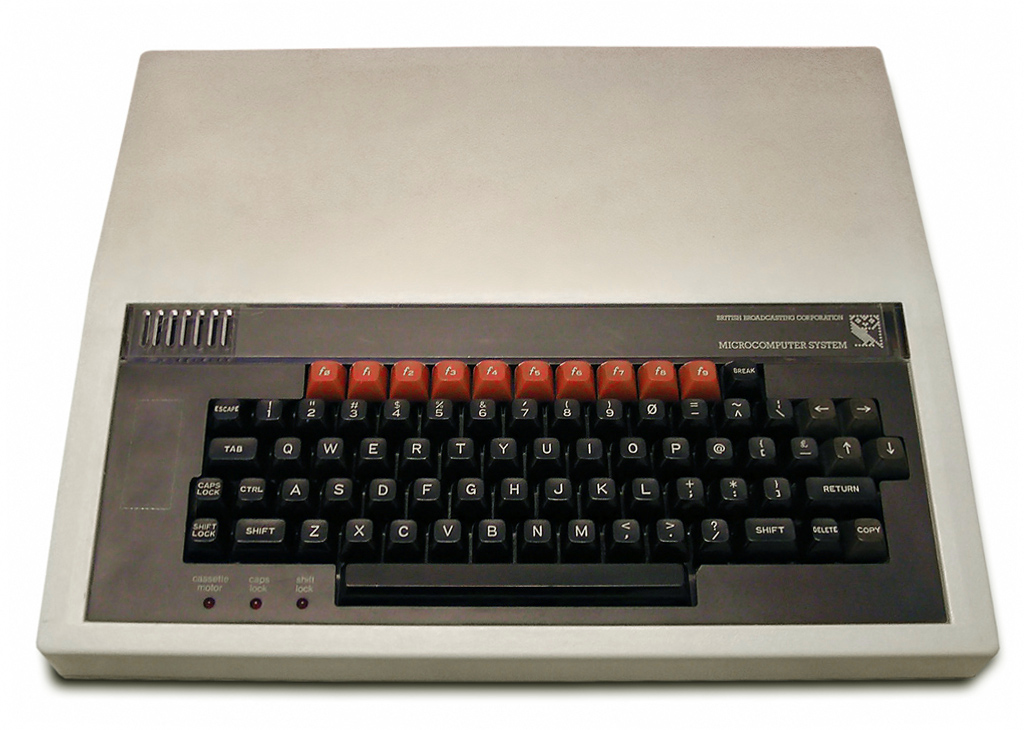
BBC Micro
ComputerWikipedia
25
MENTIONS
20
EPISODES
18
PODCASTS
Search complete. 25 mentions across 20 episodes found for "BBC Micro".
Sep 25, 2026

Lauren HarperGUEST
Yeah
Matt PurslowHOST
... developer's first game? You know, so, so the, the opening of that game, the first kinda thing that you do is you're on a, on an old 1980s, like, BBC Micro style kinda computer.
Lauren HarperGUEST
Yeah
Matt PurslowHOST
And as you're playing this, you're literally, you c- you can hear your character typing into it.

GaryHOST
And the Commodore one had like a mixture of business and software.
GaryHOST
Um, I remember I went to a, um, BBC micro event there as well.
GaryHOST
I think that was before 87.
GaryHOST
That would have been probably 84, 85, something like that.

KingyHOST
...
KingyHOST
it makes me happy that that's what's, what's so special about the 8-bit period more than anything else, Al, is that a game on the Commodore versus a game on the Spectrum versus a game on the Amstrad versus a game on Dragon 32 or the Oric or the BBC Micro or the Electron, whatever, they're, they're not ported.
KingyHOST
They're coded by individuals, and therefore-
AlmacHOST
Yeah
57 MINS LATER
KingyHOST
Mm
AlmacHOST
... through and do some, some-
KingyHOST
It feels like a BBC Micro game again, and that's not-
AlmacHOST
Yeah

MartinHOST
So if you want 6502 obviously being an ancient microprocessor, yes.
MartinHOST
BBC Micro, for example.
ChrisHOST
It's micro Apple II, EE Apple II.
ChrisHOST
The VIC-20 used something called, no, the VIC-64 used something called, as in commerce, 64, used something called 6510, which was a successor of a 6502, if I'm completely mistaken.

Kayode OdeleyeHOST
Yeah.
Liz UptonGUEST
But we had a thesis back then that it was because we had all grown up with things like the BBC Micro, the Spectrum, a computer that if you wanted to play games, you'd have to do a little bit of programming to turn it on and make your game work.
Liz UptonGUEST
You have to
Kayode OdeleyeHOST
run,
Liz UptonGUEST
Right now, it's something like 60 to one.
Liz UptonGUEST
But we had a thesis back then that it was because we had all grown up with things like the BBC Micro, the Spectrum, a computer that if you wanted to play games, you'd have to do a little bit of programming to turn it on and make your game work.
Kayode OdeleyeHOST
run
Liz UptonGUEST
you know and we thought if you could give a kid a device that they could own and that they could program um maybe they'd do something with it so originally it was tiny tiny tiny small parochial idea the idea was that we would have this device that you could give to a kid at an open day and then if they came back from interview a year later you'd say okay what did you do with that thing that we gave you for open day so you

Simon ByronHOST
It's Barbarian
Ste CurranHOST
based on the BBC Micro 8-bit classic.
Ste CurranHOST
No, no, no.
Simon ByronHOST
And that's all you should know about it before you see it.

Tim ElliottHOST
Mm-hmm.
Stephen MarriottGUEST
And it's like, why do you restrict at all? All the schools have computers, yeah? When I was at school, we had the BBC Micro.
Stephen MarriottGUEST
And it was like, I think you got access once a week or something.
Stephen MarriottGUEST
And even though I did one of the first combined computer science degrees in the UK, and I a lot of our work was still pen and paper.

Nick AlexanderHOST
Just not in the same century.
Nick AlexanderHOST
The computer sitting inside the Meadow Cottage was a BBC micro.
Nick AlexanderHOST
Oh, fuck yeah, dude.
RobHOST
That's kind of...
Nick AlexanderHOST
A micro is the world's smallest penis.
Nick AlexanderHOST
Yeah.
Nick AlexanderHOST
For our story, BBC Micro was a very, very popular computer in the 80s in the UK.
Nick AlexanderHOST
It looked like our...

Helen MulleyHOST
What was the first piece of technology you encountered that made you think, "Wow, this changes everything"? And I'm gonna start with you, Emma.
Emma StavesGUEST
So I remember when I was about seven or eight, my dad brought home a BBC Micro.
Helen MulleyHOST
[laughs]
Emma StavesGUEST
Um, we, we weren't allowed any fun computers in our house, sadly.
Emma StavesGUEST
We weren't allowed an Atari or anything [laughs] like that, but we were...
Emma StavesGUEST
And I actually, for the listener, I'm holding up a picture.
Emma StavesGUEST
This is me sitting next to the BBC Micro.
Helen MulleyHOST
Oh.
10 more episodes mention BBC Micro.
Create an account to see the whole feed, search across every transcript, and follow the entities you care about.