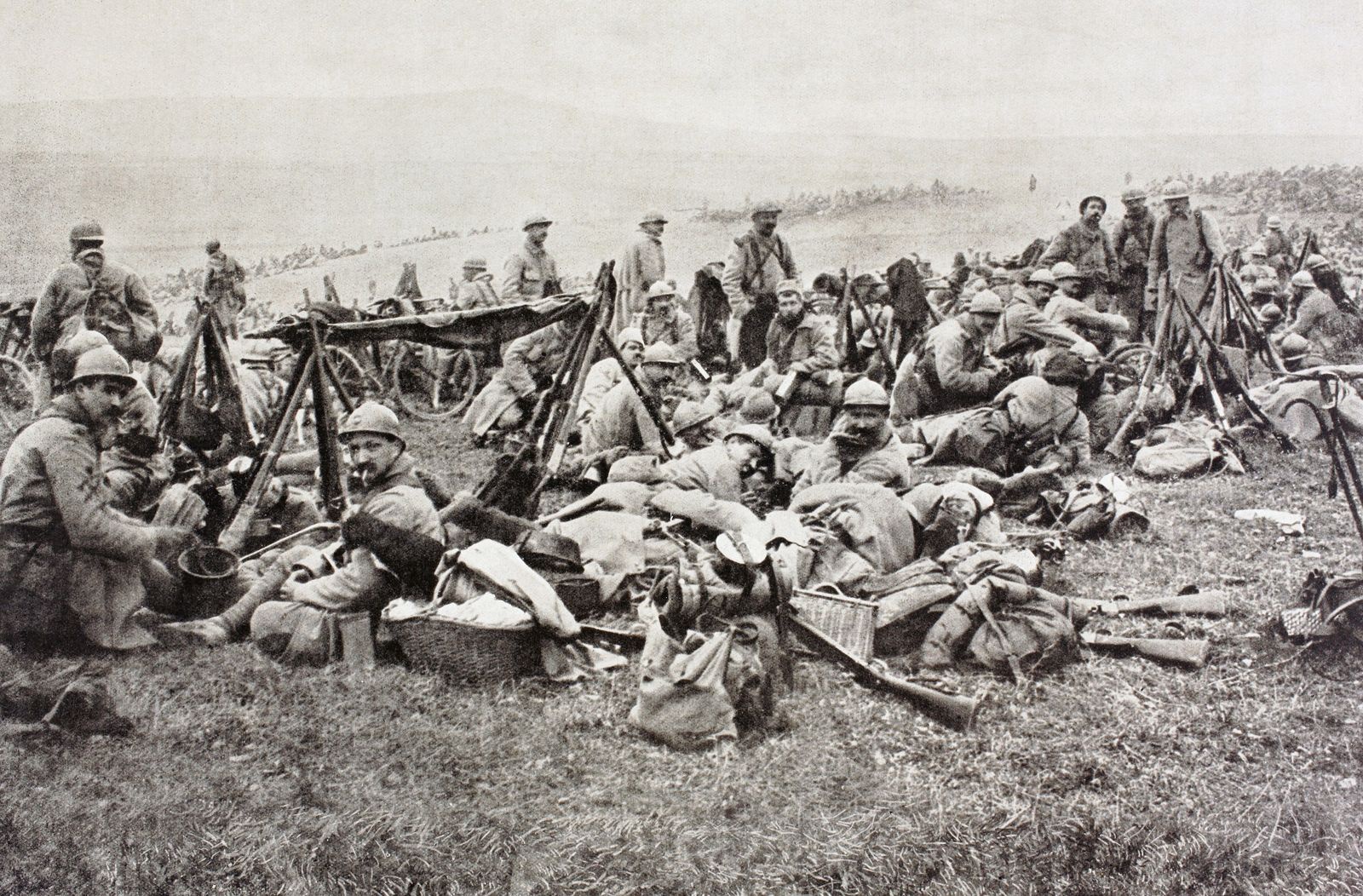
Battle of Verdun
BattleWikipedia
12
MENTIONS
8
EPISODES
8
PODCASTS
Search complete. 12 mentions across 8 episodes found for "Battle of Verdun".
Sep 16, 2026

Amber SmithGUEST
I'm a fourth generation military veteran.
Amber SmithGUEST
My My great grandfather served in the Battle of Verdun in World War I.
Amber SmithGUEST
My grandfather served in World War II as a pilot.
Amber SmithGUEST
My dad was in the 82nd Airborne as a paratrooper.

Giles BrownHOST
And France tends to get, I mean, with, you know, tragically, France tends to get overlooked in the First World War because they just seem to be on the losing side.
Giles BrownHOST
But, you know, the Battle of Verdun is bloodier than many will actually realize.
Giles BrownHOST
And it sort of sets in stone or it puts on a plinth, you know, a certain bit of Petain, for example, and others in the French military.
Enda O'DohertyGUEST
Yes, Verdun, which was a long and bloody battle, it was a stalemate for a long time.

Mike CunhaHOST
We will begin the tour with context on how the American Expeditionary Force came to the Meuse sector of the Western Front, and so we will render homage to the French army on the battlefield of Verdun.
Mike CunhaHOST
We will walk in the footsteps of two French soldiers, Lieutenant Colonel Émile Trouillant who you will recall was on the front line when the 1916 Battle of Verdun began, and Captain Charles de Verre, who months later led a desperate defense of the R1, Retranchement 1, position near Fort Vaux in June.
Mike CunhaHOST
You will stand on the ground where they stood, and you will stand on the ground where the shells churned the earth.
Mike CunhaHOST
From there, our timeline jumps to 26th of September, 1918, as we follow in the footsteps of young U.S. Army Sergeant William Triplett.

Alex DonnoHOST
But, Michael, going back to this injury report is, again, like the Stanford.
Alex DonnoHOST
I don't think the French Army had this many guys on their injury report after the Battle of Verdun.
Alex DonnoHOST
And now you see 25 players, and I think the key ones for Stanford, whether it's a strategy or not, you know, not too surprising because Stanford, we watched that game against Hawaii.
Alex DonnoHOST
Their starting center, Aiden Kilstrom, got carted off the field.

Dan HillHOST
And then throughout 1950 and then into 1916, areas such as the Lorette Spur, Vimy Ridge, eventually Arras, and then right down to almost towards the line of the Somme River by 1916 has been taken on as British ground.
Dan HillHOST
So that leaves us, by the time we get to 1916, and particularly the time that the Battle of Verdun is going to kick off in February, the join between those two nations is taking place right in the Somme region.
Dan HillHOST
Now, it's not quite, and the Somme's a little bit of a misnomer like this, Jim, and it's maybe worth us pointing out because we always talk about the Somme and we think, oh, well, there's a Somme river that must run right through the heart of the main part of the battlefield, i.e. the British part.
Dan HillHOST
Of course, it doesn't.
James TaubGUEST
Verdun is considered a school.
James TaubGUEST
You know, there are period references to the school of Verdun.
James TaubGUEST
The French are having a much, much smaller offensive area as compared to the British, but they're bringing more artillery, something they've learned about at the Battle of Verdun.
James TaubGUEST
And most of the soldiers, most of these poilus who are attacking are veterans of the Battle of Verdun.

Sebastian FaulksGUEST
No one's interested in that.
Sebastian FaulksGUEST
But then I read a book by Alistair Horne called The Price of Glory, which is about the Battle of Verdun, which really shaped modern France.
Sebastian FaulksGUEST
And it's just started up again in my mind.
Sebastian FaulksGUEST
And really the question that intrigued me the more and more I read about it was how far can you go? I mean, how many men would the politicians and the generals have tolerated being annihilated in Europe for no reason that anyone's really been able to determine? And so that was the theme of the book in my mind, how far can you go and still be human, and what does it mean to be human?

JoshHOST
The Korean War was in full swing.
JoshHOST
Uh, Pétain, who was the French hero of Verdu- the Battle of Verdun in World War I, he was now the shame of France, uh, 'cause he was the leader of the Vichy government, and he died on his little island Napoleon-style, 90 and senile, in that year.
JoshHOST
In terms of the government of this time in 1951, uh, Vincent Auriol, uh, was elected president of the French Republic, the first one of the Fourth French Republic, in 1947, and he lasted there until 1954.
JoshHOST
So he was in office at the time that Simenon wrote the book.