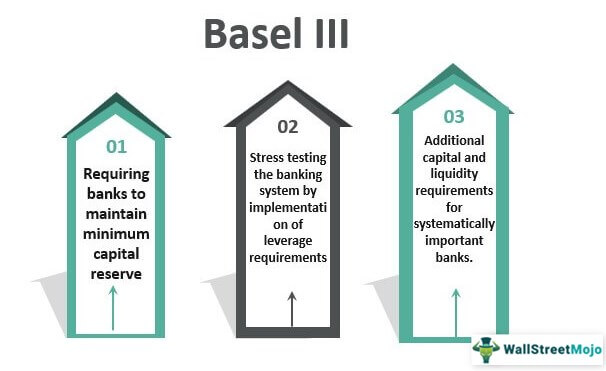
Basel III
50
MENTIONS
37
EPISODES
34
PODCASTS
Search complete. 50 mentions across 37 episodes found for "Basel III".
Sep 11, 2026

Charlie RobinsonHOST
You had to put it on your balance sheet.
Charlie RobinsonHOST
You had to make it fall under the Basel III capital requirements.
Charlie RobinsonHOST
It's, it's, it's boring banking stuff, but they, the, it's, it's a law that says, you know, you have to, um...
Charlie RobinsonHOST
Y-you, you know, it's, it's a liquidity situation.

Andrew MaguireGUEST
It's repricing the mounting risk embedded in sovereign debt.
Andrew MaguireGUEST
Just as the Basel III reclassification of gold, right back here, even though the Bank of International Settlement squared theirs two months ahead, but basically from the 1st of January 2023.
Andrew MaguireGUEST
So since then, net of all pullbacks, that includes all of these pullbacks to where we are today, Essentially, gold has attracted some $3,000 of central bank and sovereign liquidity into the US Treasury gold abasement trade from 2023 to current levels around $4,400.
Andrew MaguireGUEST
This is a spot gold chart here.
10 MINS LATER
Andrew MaguireGUEST
Whereas instead, gold gained 7% into rising yields.
Andrew MaguireGUEST
This is a huge, this is so many, the mainstream analysts are ignoring this.
Andrew MaguireGUEST
I mean, dollar weaponization definitely played a part, but it was actually physical gold's Basel III first-tier asset reclassification that enabled the largest central bank and sovereign inflows to take place.
Andrew MaguireGUEST
Now, over the following two years, yields fell by less than 1%.

Chu ChengGUEST
So actually, this will consume a lot of the capital.
Chu ChengGUEST
So according to the playbook of the Ministry of Finance, this is time to help this big bank to supplement more of the tier one capital to meet the standard of the Basel III.
Lincoln HumphriesCORRESPONDENT
So how exactly will this fresh core tier one capital improve the loss absorption, lending capacity and solvency buffers at institutions like ICBC, the Agricultural Bank of China, China Life and the PICC? And what residual risks could still limit the stabilisation effect?
Chu ChengGUEST
Well, I think one thing we need to understand is that, you know, in the past three years, we should say at the end of the 14th five-year program and also in the beginning of the 15th five-year program, one of the Chinese national plan is, you know, the new quality productive force.

David DworkinHOST
We were very involved.
David DworkinHOST
I was very involved in the whole effort around Basel III and enormous respect for Michael Barr.
David DworkinHOST
I think some of the assumptions there were missed.
David DworkinHOST
We worked with them on that and really respect their attitude and approach about that.

Melody WrightGUEST
Yeah.
Melody WrightGUEST
And what's crazy is that, you know, the big banks, they step back from mortgage lending during the last crisis, but due to Basel III and they had to reduce their mortgage exposure.
Melody WrightGUEST
And that's where you got these huge non-banks in the US that are doing most of the lending now and selling it to the government.
Melody WrightGUEST
And what many people don't realize is the government holds almost 85% of all mortgages.

Josh SigurdsonHOST
We've talked about bail-ins many times before.
Josh SigurdsonHOST
In fact, we reported on the fact that 63 central banks are implementing Basel III, which allows them to do bail-ins on your account.
Josh SigurdsonHOST
That story came out in 2024, September 2024.
Josh SigurdsonHOST
And of course, a lot of this viral news of bail-ins is surrounding stories from the FDIC from a November meeting in 2022, which I reported on at the time, where they talk about bail-in regimes, where they talk about how the FDIC has insufficient capitalization and can't pay off the money that they would have to pay off banks if they went bankrupt.
13 MINS LATER
Josh SigurdsonHOST
currency that will be based on credits, which will be based on your behavior, which will be based on what you can or cannot eat.
Josh SigurdsonHOST
These are things that governments have actually put on paper.
Josh SigurdsonHOST
In fact, the United Nations Pact for the Future, which Mark and I have talked about multiple times, which was signed off on by 193 countries, came out the same month as the 63 central banks implementing Basel III bail-ins, which, again, they put in place for a reason.
Josh SigurdsonHOST
They didn't just write that policy to just not use it.

Tom MurphyGUEST
And again, David knows this as well as anyone.
Tom MurphyGUEST
When the banks had to respond to Basel III implementation, and then the banks had to respond to the SLR changes that came from post-COVID, there was tremendous issuance from the banks, call it a trillion plus dollars.
Tom MurphyGUEST
But we could do some simple math to figure out, okay, What did each of these companies need to issue to get to the regulatory required minimums from a capital perspective? And then we could pencil that out and get comfortable as to when that was going to come and how we could absorb it.
Tom MurphyGUEST
Here, we're still struggling with what's the level of capex? How long is it going to go on for? And we haven't even talked about is the return going to be there? And that's a debate that's going on, not just in the financial markets, but in the world writ large.

DarkPANELIST
That changes if that loan has to be backed by treasuries, if you have to go out and buy treasuries.
MarsPANELIST
It already is through the Basel III capital requirements.
MarsPANELIST
No.
MarsPANELIST
The banks have capitalization requirements for their balance sheets.

Mario InneccoGUEST
And that's what she's hearing.
Mario InneccoGUEST
I mean, it's what's happened to gold as part of the Basel III project.
Mario InneccoGUEST
rules, it is a tier one asset.
Mario InneccoGUEST
It doesn't mean to say that all banks are going to use that as a tier one asset.

Kirk ElliottGUEST
When you follow the money, you see where power is going, right? And so what's the best way to follow money when money is just a fleeting thing because countries can just print it willy-nilly and doesn't mean anything anymore and Currencies can go out of favor and you have exchange rate risk and political risk and purchasing power risk, right? And it's like real money throughout history has literally been gold, right? Because it's real as tangible.
Kirk ElliottGUEST
And with Basel III making it a tier one asset, with China making it a high quality liquid asset, meaning you can just convert it back and forth with countries.
Kirk ElliottGUEST
Gold isn't money.
Kirk ElliottGUEST
Gold is wealth.
27 more episodes mention Basel III.
Create an account to see the whole feed, search across every transcript, and follow the entities you care about.