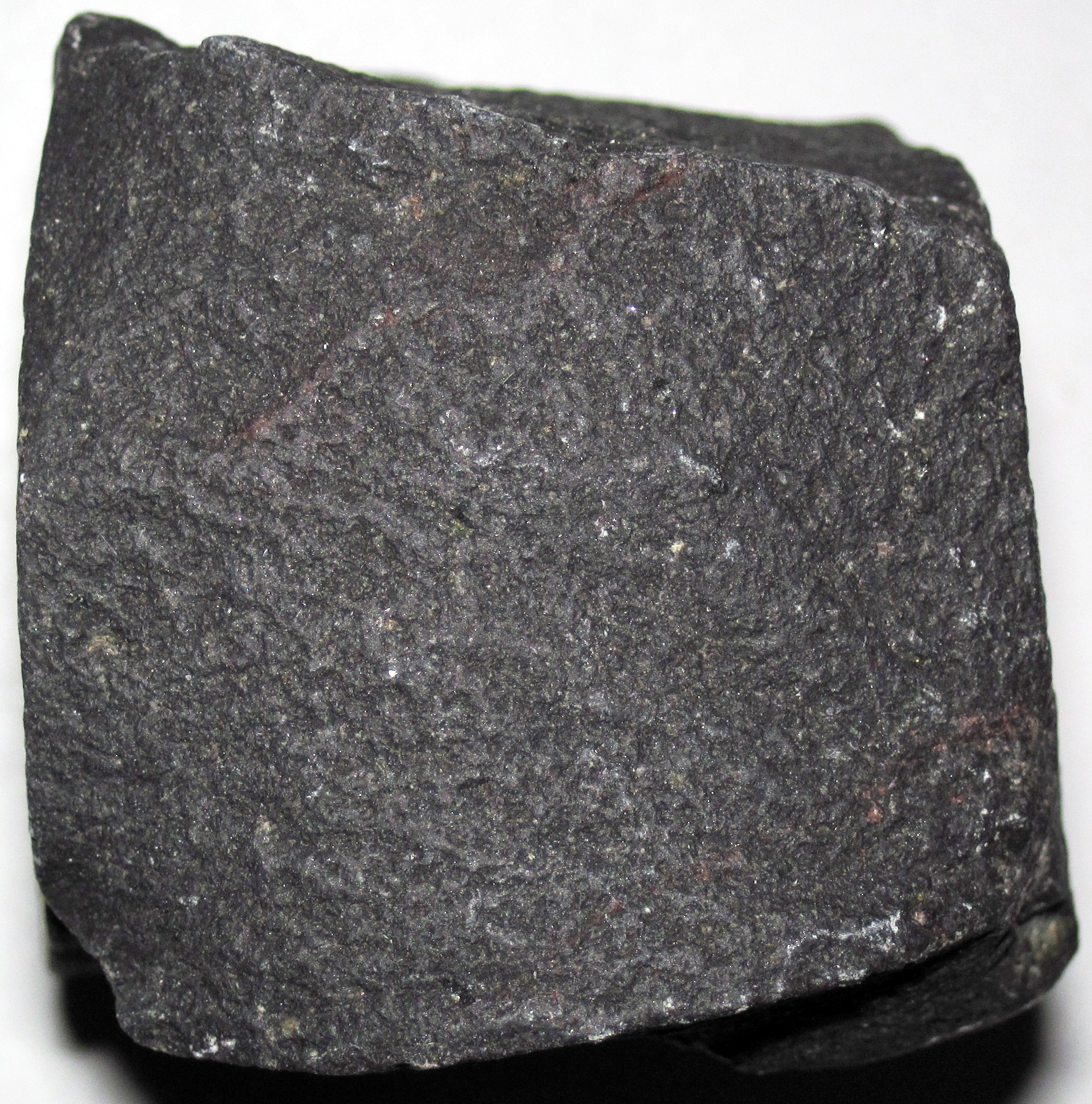
Basalt
Form of rockWikipedia
28
MENTIONS
19
EPISODES
17
PODCASTS
Search complete. 28 mentions across 19 episodes found for "Basalt".
Nov 2, 2026

Emily CoulterGUEST
So you get those lovely high grounds made out of granite.
Emily CoulterGUEST
Another really famous example of another igneous rock is basalt.
Emily CoulterGUEST
Basalt, on the other hand, you may have seen basalt columns on holiday if anybody's been to the Giant's Causeway.
Emily CoulterGUEST
I love the Giant's Causeway.
Emily CoulterGUEST
Of course you do.

Matthew LaCroixHOST
Because you would never be able to get these edges and levels in a stone this hard.
Matthew LaCroixHOST
Basalt on the hardness, most hardness scale is going to be about six and a half.
Matthew LaCroixHOST
But some types of fine grain are harder.
Matthew LaCroixHOST
It's always based on the fine grain or the coarse grain nature.

Corey CramGUEST
The core of the dam to control seepage, that's going up to Chief Toker.
Corey CramGUEST
Basalt is on the outside to control erosion, give some mass.
Corey CramGUEST
Yep, yep.
Corey CramGUEST
That reservoir is a unique one because eventually that water is going to have some type 1 reuse pumped to it from Ash Creek Special Service District's Confluence Park facility.

speaker_3NARRATOR
While the name of Alexander von Humboldt is familiar to everyone, few perhaps are aware of the peculiar circumstances of his scientific career and of the extent of his labors in almost every department of physical knowledge.
speaker_3NARRATOR
he was born on the fourteenth of september seventeen sixty nine and is therefore now in his eightieth year after going through the ordinary course of education at gttingen and having made a rapid tour through holland england and france he became a pupil of werner at the mining school of freiburg and in his twenty-first year published an essay, Essay on the Basalts of the Rhine.
speaker_3NARRATOR
Though he soon became officially connected with the Mining Corps, he was unable to continue his excursions in foreign countries, for during the six or seven years succeeding the publication of his first essay, he seems to have visited Austria, Switzerland, Italy, and France.
speaker_3NARRATOR
His attention to mining did not, however, prevent him from devoting his attention to other scientific pursuits, among which botany and the then-recent discovery of Calvinism may be especially noticed.

Marcius ExtavourHOST
Some of these rocks are called basalt.
Marcius ExtavourHOST
If you know anything about rocks or you care about geology, you've heard this word before.
Marcius ExtavourHOST
Basalt is not a fancy rock.
Marcius ExtavourHOST
It's everywhere on Earth.
Marcius ExtavourHOST
A lot of the planet consists of basalt.

speaker_0NARRATOR
The potential mechanisms include catastrophic burst, the dam failing suddenly under the hydrostatic pressure of the impounded water, releasing a wall of water downstream that would have been one of the largest flood events, in the region's geological history or gradual overtopping as the lake filled to the crest of the dam and began to flow over it eroding the basalt from the top down or seepage through fractures in the cooling basalt the water finding paths through cracks and weaknesses in the rock and gradually enlarging them until the dam was undermined from within or slow erosion by the river re-establishing its course over the dam's crest, cutting through the basalt the same way it had cut through the limestone and sandstone before.
speaker_0NARRATOR
The evidence for these dams survives today as remnant lava flows clinging to the canyon walls.
speaker_0NARRATOR
Basalt shelves and columns that mark the former positions of dams that have long since been destroyed by the river Some of these remnants are hundreds of feet above the current river level, indicating that the dams were enormous structures.
speaker_0NARRATOR
Lacustrine sediments, lake bed deposits of fine-grained silt and clay, have been found behind the former dam sites, confirming that standing water existed upstream for extended periods.
speaker_0NARRATOR
The sediments are layered indicating seasonal or annual cycles of deposition, which in turn suggests that the lakes persisted for at least years and possibly centuries or millennia.

Dylan WilmethHOST
It is a dark rock, either black or dark gray, usually pitted with holes and pockmarks.
Dylan WilmethHOST
This rock is basalt.
Dylan WilmethHOST
Basalt is an igneous rock, forged as lava cools down, which makes sense.
Dylan WilmethHOST
The Hawaiian islands are famous for their volcanoes.
Dylan WilmethHOST
But not all volcanoes make basalt.
6 MINS LATER
Dylan WilmethHOST
All right, that's enough about the rocks themselves.
Dylan WilmethHOST
Let's zoom out and learn a bit more about the volcanoes they make.
Dylan WilmethHOST
Basalt can form in a lot of different spots in a lot of different types of volcanoes on Earth, but the main story I tell my GEO 100 students is this.

Robert ClotworthyNARRATOR
These intricately carved heads vary in height from nearly 5 feet to over 11 feet tall, the largest weighing approximately 50 tons.
Robert ClotworthyNARRATOR
Like the Monte Alto sculptures, most of these heads were made from basalt.
Jeff WilliamsSOUNDBITE_SPEAKER
Basalt has large quantities of iron and magnesium in them.
Jeff WilliamsSOUNDBITE_SPEAKER
The OMAC were so precise with knowing where the magnetic fields were that they actually carved the structure around these anomalies.
Jeff WilliamsSOUNDBITE_SPEAKER
So when scientists use a magnetometer around the stone statue, they notice the nose and the cheeks, around the chin.
Jeff WilliamsSOUNDBITE_SPEAKER
The
Andrew CollinsSOUNDBITE_SPEAKER
great heads of the Olmec are made of basalt.
Andrew CollinsSOUNDBITE_SPEAKER
Basalt is a volcanic substance and the closest source to many of these heads is anything up to 100 miles away.
9 more episodes mention Basalt.
Create an account to see the whole feed, search across every transcript, and follow the entities you care about.